Israel's Arab Citizens Choose the Ballot Box; Palestinians Still Wait for Independent Candidates
The Palestinian situation, however, illustrates why elections alone are not enough.... Simply holding elections without meaningful alternatives leaves Palestinians choosing between two discredited political establishments rather than producing genuine change.

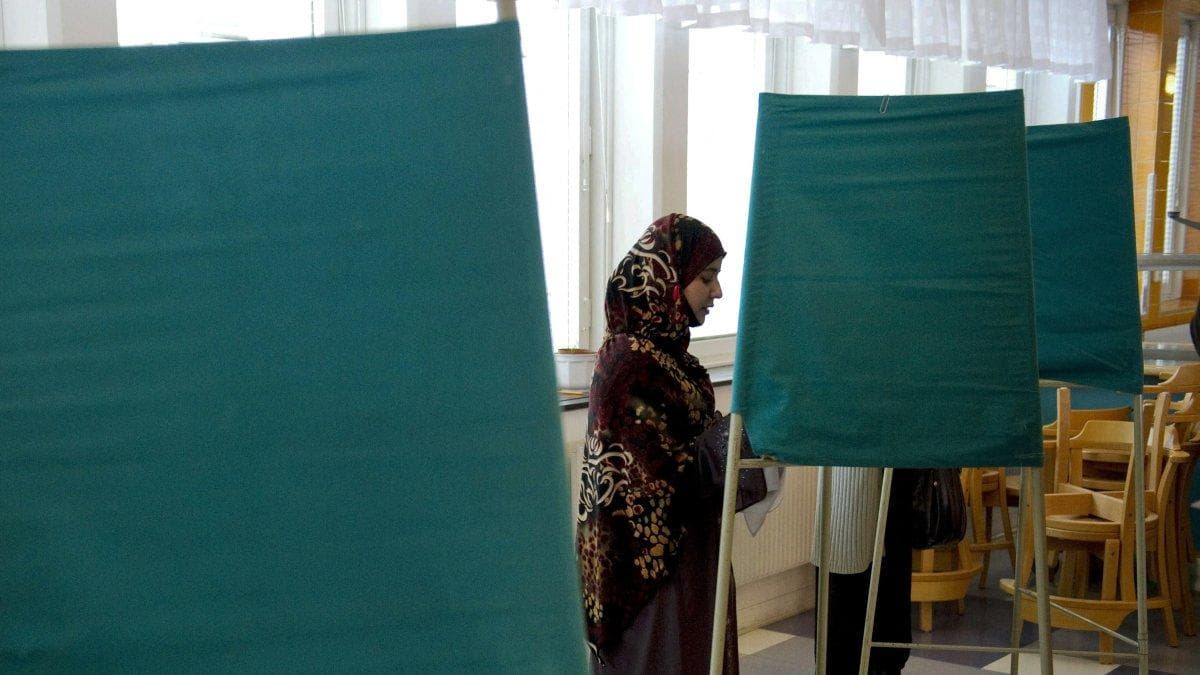
Una mujer emite su voto en un colegio electoral en el norte de Israel
Published
The results of Israel's October 27, 2026 election delivered an important message about the political participation of the country's Arab citizens. According to the preliminary count, in an unprecedented achievement for Arab-majority parties, two Arab-led parties, the Joint List and Ra'am, secured a combined 19 seats in the 120-member Knesset. This result represents a significant increase from the 10 seats held by the two Arab parties in the outgoing parliament.
So much for the sweeping claim that Israel is an "apartheid state." The election demonstrates that Arab citizens of Israel vote, establish political parties, run for office, and win substantial representation in the country's national parliament. Their elected representatives can challenge government policies and influence decisions affecting the entire country. In 2021, one of the Arab-led parties, Ra'am, even joined Israel's governing coalition.
These are facts that cannot simply be dismissed by those who portray Arab citizens as having no meaningful political rights.
Beyond the numbers, the election highlights an important distinction between Arab citizens of Israel and Palestinians living under the Palestinian Authority (PA) in the West Bank or under Hamas's de facto rule in the Gaza Strip.
The last Palestinian presidential election took place in 2005. The last election for the Palestinian Legislative Council (PLC) took place in 2006. Hamas won that legislative election, securing 74 of the PLC's 132 seats.
Those elections are now roughly two decades in the past.
The political split between Hamas and the PA's ruling Fatah faction headed by President Mahmoud Abbas, which culminated in Hamas's violent takeover of the Gaza Strip in 2007, left the Palestinians divided between two competing centers of power. The PLC stopped functioning as a national parliament in 2018, when the PA formally dissolved it. No new legislature has been elected since.
Recently, Abbas again postponed PA legislative elections that had been scheduled for November 2026, and set September 11, 2027 as the new date for both legislative and presidential elections.
The result is a political system without a functioning parliament capable of exercising the ordinary legislative and oversight functions expected of such an institution. Even though Abbas's presidential term expired in 2009, he has continued to govern by decree.
The absence of elections has deprived Palestinians for decades of a regular mechanism for replacing their leaders, renewing their political institutions, and holding their governing authorities accountable at the ballot box.
The comparison between those two elections also raises questions about the priorities of those who claim to speak on behalf of the Palestinian people.
For years, international diplomats and governments have discussed Palestinian statehood, political reform, and democratic institutions. Yet Palestinians have repeatedly seen elections postponed, while their leaders continue to exercise power without a renewed electoral mandate.

Israel's election at least offers a contrasting example of how political representation can change through participation in a competitive national vote. The 19 seats won by the Arab-led parties will not resolve every difficulty facing Israel's Arab citizens. Their representation nevertheless gives them a parliamentary platform from which to negotiate and scrutinize government policy.
As Arab citizens constitute roughly one-fifth of Israel's population, their 19 seats amount to nearly one-sixth of the Knesset — a substantial share of representation even if it does not exactly match their proportion of the population: two million out of 10 million.
The challenge now is to translate this representation into results for the communities that elected these lawmakers.
The performance of Israeli-Arab leaders should be judged by what they accomplish, including whether they can improve public safety, address social and economic inequalities, and advance the interests of their constituents.
The record turnout for Arab-led parties demonstrates that Israel's parliamentary system provides a route for political participation that Arab citizens are actively using. Their ability to organize, compete, and increase their representation is a meaningful feature of Israel's political life and democracy.
The international community should draw a clear lesson from Israel's latest election results: Arab citizens seeking greater influence can organize and compete for office, while Palestinians living under the Palestinian Authority or Hamas have no freedom or influence over their future.
The Palestinian situation, however, illustrates why elections alone are not enough. For the past two decades, Palestinians have been trapped in a political struggle dominated by Fatah and Hamas, two factions whose records show serious problems with corruption, accountability, and effective governance. Simply holding elections without meaningful alternatives leaves Palestinians choosing between two discredited political establishments rather than producing genuine change.
The international community should therefore support not just elections for the Palestinians, but, even more, genuine political competition, independent candidates, transparency, institutions capable of holding elected leaders accountable, and an end to corruption and glorification of violence and "martyrdom."
Khaled Abu Toameh is an award-winning journalist based in Jerusalem.
- Follow Khaled Abu Toameh on X (formerly Twitter)
🛠 Do you think there is an error in this article?
Recommendations



LATEST