Make the Moon great again: Trump wins the first round in the new Star Wars
America has managed to set the course, this success should make citizens enormously proud, not just for getting there first but for building something worthwhile for companies and scientists around the world to join in on
Artemis
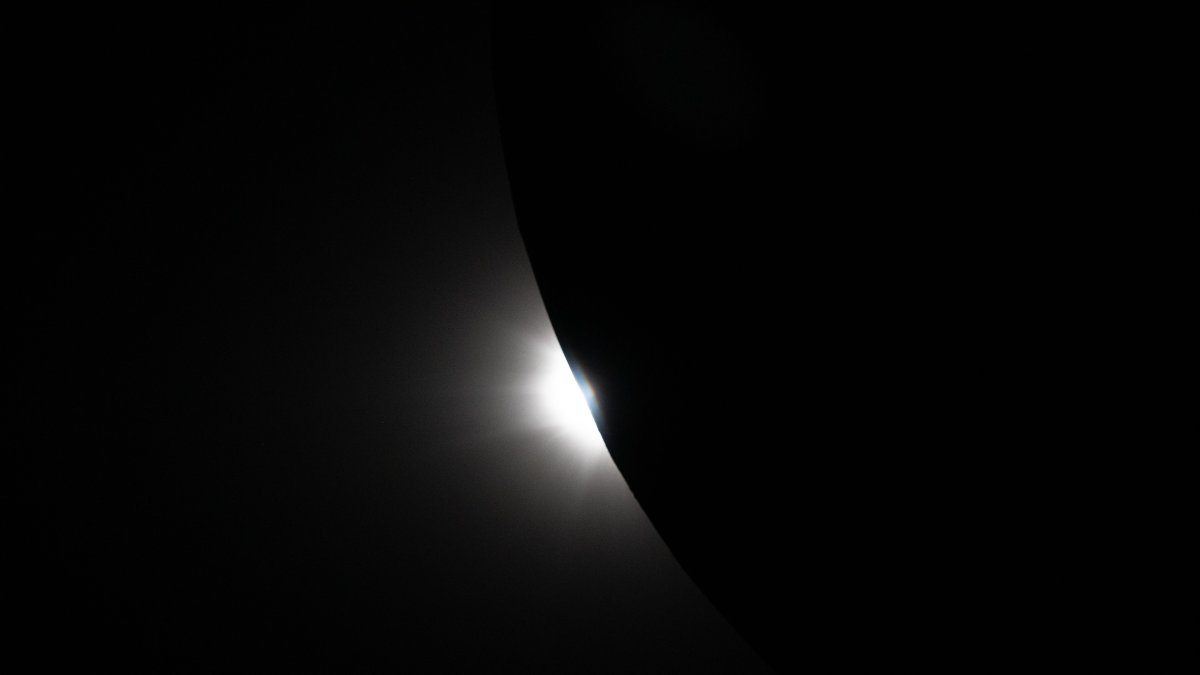
As the eyes of the planet gazed at the Strait of Hormuz, the space future unfolded in such a fantastic and successful way that it is sad, disturbing and striking. The world's lukewarm reaction to the return of human beings to lunar orbit. For the first time in 54 years, four astronauts aboard the Orion spacecraft circled the far side of the Moon and returned home safe and sound. In fact, they got out of their spacecraft walking so calmly, beating the all-time record for distance traveled by a human crew: 406,771 kilometers from Earth.
However, it was not by any stretch of the imagination an event that would make us humans who remain here on Earth hold our breath at such a feat. What's more, most Earthlings probably do not even know the names of these astronauts, unlike during the Cold War space race, when the astronauts on each side were true heroes for their country.
That gesture of indifference says several things. One is that perhaps the mission no longer seems as extraordinary as it did in 1969, or that little has been done to spread the wonder of this mission. It may also be a consequence of that disorder that Donald Trump and his exotic personality produce in certain people. A mixture of this and some more seasoning has clouded the ability to recognize one of the most momentous achievements in the history of human exploration. For it was Trump who, in 2017, rescued the Artemis program from bureaucratic oblivion and restored NASA to its original vocation. Jared Isaacman, the NASA administrator appointed by Trump, was the one who formulated the crucial difference from the Apollo program: This time we are going to stay. Not to plant a flag and go home. Not to win a race and leave the field. To stay.
As a matter of fact, this crew became the fastest in history by re-entering Earth's atmosphere at nearly 40,000 kilometers per hour. And for the first time in the history of space exploration, a woman traveled beyond Earth orbit. In addition to systems testing and validation of the Orion spacecraft, the mission made highly relevant science observations. The crew documented the topography along the lunar terminator in grazing light similar to that of the South Pole, where future lunar landings are planned. They also reported flashes of meteoroid impacts on the dark side of the Moon.
It's worth our while to name the four heroes who broke the record. Commander Reid Wiseman, 50, a Navy test pilot. During the mission, the crew, in recognition of his leadership, proposed naming a lunar crater after his late wife, Carroll. The pilot, Victor Glover, 49. Mission specialist Christina Koch, 47, the first woman to travel to the Moon, who holds the record for the longest single space mission by a woman: 328 consecutive days. And finally, mission specialist Jeremy Hansen, 50, of the Canadian Space Agency, the first Canadian to orbit the Moon.
To understand what is at stake, one must remember that the abandonment of that space race half a century ago is perhaps one of the biggest mistakes in American history. Between 1969 and 1972, the United States put 24 men on the Moon in six consecutive missions. Then this interest petered out, and the missions were terminated. It was not because of a technological limit, and there was certainly no lack of scientific objectives. Quite the contrary. However, an unfortunate combination of factors, such as having won the competition against the Soviet Union and some budgetary pettiness, played a role in this absurd abandonment.
The Apollo 18, 19 and 20 missions were canceled in 1970. In the following decades, several administrations tried to bring them back: George H.W. Bush in 1989. Bill Clinton redirected funds to the International Space Station. George W. Bush launched the Constellation program, which Obama canceled. The history of U.S. lunar exploration since 1972 is basically a history of humiliating feints and cancellations. So what makes Artemis different is the architecture of the program: the Moon as a permanent destination, not a feat to be completed.
Behind that architecture is the new space cold war, this time with China as a rival, of course. But there is also Trump's geopolitical vision and his long-term diagnostic ability, which has earned him many hits that are recognized today (recall his warnings to Europe over the crazy energy agenda). This is what makes many uncomfortable: having to accept that Trump was right from his first term. Of course, Russia, the historical protagonist of the space race, is today just a supporter. The country that launched Sputnik, that put Laika into orbit, that took Yuri Gagarin into space no longer leads, no longer innovates, no longer competes. The new Star Wars is a duel between Washington and Beijing.
China has entered this competition headlong and steadily, never interrupted by changes of agenda according to elections. The Communist Party coordinates industries, funding and interests under a five-year plan where aerospace is explicitly listed among the "strategic industries of the future." Its goals are concrete: Chinese taikonauts on the Moon by 2030, and a permanent lunar base in the next decade, in collaboration with Russia. It already has achievements that are not minor: it was the only country to land a rover on the far side of the Moon and return with samples. It has the only operational independent space station, called Tiangong, or "Heavenly Palace," built after the United States barred it from the ISS in 2011. It has ongoing robotic missions, including Chang'e-7 in 2026 and Chang'e-8 in 2029, both aimed at the lunar South Pole.
In that context, Artemis II is the first point on the scoreboard in a competition that will define who sets the rules for use of the Moon: who controls the landing zones, who sets communication and navigation standards, who exploits its riches and who is the first to transform polar ice into fuel. The Moon has concrete strategic and scientific value. Its far side, shielded from Earth's electromagnetic noise, is probably the best site for radio telescopes in the entire inner solar system. The Moon could be a galactic service station, which alone would put the first to succeed at the forefront of future space exploration.
Already working in that direction is Blue Origin, founded by Jeff Bezos, which announced it has developed a reactor called "Air Pioneer" capable of extracting oxygen from lunar dust by electrolysis. This is what changes the game: a private company can go exploring, can invest, can innovate at a speed that no government agency can achieve on its own. The Artemis model is not just NASA but the possibility that a constellation of companies with real incentives to develop lunar technology see that there is a market opening up.
The U.S. has managed to lead the way. This success should make citizens highly proud, not just for getting there first but for building something worthwhile for companies and scientists around the world to join. If the short-sighted short-termism of politicking and a world that is incapable of celebrating its progress does not want to celebrate, that is up to them. Star Wars has just begun with an American victory, and despite many, it happened under the Trump administration.
LATEST