The International Criminal Court is the theater of the absurd
Among other criticisms, the JusticeInfo.Net website has noted that the court’s judges have “triggered multiple controversies on their morality, integrity or independence.”
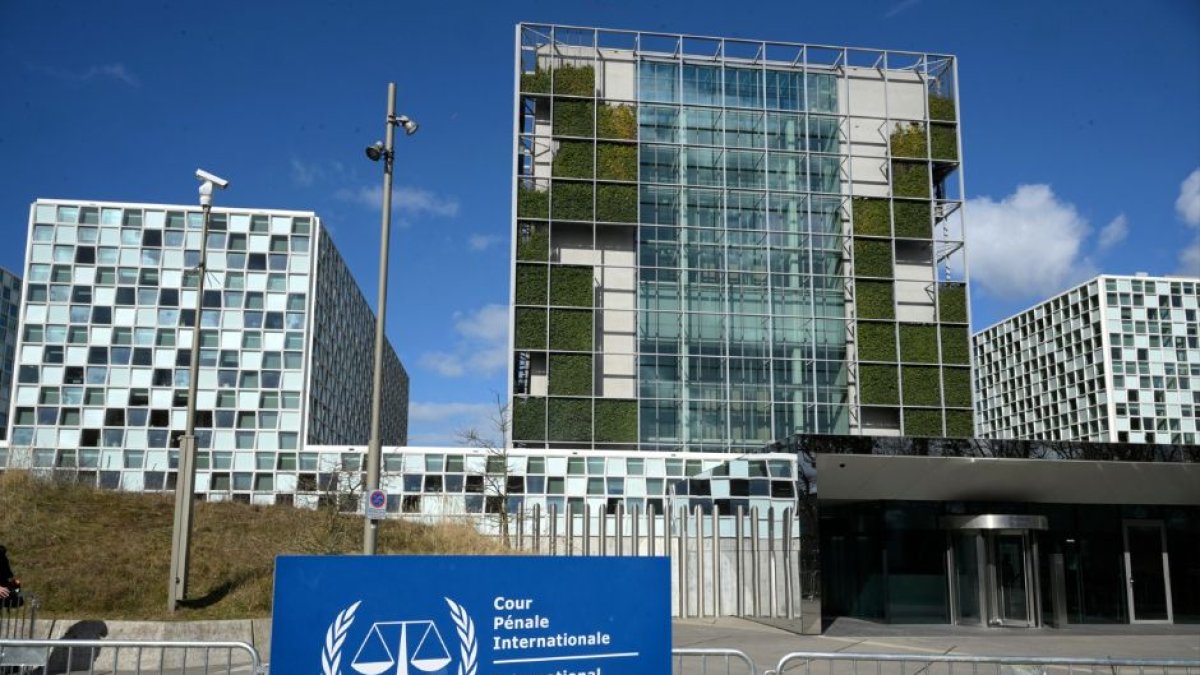
la Corte Penal Internacional (CPI) en La Haya
If William Shakespeare was right and all the world’s a stage, it follows that the International Criminal Court can be seen as the theater of the absurd.
The ICC in The Hague was established in 2002, based on a statute agreed in Rome in 1998. Its role is to investigate and prosecute war crimes, crimes against humanity, genocide and the crime of aggression, and act when the national courts of those states that have signed up to the court are unable or unwilling to do so. The pursuit of justice is one of humankind’s most noble instincts.
The reality is that the ICC has shown itself to be incapable of delivering anything approaching justice. The questions about the ICC’s ability to do so are self-evident to all except for naive, political opportunists or pro-ICC zealots. Despite manifest failings, the court has issued arrest warrants for sitting presidents and prime ministers, indictments enthusiastically embraced by the international human-rights industry that helped to create it.
Let’s leave aside fundamental issues, such as is there any such thing as international law (questionable); whether an international court can be international without the United States, Russia, China or India as members (it can’t); or how independent the ICC can be given that it grants the U.N. Security Council prosecutorial rights of referral and deferral to the court (not a lot), and whether or not the treaty-based ICC can claim to be able to unilaterally impose itself upon the citizens of a country that has not signed up to that treaty (it cannot). It is the rot at the heart of the court that disqualifies it as a functional legal entity.
The ICC’s track record has been appalling. Prosecutors have been mired in allegations of misconduct, political selectivity, failures in due process, ethical irregularities and double standards in case after case.

Politics
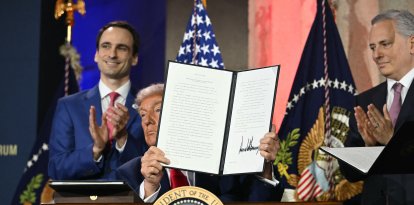
Marco Rubio announces sanctions against two more ICC judges for investigating Israel
Carlos Dominguez
Its first trial—that of an African militia leader accused of using child soldiers—was an evidentiary and procedural shambles, and twice suspended because of the irregularity and unfairness of proceedings. The prosecutor hid exculpatory evidence from both the judges and defense—something for which a British or American lawyer would have been disbarred.
The prosecution’s first-ever witness, in the ICC’s first-ever trial, recanted his version of events the moment he entered the witness box, stating that he had been coached by nongovernmental organizations that are the handmaidens of the court. Not one of the other “child soldiers” presented by the prosecution was found to be reliable. The prosecutor also tried to introduce new charges halfway through the trial.
In another case, in addition to again withholding exculpatory evidence from the defense, the prosecutor had to admit that the court’s star witness against Kenyan Vice President William Ruto was “thoroughly unreliable and incredible” (its Kenyan cases were subsequently dropped). In a third case, the same prosecutor appeared not only to be unaware of the basic legal concept of presumption of innocence, but also threatened to criminalize any third parties who might argue a presumption of innocence on the part of those indicted—and as yet unconvicted—by the international court. A clearer case of “Alice in Wonderland” justice, along the lines of “sentence first, verdict afterwards,” is difficult to find.
And in a further case, professor William Schabas, ICCuber-fan and author of the 1,600-page The International Criminal Court: A Commentary on the Rome Statute, has had to acknowledge that the court has convicted people of crimes they didn’t commit. It is little wonder that even pro-ICC legal bloggers have been reduced to describing trials as “slapstick comedy.”

Politics
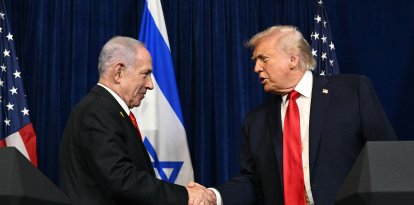
US sanctions four ICC judges and prosecutors: 'The court is a threat to national security'
Carlos Dominguez
It is widely accepted that international law, such as it may be, is both complex and challenging, and that, as stated by legal scholar Marjan Ajevski: “It is not unreasonable to say that international criminal law is, for the most part, a judge made law.”
It is also not unreasonable, therefore, to expect that those nominated to sit in judgment on often very detailed aspects of international criminal law should not just be experienced judges and lawyers, but the cream of the crop. This has not been the case at the ICC, where the quality of the bench has been questionable from the start. The International Bar Association has questioned their qualifications. The JusticeInfo.Net website has additionally noted that ICC judges have “triggered multiple controversies on their morality, integrity or independence.”
The nomination and election of judges to the court is the responsibility of the Assembly of States Parties (ASP), the ICC’s oversight body. Instead of the real judges who are needed, the court’s corrupt FIFA-esque vote-trading has resulted in diplomats, washed-up politicians, NGO workers and human-rights activists—many who have apparently never been inside a courtroom before—being appointed to the bench. Close NGO involvement in the judicial candidate vetting process saw more concern about woke box-ticking than competence and legal expertise on the bench.
Human Rights Watch, an avid supporter of the court, has publicly stated that vote-trading is “antithetical” to securing the most highly qualified judges and conceded that vote-trading for judicial positions dates back to the very first elections for judges in 2003. Vote-trading has been a feature ever since and has wrecked the judicial credibility of the ICC.
One example of this was the election by the ASP of a Japanese diplomat, who has no legal qualifications or experience whatsoever, to be a judge merely because Japan gave a lot of money to the court. While the judge in question would be out of her depth in traffic court, let alone be able to meaningfully contribute to exceptionally complex interpretations of war crimes, she definitely qualified for a walk-on part in this theater of the absurd.
Why should anyone appear before this judicial farce?
LATEST