The BBC scandal: Why it might be time to end public media
In a world of thousands of channels, podcasts and newspapers, forcing citizens to fund state media is not service, it is servitude. The BBC scandal should reopen this debate. Not to offer reforms but to recognize that the state is not the guardian of the truth....
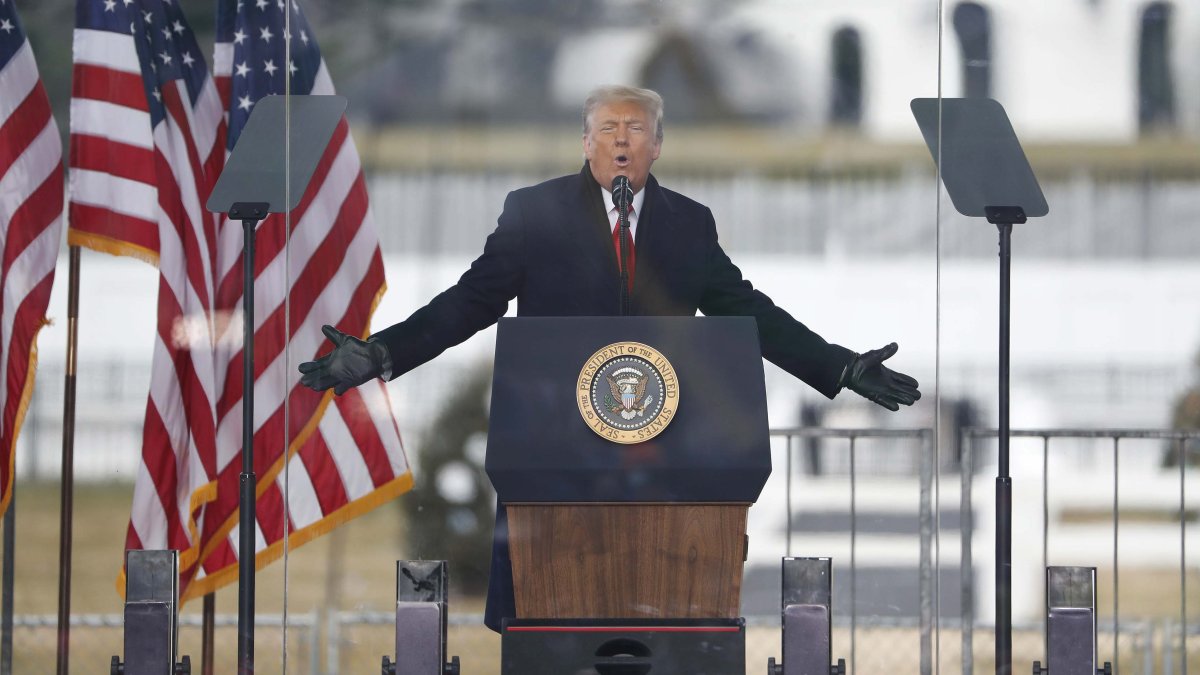
Trump on January 6, 2021
A broken model
The resignation of BBC director general Tim Davie and news CEO Deborah Turness is not a simple changing of the guard. It is the tacit admission that the taxpayer-funded public media model has failed. The scandal that precipitated its downfall - the deliberate manipulation of a speech by Donald Trump to make him appear to be inciting violence on January 6, 2021 - is not an isolated mistake. It is the symptom of a systemic disease affecting all state media in the Western world.
The scandal that came to light this week exposed how the BBC spliced together fragments of a Trump speech, separated by more than 50 minutes, to create a fake that lasted almost 5 years. And it only came to light, not because of the honesty of the executives or the corporation, but because an internal report by ethics consultant Michael Prescott was leaked documenting this and other instances of manipulative leftist bias. After the scandal, the corporation had no choice but to admit its mistake, although Trump has already threatened to sue the company for $1 billion.
But the damage to trust goes back a long way and this episode only adds fuel to the fire. Millions of citizens around the world are forced to fund their own disinformation. That is the point.
It is serious that the BBC has manipulated information, of course. The BBC is not just any network, but one of the largest and most prestigious in the world, an accolade earned by a century in the news business, supported by public money. But, precisely, the point is that it is not a success that depends on quality but on imposition. Every British TV household has to pay a fee of almost £200 a year. They do not have a choice. They cannot opt out of paying if they feel the BBC does not represent them or if they simply do not want to consume its content. It is an ideological tax disguised as a public service.
And the BBC is not alone in its dishonesty, nor is this its first major scandal. British regulator OFCOM had already ruled earlier this year that the corporation had breached its impartiality rules on several occasions. It was recently revealed that it had manipulated information in favor of Hamas more than 1,500 times. Its Arabic-language service published zero articles on Israeli hostages while the English-language service published barely a score, while anti-Israeli information provided by Hamas officials was profuse and daily. The Prescott memo also warned of poor, false or biased coverage of thorny issues for the left: immigration, gender identity, radical Islam.
Not a hint of impartiality, just political activism paid for by those who, ironically, often dissent from their positions.
NPR: The woke media twin across the Atlantic
While the BBC is now in the spotlight, other public media failures should not be left unspoken. One example is NPR, its U.S. equivalent. In April 2024, Uri Berliner, a senior editor with 25 years at the organization, published an explosive essay in The Free Press denouncing NPR's ideological capture. His findings were devastating regarding the makeup of the staff, in which the disproportion was 87 registered Democrats for every Republican in editorial positions. Coverage was notoriously biased on key issues driving voter opinion, such as COVID-19, Hunter Biden's laptop and Trump's Russian collusion. And, of course, the aversion to merit and instead the preeminence of DEI values in sourcing and content generation.
Berliner was suspended and, following the arrival of Katherine Maher as CEO - who in previous TED talks and posts had suggested that "reverence for truth" is a distraction - resigned.
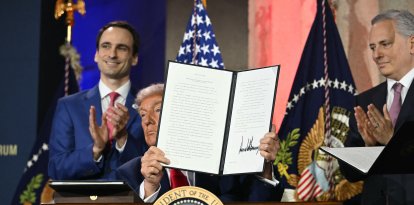
In May of this year, Trump signed an executive order directing the Corporation for Public Broadcasting to cease all funding to NPR and PBS, which he considered radical left-wing monsters. Although the order is in effect, it is being challenged and Maher remains in charge of the medium.
"Many will say that shutting down public media is attacking press freedom, but, on the contrary, it is defending it."
The lie of "impartiality"
The defenders of the public media always put forward the same arguments: the extension of the state media networks reaches everywhere and only they can guarantee impartiality in the face of the commercial interests of the private media. Two colossal lies.
There is no such thing as news impartiality, news is covered, editorialized and selected by subjects and is tied to their ideas and ways of seeing the world. But there is honesty, which implies not lying about facts and data, admitting and exposing one's biases and offering multiple perspectives to provide transparency. The media often fail at that, and people are free to reward or punish the media according to whether or not they provide them with quality news.
But public media have other incentives: to please the governments that pay them. They are not journalists, they are state employees and that is why they systematically fail in their work as correspondents of reality.
A private media depends on its audience, a state media depends on politicians who appoint their directors according to their convenience. They do not serve the public, they serve the ideology of power. That's why NPR downplayed the Hunter Biden scandal before the 2020 election. That's why the BBC released a doctored documentary on Trump just before the 2024 election. That's why the American, Argentine, British, Spanish, French, Italian, or any other country's public media are mere tools of political propaganda.
Outdated and in decline
Many public media were founded at the beginning of the last century, when the novelty and boom of radio gave the indication that it was a powerful tool. Governments saw that their message was spreading fast, with an unprecedented reach that also managed to connect remote areas with announcements of valuable services, such as weather or health news. The BBC was founded in 1922, for example.
Moreover, creating a media chain required large sunk investments, advertising had not developed its great potential in these media and funds could only come from the State. But a few decades later this was reversed and the mass media, news and entertainment, became a millionaire and diverse industry. State support was no longer necessary.
Today, anyone can create content that reaches millions of people. All points of view, all ideologies, all voices have this possibility and that is why there are thousands of independent media, podcasts, YouTube channels, newsletters. The market offers everything, at a very low cost, just with an internet connection. No subsidies are needed.
In this context, forcing citizens to finance state media is absurd and blatant. But the state media do not serve the people, they only seek to influence them. They are tools of power and politicians never give them up.

The argument for freedom
Why can politicians fund their ideological propaganda with taxpayer money, even when that ideology is contrary to their values? Isn't this a fiscal assault? Doesn't this imbalance that gives the state control of the narrative undermine freedom of speech?
Recent scandals...and old ones, leave no doubt about the bias and lack of transparency of public media. The key is that, no matter how much they get it wrong, it is always paid for by ordinary citizens. The managers stay as long as they can in office, in fact those of the BBC resigned not when the Trump video was shamefully edited, nor when the evidentiary documentary came to light, nor when the Prescott report was presented, but only when a private media went viral. If Trump wins the lawsuit, it will not be the executives who pay the million-dollar figure but the taxpayers. The public employee does not pay for their errors. The debate is whether society wants to continue paying for these obsolete, murky structures full of activists.
In the midst of the digital era, where the television and radio model of the last century is a museum piece, where the population consumes less and less traditional media and those under 30 do not even know how to use it, keeping publicly funded media alive is an obscene incoherence and a scam. I hope the fall from grace of its most iconic example, the BBC, is the beginning of the end of an unsustainable model. Because the fact that a state-owned media was caught manipulating information and that its top managers resigned, was not for the collapse of a clique of woke managers, but to dismantle the very justification for its existence.
The end of ideological hijacking
Many will say that ending public media is attacking press freedom, but, on the contrary, it is defending it. In a world of thousands of channels, podcasts and newspapers, forcing citizens to finance state media is not service, it is servitude. Information should flow in a free market where those who lie, lose their audience, and those who tell the truth, prosper. And all at one's own risk, without the credentials of being the Government's mouthpiece.
If NPR or the BBC are so valuable, let them survive like the rest, in the jungle of independent media. If their content is so indispensable, citizens will reward it with voluntary contributions. And if they don't, it will be because they never wanted to pay for their propaganda. The BBC scandal should reopen this debate. Not to offer reforms but to end them once and for all and acknowledge that the State is not the guardian of the truth. Indeed, as seen this week, it is their greatest threat.
LATEST