Analysis
Weak and inadequate: Europe’s response to the Iran war
The significance of the ballistic threat is exacerbated by the capability gaps within Europe’s missile defense architecture.
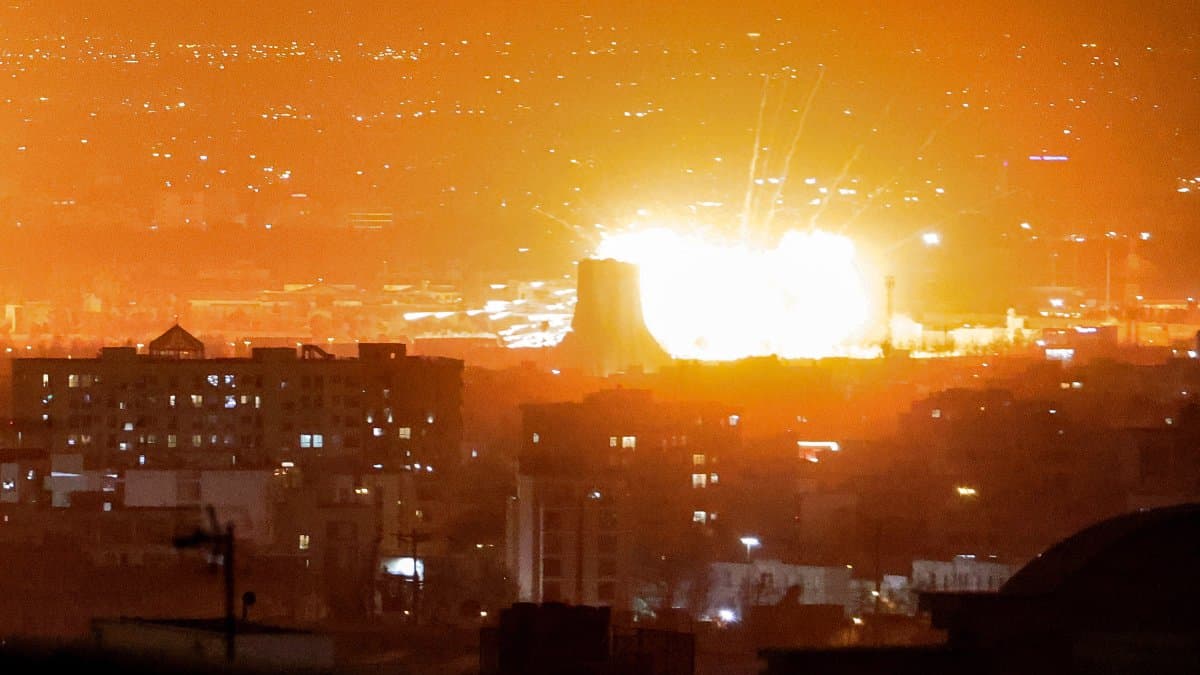

( Apr. 1, 2026 / JNS ) One of the principal surprises of the Iran war has been Iran’s willingness to target bystander nations in the Gulf to exert pressure on U.S. and Israeli military policy.
On March 20, this strategy of nation-scale hostage-taking was expanded to the European continent. The launch of two ballistic missiles targeting the joint United States-United Kingdom naval support facility on Diego Garcia, a remote atoll situated in the Chagos Archipelago, served as a clear demonstration of the range of Iran’s military ambitions.
While the outcome of the strike yielded no infrastructural damage to the base, the reach of the launch has far-reaching consequences. The projectiles traversed an estimated 4,000 kilometers (2,500 miles), dismantling Tehran’s long-standing claim of a self-imposed 2,000-km limit on its ballistic-missile range.
By targeting Diego Garcia, Iran signaled its capacity and willingness to target strategic rear bases. However, the most profound implication of the March 20 strike is strictly geographic. The raw mathematics of a 4,000-kilometer range dictates that if an isolated atoll in the central Indian Ocean is within the reach of Iranian rocket forces, the entire European continent is exposed to the same threat.
The missile threat to Europe
The flight data from Diego Garcia vindicates years of explicit warnings from Israeli and U.S. officials. As early as 2007, U.S. President George W. Bush warned that the U.S. “intelligence community assesses that, with continued foreign assistance, Iran could develop an intercontinental ballistic missile capable of reaching the United States and all of Europe.”
Dr. Raz Zimmt, director of the Iran and the Shi’ite Axis research program at the Institute for National Security Studies (INSS), told JNS that “even before the war, Prime Minister Netanyahu and President Trump warned that Iranian capabilities could threaten Europe,” adding that “this was the long-term intelligence assessment, and the Diego Garcia attack was a clear confirmation.”
Beni Sabti, an Iran expert at INSS, a think tank affiliated with Tel Aviv University, noted that “the fact that the Iranians can reach Europe has been known for many years. There have been countless articles and reports over the years clearly showing that Europe is under threat, but so long as the threat was only on paper, it wasn’t taken very seriously.”
The expansion of the Iranian missile threat range places most high-value European military infrastructure at risk. Essential installations that serve as vital hubs for NATO logistics, troop transit and command and control, such as Ramstein Air Base in Germany, Camp Bondsteel in Kosovo and Mihail Kogalniceanu Air Base in Romania, now fall within the verified strike radius of Iranian missiles. Furthermore, almost every major European city is within a 4,000-km radius of Iran.
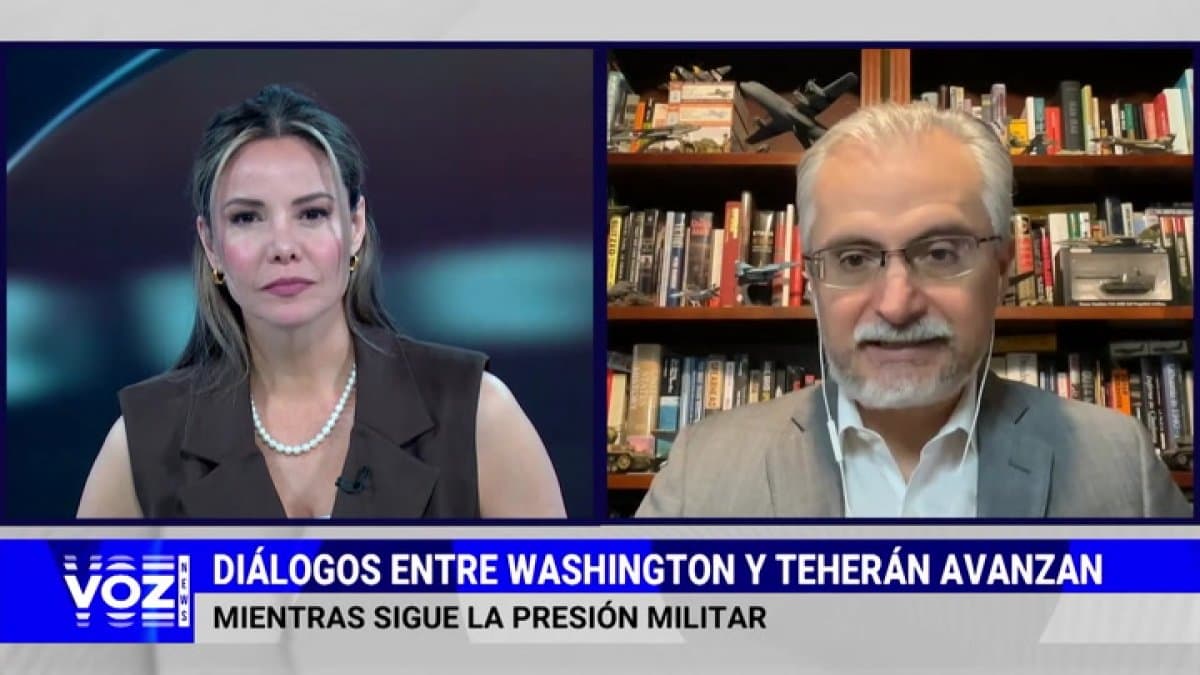
Israel Defense Forces Chief of Staff Lt. Gen. Eyal Zamir explained the direct nature of this threat, noting that “these missiles are not intended to strike Israel. Their range reaches the capitals of Europe: Berlin, Paris and Rome are all within direct threat range.”
Sabti explained that a scenario in which the Iranian regime chooses to act on its threats is a realistic possibility. “The attack on Diego Garcia was a clear message by the Iranians that they can and will harm Europe if they choose to,” he told JNS. “The Iranian regime is dominated by messianic, fanatical ideology, and there is definitely a possibility that as the war continues and possibly escalates, we might see Iranian ballistic missiles flying over European capitals. This is not an uncrossable line for Iran.”
The significance of the ballistic threat is exacerbated by the capability gaps within Europe’s air and missile defense architecture. Current indigenous European systems, such as the French-Italian SAMP/T, the Norwegian NASAMS and the German IRIS-T SLM, are exclusively designed for countering intra-atmospheric threats like cruise missiles. They wholly lack the specific exo-atmospheric intercept capabilities required to neutralize intermediate-range ballistic missiles of the type used to target Diego Garcia.
Consequently, the defense of the European continent relies heavily on U.S.-managed missile defense systems, as well as the newly deployed Israeli-designed Arrow-3 systems in Germany. The current European missile shield is far from hermetic and doesn’t cover vast swaths of the continent, including large population centers.
Even the fundamental capability of launch detection remains completely reliant on the U.S. space-based systems, highlighting Europe’s lack of sovereign early-warning networks.
“Europe isn’t ready. Serious missile defense at this point is impossible because it will take too much time and cost too much money,” Maj. (res.) Alexander Grinberg, an expert on Iran at the Jerusalem Institute for Strategy and Security, told JNS.
Attacks against Europe
Beyond the threat of long-range missiles reaching European capitals, Iran is inflicting immediate damage on European interests through a combination of direct military engagements, terror plots, and economic sabotage.
The conflict has already crossed into European Union territory. On the night of March 1, an Iranian “Shahed-type” drone struck the main gate and a runway at RAF Akrotiri, a British military base in Cyprus, an E.U. member state.
While the U.K. Ministry of Defense reported only limited material damage to the facility, the attack triggered sirens, forced a partial evacuation of the military base and led residents of the nearby civilian village to flee to local army barracks. The following day, allied air defenses were forced to intercept multiple incoming drone waves heading toward the base.
Beyond the strikes on Cyprus, a wave of Iranian drone and missile attacks has systematically targeted multinational bases hosting European forces across the broader Middle East. On March 1, Iranian drones struck the French-administered Al Salam Naval Base in Abu Dhabi, igniting a fire in material storage facilities and prompting the mobilization of French fighter jets to secure the airspace.
On March 12, a drone strike on a military facility in Mala Qara, Iraq, killed a French soldier and wounded six others. This fatal incident followed an earlier attack on an Italian military base in Erbil that caused material damage and forced a temporary withdrawal of Italian personnel.
The conflict has also spilled into NATO territory, with Iranian ballistic missiles breaching Turkish airspace on March 4, 9 and 13, necessitating interceptions by American and Spanish air defense systems.
Beyond conventional military threats, Europe is facing a coordinated campaign of state-sponsored terror and espionage within its own borders. Iranian intelligence services have activated criminal proxy networks across the continent, yielding a string of recent violent plots.
On March 28, French police thwarted an attempted bombing outside a Bank of America building in Paris. Officers arrested a suspect attempting to ignite a homemade explosive device. French Interior Minister Laurent Nunez directly linked the thwarted attack to the ongoing war. Days earlier, on March 23, an Iran-aligned group, Harakat Ashab al-Yamin al-Islamia, claimed responsibility for torching four ambulances belonging to a Jewish volunteer group outside a London synagogue.
These highly visible incidents follow the March 19 arrest of two Iranian nationals trying to enter a sensitive U.K. naval facility; the March 9 bombing of a synagogue in Liege, Belgium; an explosion outside the U.S. Embassy in Oslo on March 8; and the March 6 arrest of four men by British counter-terrorism police for conducting reconnaissance on London’s Jewish community.
Supplementing the physical threats, Iran has also targeted Europe by weaponizing the global energy market. By effectively halting commercial shipping through the Strait of Hormuz, Tehran has choked off approximately 20% of the world’s seaborne crude oil and liquefied natural gas (LNG). The International Energy Agency characterized the closure as the largest supply disruption in the history of the global oil market.
The economic fallout has been severe, with Brent crude prices surging to a peak of $126 per barrel. Compounding the crisis, an Iranian precision strike on Qatar’s Ras Laffan Industrial City knocked out 17% of the facility’s LNG production capacity, causing European LNG futures to jump by 77%. European natural gas prices surged nearly 100% within the first month of the war, threatening energy-intensive industries and reigniting fierce inflationary pressures.
Consequently, the Organization for Economic Co-operation and Development (OECD) heavily downgraded its 2026 growth forecasts for the region, warning of impending stagflation. The crisis has also forced the European Central Bank to reconsider its planned interest-rate reductions to combat inflation, bracing the continent for a prolonged period of economic instability.
“I can’t rule out the possibility that at some point Iranians might choose to directly shoot missiles at Europe as well, but right now the main leverage being used by the Iranians is economic pressure that they can generate through cutting off energy supply,” Zimmt noted.
More insidiously, this economic attrition directly bolsters Russia’s strategic position. Global oil and gas prices have skyrocketed due to the Iran war, resulting in billions of unexpected energy revenue to Moscow.
Russia’s total monthly oil and gas revenues are expected to nearly double this month, jumping from around $12 billion to almost $24 billion. Even if the current conflict ends in the coming weeks, projections suggest Russia is on track to pull in an additional $84 billion in windfall revenue this year alone.
Therefore, Iran is increasing military and economic pressure on Europe from two fronts at once.
Europe’s weak response
Faced with the verified expansion of the Iranian ballistic threat, alongside a multifaceted campaign of asymmetric terror, the logical expectation would be rapid, unified military mobilization.
Instead, the political reaction across the continent has been overwhelmingly defined by rhetorical deflection and institutional paralysis. Certain European leaders have seemingly decided on a policy of willful blindness when faced with the facts of the Diego Garcia attack.
In a recent interview, U.K. Housing Secretary Steve Reed blatantly denied that there is evidence that Iran is capable of hitting the U.K. “There is no specific assessment that the Iranians are targeting the U.K. or even could, if they wanted to,” he explained.
Reed said the fact that one of the missiles fired at Diego Garcia was intercepted, and the other failed, shows “that our defensive capabilities are correct.”
Grinburg explained that European leaders have an interest in concealing or ignoring the threat because they’re afraid that they will be questioned on the fact that they have done nothing to address this problem despite the multiple warnings that they got.”
Grinburg further observed that the European media has also neglected to press European leaders on the significance of the Iranian threat. “The attack [on Diego Garcia] went intentionally unnoticed by European legacy media. They didn’t want to put it in the headlines because it would corroborate Israeli warnings,” he said.
European capitals have made a concerted effort to distance themselves from the U.S.-led military campaign. When U.S. President Donald Trump explicitly asked European allies to deploy ships to reopen the Strait of Hormuz, he was widely rebuffed. Addressing German lawmakers on March 18, Chancellor Friedrich Merz declared that Germany would “not participate in ensuring freedom of navigation in the Strait of Hormuz ... by military means.”
This distancing was echoed by French President Emmanuel Macron, who stated, “France didn’t choose this war. We’re not taking part.”
The European refusal to assist in the Middle East sparked a bitter transatlantic dispute, with Trump publicly attacking Merz’s stance, countering, “Well, Ukraine’s not our war. We helped, but Ukraine’s not our war.”
Spanish Prime Minister Pedro Sánchez went even further, refusing to allow U.S. access to its jointly-operated facilities, specifically Naval Base Rota and Morón Air Base in southern Spain, for any operations related to the Iran conflict. In a homage to Sanchez’s active opposition to the war, the Iranian Revolutionary Guards attached stickers with his image and quotes to ballistic missiles before they were fired at Israel.
🛠 Do you think there is an error in this article?
Recommendations


LATEST