UN uses ‘every excuse in the book’ to obstruct probes, inspector general overseeing foreign assistance says
“Why are we to trust the U.N.’s own vetting procedures?” Adam Kaplan, of USAID, asked a congressional committee.

United Nations General Assembly

An inspector general for the U.S. Agency for International Development said at a congressional hearing that his office “encounters non-stop obstruction” by the United Nations “to share information about potential misuse of U.S. funds.”
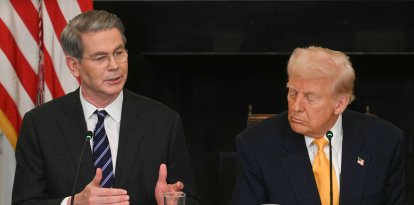
Adam Kaplan, deputy inspector general of USAID, testified on Tuesday in front of the House Foreign Affairs Committee on “waste, fraud and abuse in foreign assistance.”
USAID is the primary U.S. government agency for international development and humanitarian assistance.
Kaplan told the committee that of all USAID award and grant recipients, “the least transparent is the United Nations.”
He said that his office “sought information from five different U.N. agencies on 10 investigations.”
“The response times ranged from six months to two years. This is unacceptable,” he said. “The United Nations puts up every excuse in the book as to why they cannot comply with our information requests.”
Kaplan said he is urging the U.S. State Department, which absorbed USAID last year, to implement a clause stating that awards to the United Nations include a requirement to provide his office with access to information, closing an accountability gap that doesn’t exist with other non-governmental contractors.
He also pointed out to the committee a flaw in USAID regulations, including a lack of a forum-selection clause in agreements with foreign-based NGOs.
That means, in practice, that a U.S.-based organization receiving USAID funding can be sued for fraud in a U.S. court, while a non-governmental body overseas cannot.
“Cases have been dismissed because USAID omitted this clause,” Kaplan said.
He cited a case in the U.S. District Court for the Southern District of New York involving a British non-governmental group accused of falsifying its past support to Hezbollah and Iranian affiliates.
“They had to declare it under certification,” Kaplan said. “They made a false representation. We had them dead to rights.”
The judge determined that there were no ties between the group and the United States beyond the grant and that his court had no jurisdiction over the matter. He dismissed it.
The judge decided that had USAID included a forum-selection clause, it would have been a different story, Kaplan said.
“You have no idea how much that frustrated us, because it was a great case, and this contractor lied about his past representation with affiliation with terrorist actors,” he told the committee.
USAID anti-terrorism certifications apply only to grants and not to contracts. The certification has allowed the U.S. Department of Justice and the Office of the Inspector General to bring cases against grantees for concealing past support to Iran and Hezbollah.
“Inexplicably, however, contractors were not required to make the same representation,” Kaplan said.
Another key loophole, which Kaplan said must be closed, exempts U.N. staff from the vetting that USAID must do of staff at aid groups that it funds.
“There’s no reason why NGO staff and contractor staff operating in high-risk environments controlled by terrorist actors had to put their folks through U.S. government vetting systems while the U.N. was exempt,” Kaplan said.
“Why are we to trust the U.N.’s own vetting procedures, given what happened with UNRWA and the mass infiltration of U.N. staff that also were Hamas affiliates or participated in the Oct 7. terrorist attacks?” he said.
The USAID Inspector General’s Office, a statutorily independent law enforcement agency, is probing U.N. staff for ties to Hamas “to ensure us taxpayers don’t pay their salaries,” Kaplan said.
The director of international affairs and trade at the Government Accountability Office also testified on Tuesday, but the State Department inspector general was notably absent.
The State Department Inspector General’s congressional and public affairs office told JNS that it is in regular contact with the House Foreign Affairs Committee and is “focused on providing robust oversight of the foreign assistance programs and activities at the Department of State, including programs realigned from USAID.”
The office added that its focus includes Israel and it is “currently conducting an audit examining the effectiveness of the department’s efforts to mitigate risks that funds provided to public international organizations benefit terrorist groups, their members or supporters in the Near East following the Oct. 7, 2023, Hamas attack on Israel.”
The State Department funded UNRWA, which has been accused of having staffers with direct ties to Gazan terror groups, before the Biden administration, and subsequently Congress, suspended U.S. aid to the agency.
© JNS.
LATEST