ANALYSIS
Pahlavi’s vision for ‘free Iran’: Israel recognition, no nukes
The exiled crown prince outlined a post-Islamist, pro-Western future for the country.
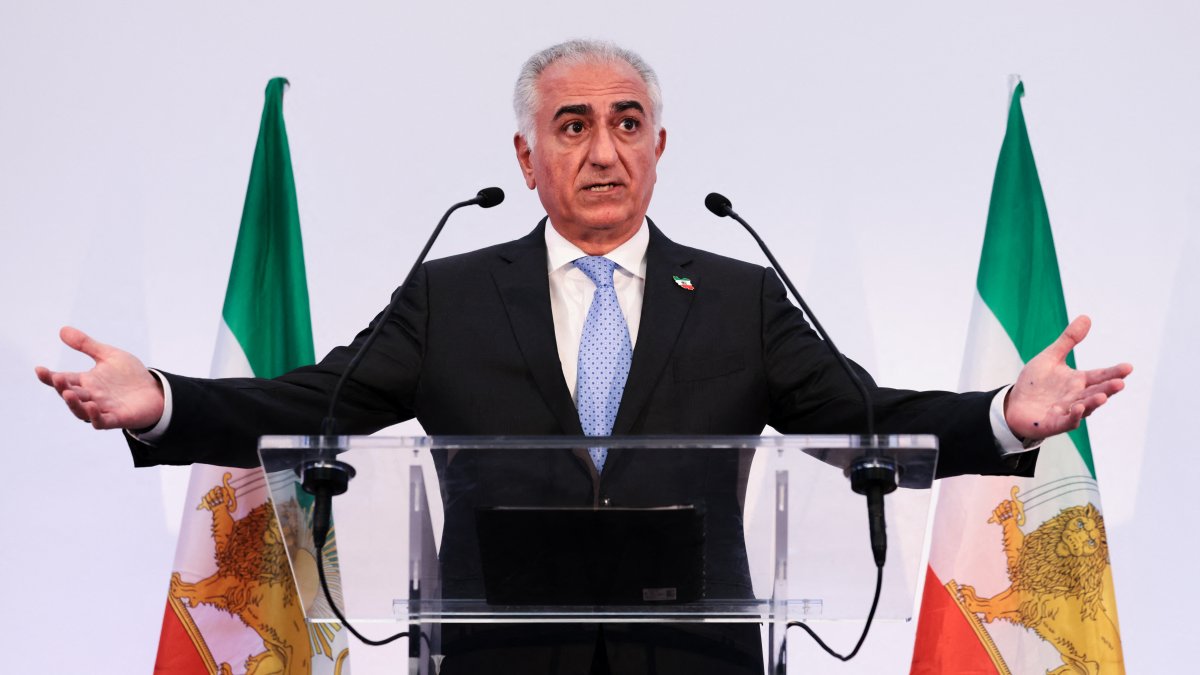
Mohammad Reza Pahlavi, hijo del último sha de Irán

Exiled crown prince and prominent opposition leader Reza Pahlavi has outlined his vision for a post-Islamist Iran, as nationwide anti-government protests stretch into their third week.
Speaking in English with Farsi subtitles in a four-minute video message published to social media early Thursday Tehran time, the eldest son of the last shah, Mohammad Reza Pahlavi, who advocates a secular, democratic post-Islamic Republic system, said that a “free Iran” will abandon its nuclear program and support for terrorism, while normalizing relations with the United States and “immediately” recognizing Israel.
“To all of our friends around the world,” the 65-year-old dissident, who lives in Virginia, began, describing the Islamic Republic as an oppressive regime that has turned Iran into a global symbol of terrorism, extremism and poverty. He contrasted it with what he called the country’s “real” identity as the beautiful, peace-loving and prosperous nation that existed before the 1979 Islamic Revolution, one that will rise again once the clerical regime falls.
Pahlavi then pivoted to outline how a “free Iran” would engage with the world, saying that after the fall of the mullahs, “Iran’s nuclear military program will end” and “support for terrorist groups will cease immediately,” and the country would “work with regional and global partners to confront terrorism, organized crime, drug trafficking and extremist Islamism.”
He said a democratic Iran would “act as a friend and a stabilizing force in the region” and “a responsible partner in global security,” with normalized relations with the United States and immediate recognition of Israel. Tehran would seek to broaden the Abraham Accords into “the ‘Cyrus Accords,’ bringing together a free Iran, Israel and the Arab world,” he added.
Cyrus the Great was the 6th-century EBC founder of the Achaemenid Empire, renowned for his vast conquests, relatively tolerant rule and role in allowing exiled Jews to return to Jerusalem.
Pahlavi also pledged that a post-regime Iran, endowed with major oil and gas reserves, would be “a reliable energy supplier to the free world” with transparent policymaking and predictable prices. It would adopt international standards to combat money laundering and corruption, and would open one of “the world’s last great untapped markets” to trade, investment and innovation so that “opportunity will replace isolation,” he added. Such changes would “benefit the region and the world” and make a free Iran “a force for peace. For prosperity. And for partnership,” the prince said.
Trump casts doubt on Pahlavi’s prospects
President Donald Trump has expressed reservations about whether Iran’s population of over 90 million will embrace Pahlavi as their leader, while saying there is a chance that the ayatollah regime could collapse.
“He seems very nice, but I don’t know how he’d play within his own country,” the U.S. leader told Reuters on Wednesday. “And we really aren’t up to that point yet.”
The president added that “I don’t know whether or not his country would accept his leadership, and certainly if they would, that would be fine with me.”
Independent surveys suggest that support for restoring the monarchy in Iran is significant but still a minority preference, with around 19%–21% backing some form of monarchy, while larger shares favor a secular republic or are undecided.
The royalist slogan “Javid Shah” (“Long live the Shah”) has been widely heard during the current wave of protests, chanted in cities including Tehran, Kermanshah and Bandar Abbas, and amplified in numerous videos shared from Iran and by diaspora activists.
Trump said it is possible the government in Tehran could fall amid the protests but added that “any regime can fail,” calling the coming stretch “an interesting period of time” regardless of the outcome.
The president has told advisers he wants any U.S. military strike in Iran to deliver a swift and decisive blow to the regime rather than trigger a prolonged conflict, NBC News reported on Thursday.
Citing a U.S. official and people familiar with internal discussions, NBC said Trump’s national security team has not assured him that Tehran’s government would quickly collapse following an American strike, raising concerns about Iranian retaliation and limited U.S. assets in the region.
“If he does something, he wants it to be definitive,” one of the sources said.
The largest protests since 2009 have spread across Iran, with demonstrators filling the streets of Tehran, Mashhad and other cities. The nationwide unrest was triggered by soaring inflation and the collapse of the rial, which has plunged to about 1.46 million to the dollar. What began as anger over prices and a sinking currency has widened into open calls to end clerical rule, with strikes shuttering markets and businesses in commercial hubs.
Thousands have been killed, injured and detained during the demonstrations, with figures of fatalities ranging from 2,000 to as high as 20,000.
The unrest comes as Iran’s leadership grapples with long-running U.S. sanctions and the U.N. “snapback” that restored nuclear-related measures, alongside mounting strains on the country’s water and energy systems. Israeli and U.S. strikes on Iranian nuclear and energy facilities in June 2025 caused significant damage and have further complicated Tehran’s already fragile energy landscape.
LATEST