US urges citizens to leave Iran amid escalating unrest
IDF says it is on high alert, prepared for surprise scenarios, but stresses Iran’s protests are an internal matter and urges the public not to spread rumors.
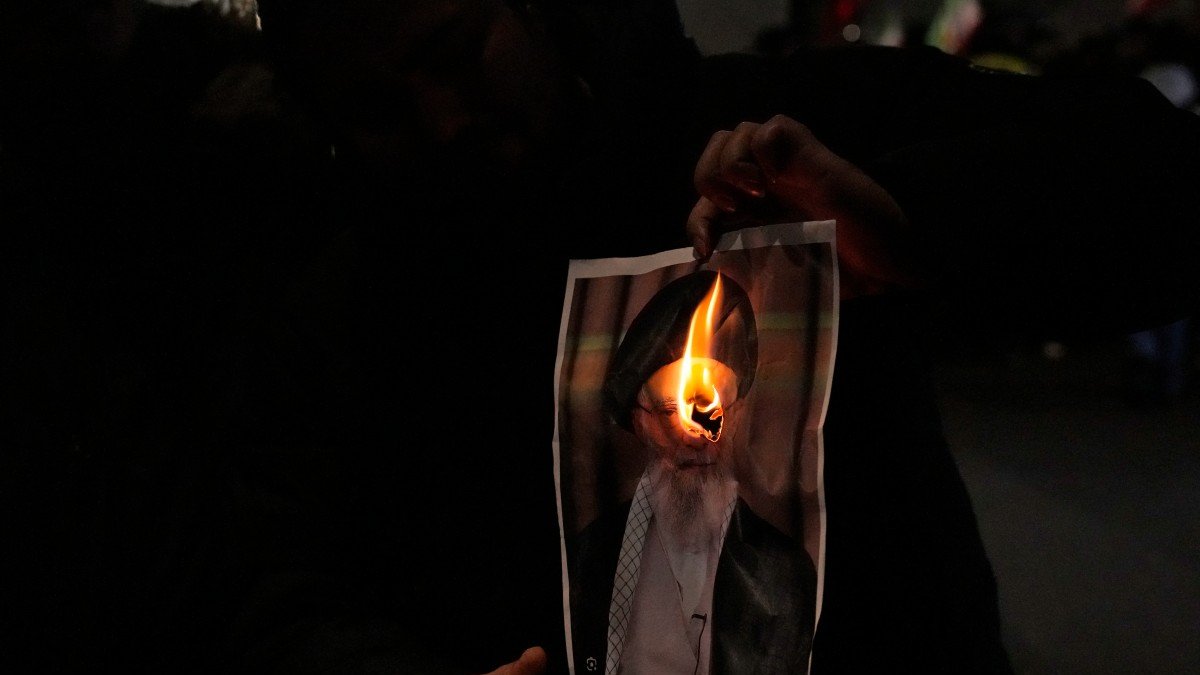
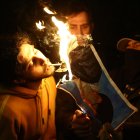
A protester burns an image of Ayatollah Ali Khamenei.

The Trump administration on Monday issued an urgent warning for US citizens to leave Iran immediately, as protests in the country continue to intensify.
The virtual U.S. Embassy for Iran instructed Americans to "leave Iran now" and develop exit plans that do not depend on government assistance.
Officials warned demonstrations are escalating and could turn violent, leading to arrests and injuries, and said that “U.S. nationals are at significant risk of questioning, arrest and detention.”
“Increased security measures, road closures, public transportation disruptions and internet blockages are ongoing,” the security alert reads, adding that “the Government of Iran has restricted access to mobile, landline and national internet networks.”
According to the statement, “U.S. citizens should expect continued internet outages, plan alternative means of communication and, if safe to do so, consider departing Iran by land to Armenia or Türkiye.”
The United States maintains no diplomatic presence in Iran and cannot provide consular services there.
The U.S. State Department has classified the Islamic Republic of Iran as a Level 4 “Do Not Travel” destination, warning Americans of extreme risks including terrorism, unrest, kidnapping, arbitrary arrest and wrongful detention.
French media outlets reported on Monday that France has withdrawn nonessential diplomatic staff from its embassy in Tehran amid heightened regional tensions. Le Figaro and Libération cited informed sources confirming the move, which comes as Western governments reassess their presence in Iran following growing security concerns.
Trump imposes Iran tariffs
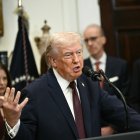
President Donald Trump said on Monday evening that, effective immediately, any country that does business with the Iranian regime will be subject to a 25% tariff “on any and all business being done with the United States of America.”
“This order is final and conclusive,” said Trump.
The United States has also blocked access to the website of Tasnim News Agency, a media outlet affiliated with Iran’s Islamic Revolutionary Guard Corps, according to a report Monday by Fars News Agency, which is also linked to the IRGC.
The European Parliament has banned Iranian diplomats from entering its buildings in response to Tehran’s violent crackdown on protesters, Parliament President Roberta Metsola said on Monday. The restriction applies to Parliament facilities in Brussels, Strasbourg, Luxembourg and all liaison offices across European cities, an official told Euractiv, a European news website focused on E.U. policies.
Trump briefed on Iran options
The president has been briefed on a range of military and covert options for possible use against Iran that extend beyond standard airstrikes, two Defense Department officials told CBS News, speaking on condition of anonymity to discuss sensitive national security matters.
The president's national security team is set to meet at the White House on Tuesday to review updated options on Iran, several sources familiar with the discussions told the outlet. It was not immediately clear whether the president plans to attend.
Trump has in recent days warned of consequences if the regime’s forces harm protesters, while keeping the door open to negotiations.
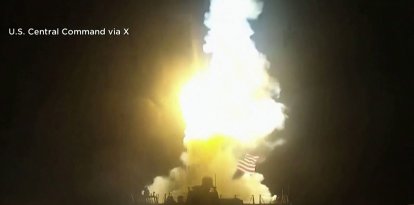
White House press secretary Karoline Leavittsaid on Monday that Trump is “keeping all his options on the table,” including airstrikes, while emphasizing that “diplomacy is always the first option” for the commander in chief. Public statements from the Iranian regime are different from the messages the administration is receiving privately, according to Leavitt.
“I think the president has an interest in exploring those messages,” Leavitt told reporters. “However, with that said, the president has shown he is unafraid to use military options if and when he deems necessary, and nobody knows that better than Iran.”
Iranian regime reactions
Iran’s foreign minister said on Monday his government is reviewing U.S. proposals despite ongoing tensions between the nations.
“Communications between [U.S. special envoy Steve] Witkoff and me continued before and after the protests and are still ongoing,” Foreign Minister Abbas Araghchi told Al Jazeera. He described Washington’s ideas as “incompatible” with U.S. threats against Tehran.
Iranian Supreme Leader Ayatollah Ali Khamenei accused Trump of “arrogantly” judging the world in a series of social media posts on Jan. 9, saying that the American president “too will fall.”
“The rioters have put their hopes in him,” Khamenei stated. “If he’s so capable, he should manage his own country.”
Israel on high alert
Jerusalem assesses that Trump will follow through on his threat to intervene against the Iranian regime if Iranian authorities use lethal force against demonstrators, which could involve potential military action “and that this could lead to an exchange of blows with Tehran,” Israel’s Kan News reported on Monday.
Meanwhile, Israel Defense Forces spokesperson Effie Defrin on Monday reiterated the military’s stance, which he said was issued against the backdrop of “many rumors” being spread, that “the IDF is prepared for defense and on alert for surprise scenarios if required” and that “the protests in Iran are an internal matter.”
“We continue to conduct ongoing situation assessments and will update on any changes if and when they occur. I emphasize: Do not lend a hand to rumors,” Defrin’s statement concluded.
Death toll continues to rise
About 2,000 people were killed during protests in Iran, an Iranian official told Reuters on Tuesday, blaming “terrorists” for the deaths of both demonstrators and security forces.
Opposition-linked outlet Iran International reported Tuesday that the death toll was far higher, saying that in the largest mass killing in Iran’s modern history—carried out largely over two consecutive nights, Thursday and Friday, Jan. 8 and 9—at least 12,000 people were killed.
By contrast, the death toll in the more than two-week-long nationwide protests that started on Dec. 28 has climbed to 646 people, the U.S.-based Human Rights Activists News Agency (HRANA) reported on Monday, including 505 protesters, 113 military and security personnel, and seven bystanders. HRANA said it was investigating 579 more reported deaths.
In addition, according to the rights group, 10,721 people have been arrested since the demonstrations began.
Protests have erupted in 585 locations nationwide, including 186 cities in all 31 provinces, according to HRANA, as Islamic Republic authorities continued to crack down harshly on the demonstrations, including an internet shutdown.
Demonstrators have filled the streets of Tehran, Mashhad and other cities as nationwide protests continue over soaring inflation and the collapse of the rial—which has plunged to about 1.46 million to the dollar.
What began as anger over prices and a sinking currency has widened into open calls to end clerical rule, with strikes shuttering markets and businesses in several commercial hubs.
The unrest comes as the Iranian regime grapples with long‑running U.S. sanctions and the recent U.N. snapback that restored nuclear‑related sanctions, alongside mounting strains on its water and energy systems. Israeli and U.S. strikes on Iranian nuclear and energy facilities last June inflicted significant damage and aggravated the country’s existing energy woes.
LATEST