Spies Gone Wild: Intel agencies often slow to punish misconduct from guns to grift, watchdog warns
The Intelligence Community Inspector General told Congress that agencies fail to act on alleged wrongdoing because of “tribalism” and because his office has no authority to investigate claims directly.
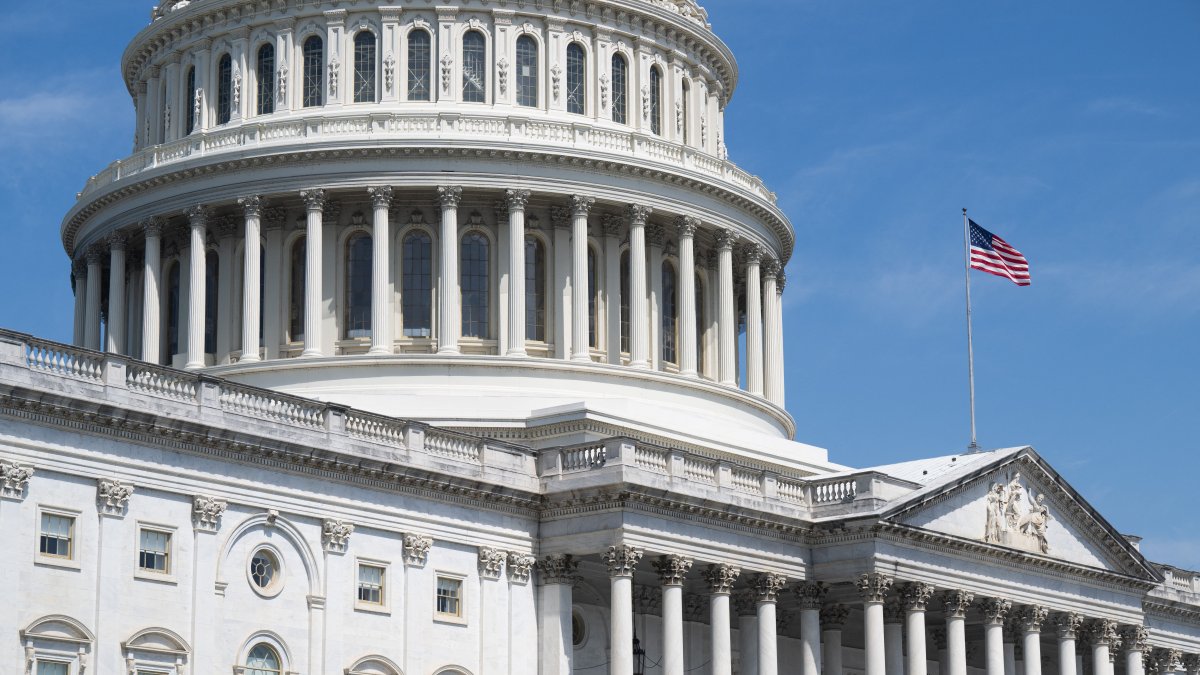
A view of the US Capitol in Washington, DC, on June 25, 2026

When an intelligence agent purchased illegal firearm components from China, an Intelligence Community contractor searched through employee security files and another such contractor profited off of government service, the IC watchdog raised the alarm. But federal agencies within the community failed to act for months, according to bombshell testimony delivered to Congress this week.
The Intelligence Community Inspector General Christopher Fox testified that his watchdog office lacks the proper authority to carry out investigations into alleged wrongdoing inside the Intelligence Community and instead is often hampered by “tribalism” among the agencies.
The shortcomings pose nothing less than “one of the most significant national security risks facing the United States,” Fox told the House Permanent Select Committee on Intelligence on Wednesday in a closed-door hearing, according to a written statement.
You can read Fox’s testimony below: HHRG-119-IG00-20260624-SD001.pdf
Fox testified that the watchdog’s lack of law enforcement authority prevents the office from sufficiently probing alleged misconduct or compelling agencies to turn over documents and testimony, which sometimes allows alleged misconduct to go unaddressed for months.
In one instance, in February 2023, an Intelligence Community employee purchased illegal firearm components from a Chinese company, raising red flags. But, “Without law enforcement authority, our investigators could not act directly,” Fox said.
“They waited 19 months for the Department of Justice to decline prosecution,” the inspector general testified. “During this time, the employee maintained their position and clearance. Coincidentally, the employee was detained by customs for suspicious activity on a trip to Israel, at which time the illegal items were discovered.”

In June 2021, an intelligence contractor searched the security profiles of more than 150 individuals without prior authorization. However, the Office of Inspector General had to wait more than a year for the FBI, among the 18 federal agencies in the IC, to conduct an additional interview and even longer for the contractor to be removed.
“Information included personal history, foreign national contacts, and other information of value to a foreign intelligence service for spotting and assessing potential recruitment targets,” Fox told the committee. “IC OIG was required to wait 16 months for coordination with the Federal Bureau of Investigation (FBI) before conducting the initial subject interview. It took another 15 months for the contractor’s removal from the IC.”
In March 2021, the IC OIG opened a probe into a former senior official for violating post-employment communication rules. The official, who had moved on to work for an Intelligence Community contractor, directly communicated with current intelligence employees to influence contracts worth millions.
“Unable to compel testimony, IC OIG investigators faced delays in coordinating with DOJ for an initial subject interview. The former official was interviewed for the first time in December 2024 – more than three years after the investigation was opened,” Fox said.
The watchdog chief also told lawmakers that the IC OIG often faces pushback or lack of cooperation from intelligence agencies over “tribalism.”
“The most pervasive problem we face in our oversight mission is agentic tribalism,” Fox testified.
“Many career intelligence officers confuse loyalty to mission with loyalty to faction. They treat oversight not as a legal obligation, but as an intrusion to be managed, slow-rolled, or out-maneuvered. Officers arrive at inter-agency meetings wearing metaphorical agency jerseys,” Fox explained. “Agencies cite their ‘equities’ or invoke lengthy processes when delay serves their purpose.”
Even though the watchdog’s founding statutes provide access to the intelligence information, personnel and facilities necessary to perform its work, the office does not have the authority to directly investigate the agencies or compel testimony or documentation.
The gap in the inspector general’s powers has prompted lawmakers to consider legislation to give the office new authority to conduct its own investigations with the same federal law enforcement powers enjoyed by other inspector general offices across the federal government.
That bill, which was introduced jointly by House Intelligence Committee Chairman Rep. Rick Crawford, R-Ark., and Sen. Chuck Grassley, R-Iowa, is the Intelligence Community Inspector General Parity Act of 2026.
Fox said that such legislation is important to strengthen the oversight capability of the ICIG, which has been hamstrung by agencies which engage in “delay, deter, deny” tactics to blunt his office’s oversight.
“Instead of relying on agencies to adhere to an oversight honor system, the IC IG Parity Act will deliver genuine accountability in the IC for the first time,” he said.
“The IC is too powerful to allow procedural friction and trust without verification. The IC IG must have explicit powers to inspect all systems without exceptions for novel technologies, classifications, compartments, political sensitivity, or any other excuse,” he added. “For decades, a passive culture among inspectors general has failed to fill critical oversight gaps with the necessary speed and teeth.”
LATEST