Eight Interesting Stories About the 4th of July: The Wrong Date, the Deleted Paragraph, the Borrowed Melody of the National Anthem, and More
From the signature that took a month to complete to the accidental origin of Uncle Sam: the lesser-known stories behind America’s most patriotic holiday.
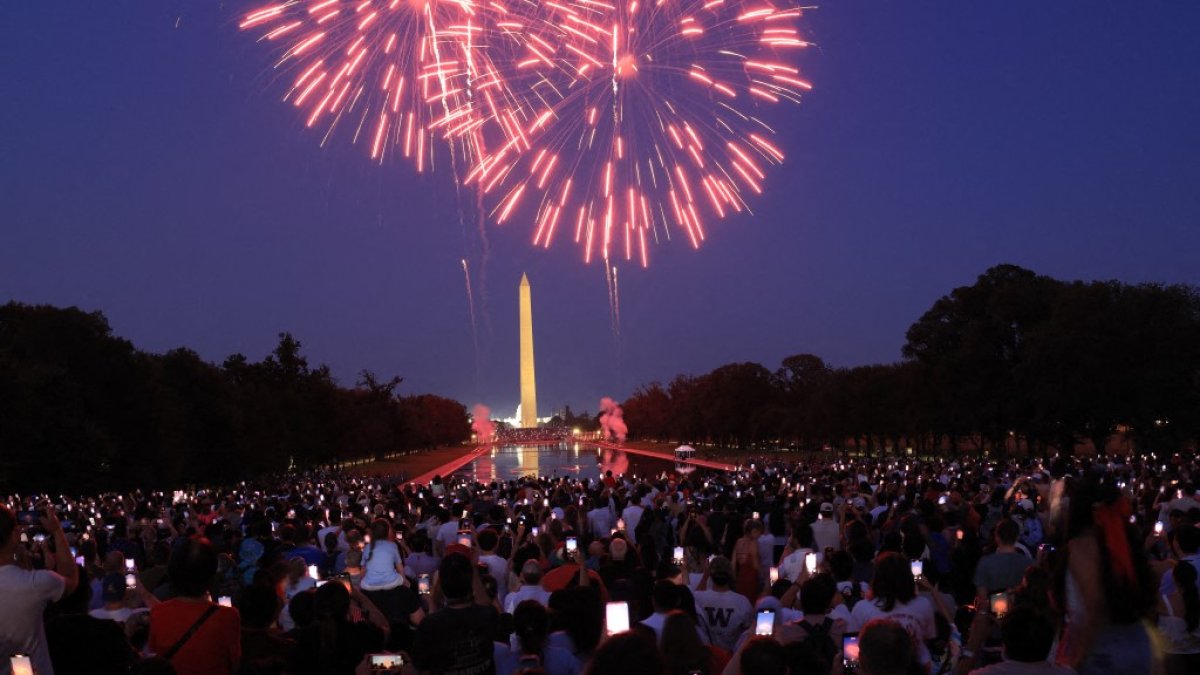
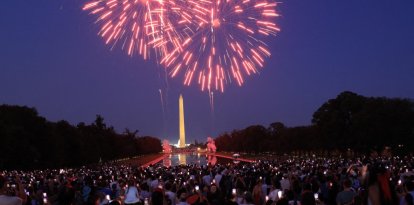
File photo of Independence Day celebrations along the National Mall

250 years later, America’s most patriotic holiday still holds stories that rarely appear in official speeches, classrooms across the country, or family conversations. From a deleted paragraph, to an anthem whose melody was borrowed, to a mistaken date, these are eight documented stories that add a touch of intrigue to Independence Day nationwide.
Why Not July 2?
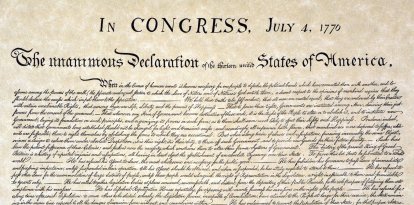
The Continental Congress voted to officially sever ties with Great Britain on July 2, 1776, not the 4th. The motion had been introduced weeks earlier by Virginia delegate Richard Henry Lee, and it was that vote—not the date celebrated today—that legally sealed the independence of the United States of America. On July 4, only the already drafted text of the Declaration was adopted—the document intended to announce to the world what had already been decided two days earlier. The date became fixed in the collective memory because it was the one printed in the document’s header; its printing was ordered that very night, and the first copies distributed throughout the colonies bore July 4 at the top, not July 2. The internal vote, however, left no document for people to read or celebrate, remaining merely a procedural step without much substance. President John Adams was so convinced that July 2 would go down in history that for years he refused to congratulate anyone on the wrong date.
A draft that addressed slavery
The original draft by Thomas Jefferson included a paragraph condemning slavery and directly accusing King George III of imposing it on the colonies—a claim that, at the time, was still controversial. Delegates from Georgia and South Carolina, whose economies depended on slave labor, demanded that the passage be removed before the text was put to a vote. Congress agreed, and the Declaration of Independence ultimately proclaimed that all men are created equal without mentioning the institution that contradicted that idea in half of the signatory colonies.
The mass signing came later
On July 4, 1776, there was no mass signing by the 56 delegates, as popular imagination suggests. On that day, only John Hancock, president of the Congress, signed the document—his enormous signature appears at the top of the page. The rest of the delegates signed in the following weeks, and the formal ceremony with most of the signatures did not take place until August 2, 1776—almost a month after the date that appears in textbooks today.
This is how one of the most iconic symbols of the U.S. was born
Uncle Sam, perhaps the symbol most closely associated with the United States around the world, was born out of a misunderstanding involving sacks of meat. Samuel Wilson, a packer from Troy, New York, was responsible for supplying the U.S. Army during the War of 1812 and marked the barrels with the initials “U.S.” Soldiers began joking that those initials stood for “Uncle Sam,” in reference to Wilson himself, and the joke eventually became the official personification of the country more than a century later.

The Mockery That Became Patriotic Pride
Yankee Doodle, the tune that is heard today at parades and patriotic events, began as a British mockery of Americans. British officers sang it before the war to ridicule the colonial soldiers, whom they described as rustic, unkempt, and unsophisticated with the word doodly, at the time meant fool or simpleton. The Americans themselves adopted the tune during the War of Independence and turned it into a hymn of pride, reversing the original insult.
The Borrowed Melody
Nor is the music of The Star-Spangled Banner entirely American. The melody originally belonged to To Anacreon in Heaven, the song of a London gentlemen’s drinking club dedicated to the Greek poet Anacreon. Francis Scott Key wrote the lyrics in 1814 after witnessing the flag flying over Fort McHenry, but he set his poem to an English tune that had already been circulating for decades in taverns on both sides of the Atlantic.
The 4th of July is also celebrated in other parts of the world
Although the 4th of July is almost entirely associated with the U.S., in reality, the date does not belong exclusively to that country and, in fact, is celebrated in other parts of the world. The Philippines commemorates Republic Day on that day, in reference to Washington’s formal recognition of its independence in 1946, and Rwanda observes Liberation Day, which marks the end of the 1994 genocide. In other words, three countries and three completely different histories coexist on the same day of the calendar.
A Symbol of Freedom
The Liberty Bell, which is now on display in Philadelphia as one of the most recognizable symbols of American independence, does not ring on July 4, as is often portrayed in movies. The original bell hung for decades in the tower of Independence Hall, the building where the Declaration was debated and signed, and over time it became an emblem of the struggle for freedom, in part because of a biblical inscription cast into its rim proclaiming the liberation of all the inhabitants of the earth. But since 1846, it has been unable to function as a normal bell, as a crack that worsened over the years rendered it inoperable; today, it is preserved, cracked and silent, inside a glass pavilion, having become a museum piece rather than an instrument. Every July 4, instead of ringing it, a group of descendants of the Declaration’s signers gently strikes it thirteen times with a wooden mallet—once for each of the thirteen original colonies—in a gesture that is more symbolic than functional. Nor did the first public reading of the Declaration take place on the day it was adopted: it was on July 8, 1776—four days later—in the courtyard of that same building.
LATEST