The indelible Hispanic heritage in the US: Even cowboys and mustangs have Spanish origins
Did you know that the "ten-gallon hat" does not refer to a unit of measurement (10 gallons) but is a modified translation of a Spanish expression? This just one more example of the Hispanic influence in American culture.
The Spanish footprint in the United States

An imposing plain, a herd with hundreds of head of cattle, many acres to work... and a wide-brimmed hat. Few things in the United States of America are more iconic than the cowboys whose work helped lay the country's foundation and who continue today to work the land that feeds millions. Well, even this emblematic image has its origins in the Hispanic world; specifically in Spain, the true cradle of the Americas.
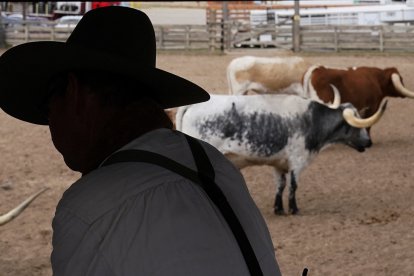
A cowboy commemorating the cattle trails in Texas.
North American cowboys are the natural extension after the discovery of the New World of the classic Spanish vaqueros who tended cattle on the vast plains of Extremadura or in the marshes of Andalusia, two of the regions that fostered the conquistadors. The colonization of America moved this icon to the prairies that span from Mexico to the American Southwest.
In fact, when we talk about the classic cowboy hat, this refers to the ten-gallon hat, whose name actually does not come from the unit of measurement, but rather from across the Atlantic.
There are two versions for the etymological origin of this term. Some historians point an alteration to the Spanish expression "tan galán" ("so handsome"), which praises the elegance the face beneath the hat ("You look tan galán with that hat!"). On the other hand, somewhat less poetic, some linguists point out that the term galón has another potential key meaning, from the Royal Spanish Academy dictionary: "Narrow ribbon of strong fabric that is used as an ornament on a garment." This could refer to the braids that sometimes adorned these hats. Be that as it may, it is evident that either meaning has the same origin: the Spanish language.
Hispanic culture: The heart and soul of the United States of America
Cowboys are but a small footprint within the very broad Spanish legacy in the United States since its origin and birth. In fact, beyond cowboys, the figure of the "gunslingers" that fought against the Native Americans in the Wild West is iconic. It is also Spanish. These fearless symbols have their origins in the Dragones de Cuera, elite soldiers who patrolled the borders of New Spain, "were military men who wore seven-layered vests to defend themselves from the arrows of, above all, Apaches and Comanches, since with the rest of the tribes, despite their pluses and minuses, the Spanish signed peace and trade agreements," explains Marcelino Lominchar, professor of history and author of the book "Historias de la Historia de España" ("Stories of the History of Spain").
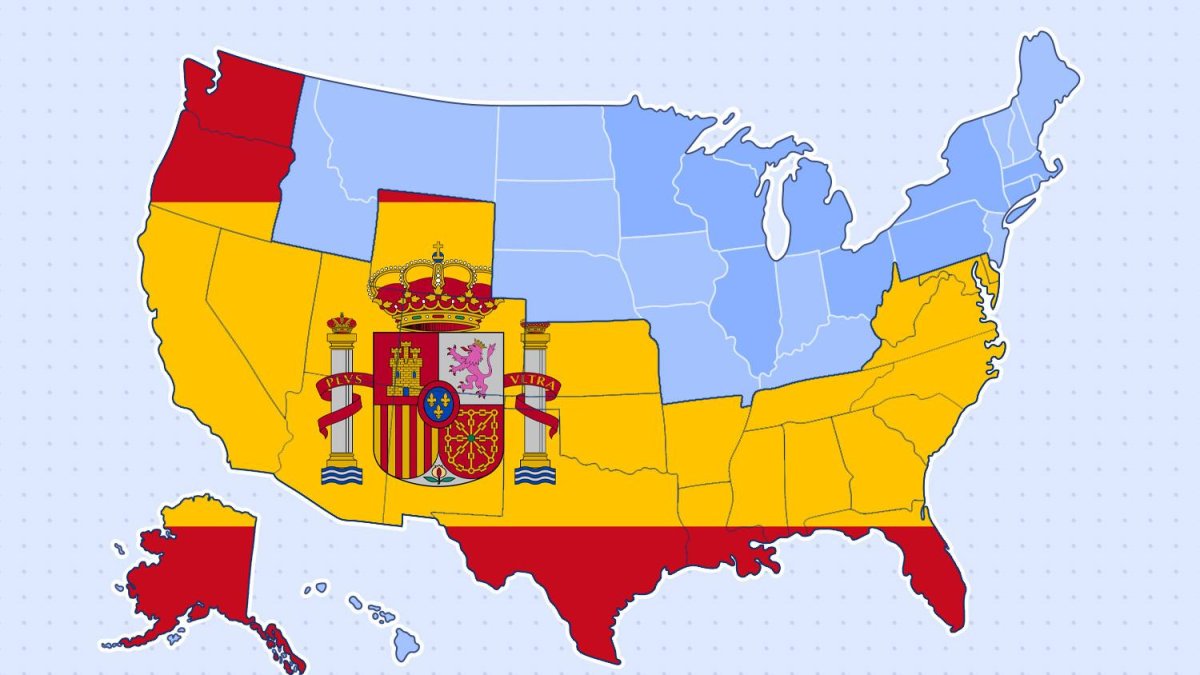
Lominchar recalls how five centuries ago, a large group of Spaniards crossed California, Florida, New Mexico, Alabama, Louisiana, Nebraska, Montana, Utah, Arkansas, Tennessee, Oklahoma, Missouri and even Alaska in a journey that left an indelible mark on the nation's history. From this journey came the names of Los Angeles, Santa Elena, San Diego, San Francisco, Santa Fe, Santa Monica and a long list of emblematic places founded by the Spanish empire.
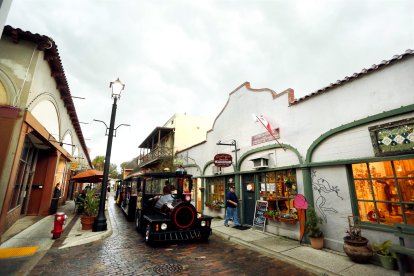
Avilés Street in St. Augustine, Fla., the first street in the United States.
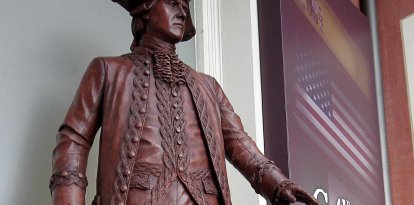
This image belongs to the first street in the United States of America. Avilés Street is located in St. Augustine, Fla. This is the oldest city in the country, founded by Pedro Menéndez de Avilés, a Spanish soldier and sailor who in 1565 conquered Florida and founded this emblematic city. Along with him, other iconic figures include Junípero Sierra, Juan Ortíz, Cabeza de Vaca and Bernardo de Gálvez, an American national hero for his help against the English whose portrait hangs today in the Capitol.
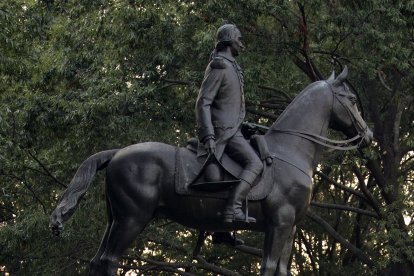
Ceremony honoring Bernardo de Gálvez in Washington.
To get an idea of the magnitude of nation's Spanish heritage, Professor Marcelino Lominchar recalls that "Florida was sold to the U.S. in 1820, so it still has a century and a half to go before it is under U.S. sovereignty as long as it was under Spanish rule."
"Of the nearly 4 million square miles in the U.S., roughly 400,000 were under British rule and over 2 million under Spain, the rest being unsettled land," Lominchar continues.
Florida was sold to the U.S. in 1820, so it still has a century and a half to go before it is under U.S. sovereignty as long as it was under Spanish rule. From the crossbreeding of Spanish horse breeds comes the word "mustang," referring to the wild horses that roamed the plains of North America and were later domesticated by the Sioux, Arapahoe and Cheyenne.
Similarly, the professor adds, "the Spaniards were the first to navigate the Mississippi, the first white people to see the Grand Canyon and Monument Valley and the first to cross the Rockies and the Mojave Desert. Even in Alaska there is a place called Quitatayarock, which comes from the Spanish "quítate de allá" ("get out of the way"), which was shouted by the crew of a Spanish galleon so it would not crash into the rocks and was eventually adopted as a local name.
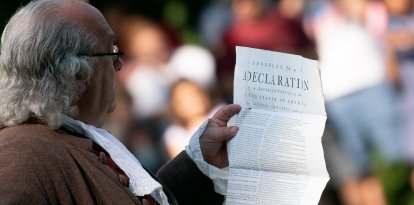
To certify this footprint, what better than the words of President Thomas Jefferson, who said that "the history of the United States is written in Spanish." In Spain, meanwhile, the poet Federico García Lorca is credited with the phrase "the Spaniard who has not been to America does not know what Spain is." The two nations that have moved hand in hand through time for more than 500 years. Happy Hispanic Heritage Month, a month to also celebrate the country's Spanish roots.
LATEST