France is ablaze once again: Black bloc hijacks national strike, turns Lyon into a battlefield
France experienced another day of strikes on Thursday, marked by violence from radical groups. In Lyon, black bloc protesters clashed with police; in Toulouse, a high school was set on fire with mortar shells; and in several cities, police officers were attacked.
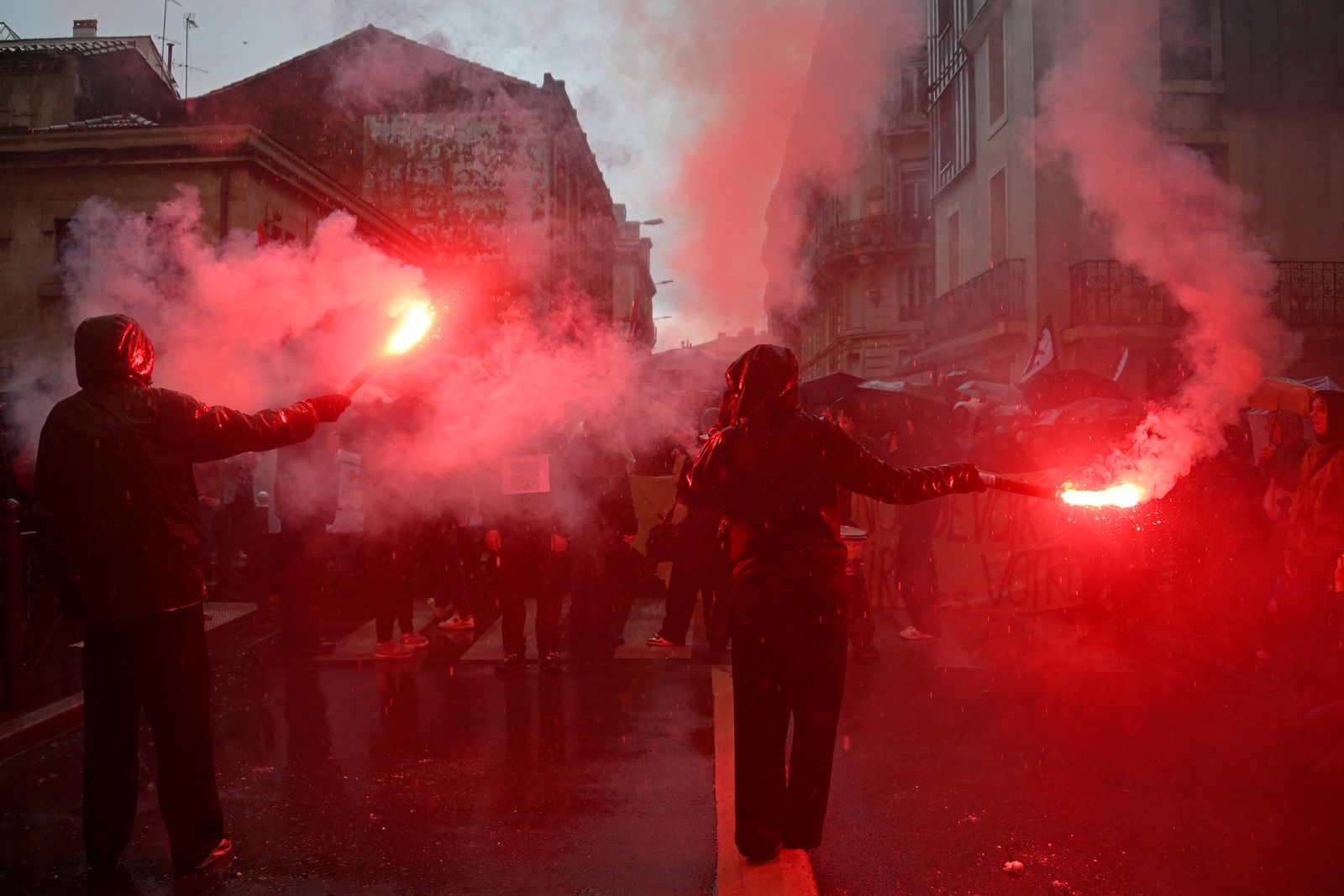
Protesters holding lit flares

France experienced another day of national strikes and protests on Thursday that resulted in scenes of urban violence in several cities, with Lyon as the epicenter of clashes between police and groups of hooded protesters identified as a "black bloc."
According to the Ministry of the Interior, by noon there were 270,000 demonstrators in 180 marches outside Paris. Later, a preliminary estimate from the same ministry raised the total figure to nearly 600,000 participants nationwide, making it the largest day of action in this fall's social movement.
The Ministry of the Interior acknowledged "tensions" in Lyon and "incidents" in Nantes, while a high school near Toulouse was set on fire with fireworks, in an incident that the minister of education described as "absolutely scandalous."

Lyon: Black bloc takes to the streets
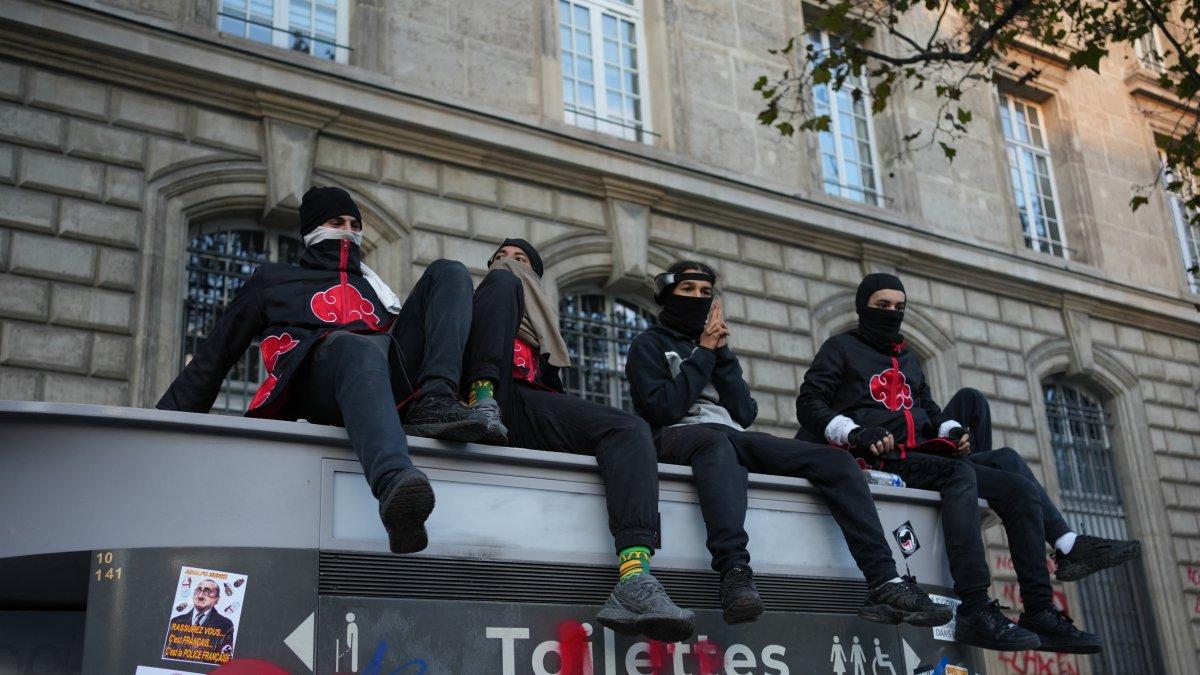
The most tense incident of the day occurred in Lyon, where several hundred people dressed in black and with their faces covered formed a black bloc and clashed with law enforcement. According to police, some 500 hooded individuals threw projectiles and set off fireworks near the Gallieni Bridge, forcing riot police to respond with tear gas and charges.
The prefecture counted some 30,500 protesters in the city, while the CGT union put the figure at 55,000. Local authorities had banned demonstrations in much of downtown Lyon for fear of further acts of vandalism and looting, a restriction that the unions unsuccessfully challenged. The riots completely paralyzed the city's metro and funiculars.

High school set on fire and attacks on police
In Toulouse, a high school on the outskirts of the city was set on fire in the morning after fireworks were thrown, forcing the evacuation of students and staff while firefighters put out the flames. Minister of Education Edouard Geffray called the incident "absolutely scandalous" in a post on X, denouncing "criminal conduct."
In Pau, a group attacked officers with fireworks, aiming them directly at their faces, while clashes with police were also reported in Nantes. In La Courneuve, a teenager was stabbed in an incident that some reports link to a knife attack outside a high school. In Paris and other cities, the clashes were minor and the vandalism was more contained.
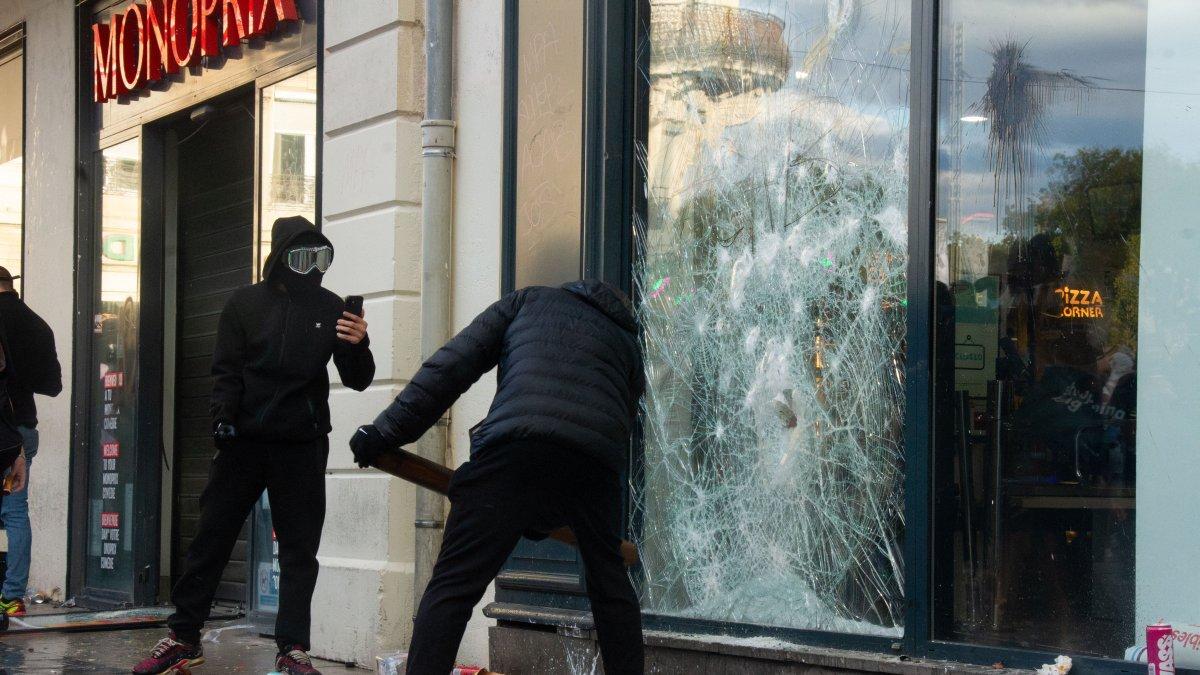
Ministry of the Interior acknowledges tensions
Minister of the Interior Laurent Nuñez's office acknowledged at noon that the marches were proceeding "generally well," but explicitly acknowledged "tensions in Lyon, where several hundred individuals formed a black bloc."
Nuñez had anticipated an "extremely firm response" from the 70,000 police officers deployed nationwide to prevent a repeat of the Oct. 17 riots, which resulted in 2,400 arrests.
The day is part of the fourth national strike of the fall, called by unions to demand better wages and public services, and supported by student groups. Although most of the demonstrations took place without incident, violence by a radicalized minority continues to dominate the agenda and test the Macron government's ability to restore public order.
Recurring pattern
While the government insists that any police misconduct will be investigated, the question on French society's mind is how long it will allow a violent minority to hijack the narrative of protests that, at their core, seek to advance economic and social demands. The government's response—with 70,000 officers deployed and a promise of firm action—suggests that the battle for control of the streets is far from over.
🛠 Do you think there is an error in this article?
Recommendations




LATEST