Alert in Europe: At least 15 flights affected by a wave of bomb threats
Three planes were diverted, and several landed under escort by military fighter jets. The alerts affected flights operated by various airlines, including one that departed from Madrid, and prompted the activation of security protocols at several European airports.
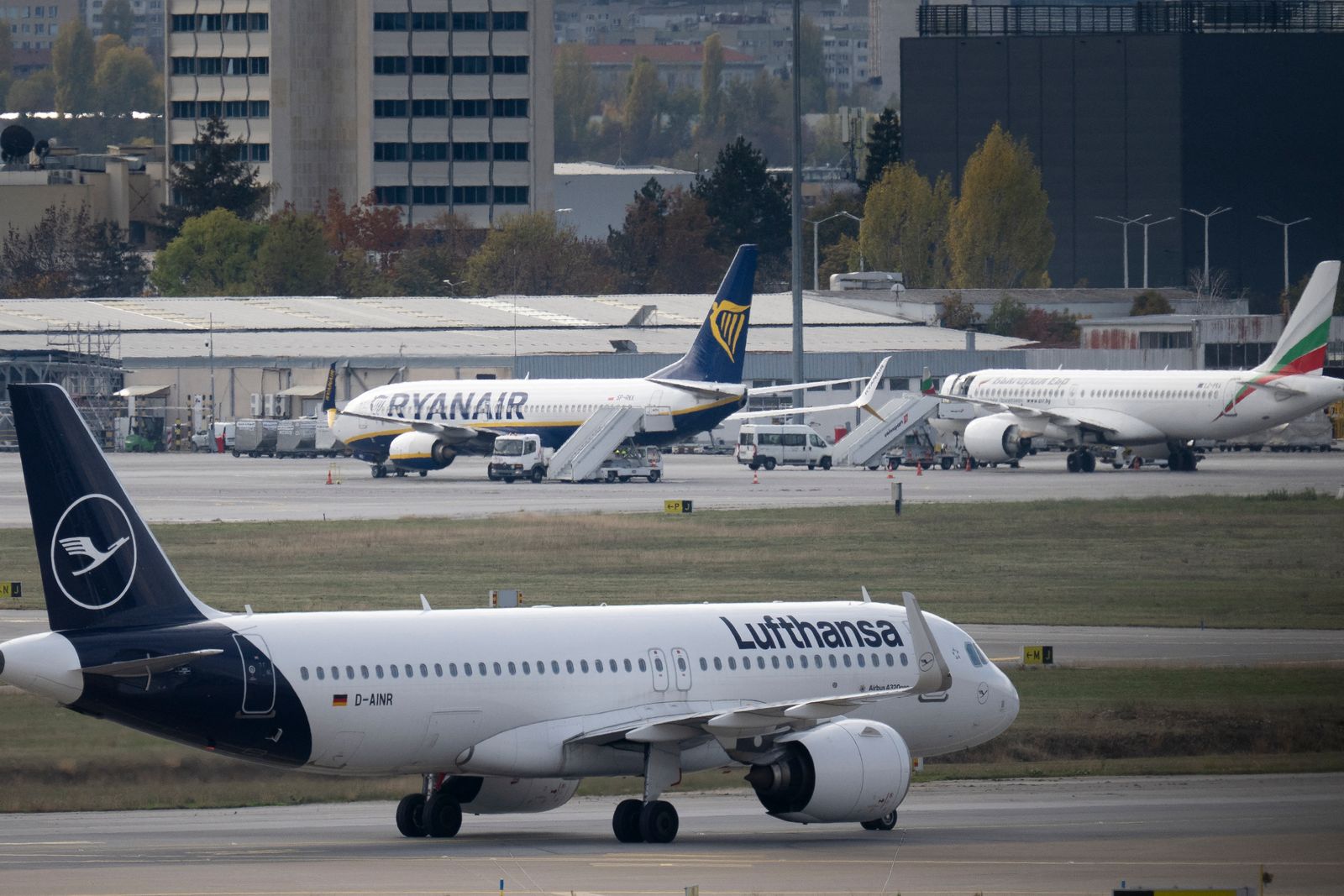
A Lufthansa plane flies past Ryanair planes

A new wave of bomb threats triggered an aviation security alert in Europe on Thursday, resulting in at least 15 commercial flights affected, three diversions and the deployment of military aircraft to escort some planes.
The incidents occurred on routes connecting cities such as Rome, Madrid, London, Dublin, Helsinki and Warsaw. According to reports from Libertad Digital and 20 Minutos, authorities activated emergency protocols and inspected the aircraft, though no explosives have been confirmed so far.
One of the most significant incidents involved an Airbus A320 operated by the Irish airline Aer Lingus that was flying from Dublin to Rome. After receiving a threat, the aircraft was diverted to the Évreux military air base in France, where it landed without incident.
The plane, which was carrying 151 passengers and six crew members, was escorted by a Rafale fighter jet from the French Air Force. All occupants were evacuated while specialized teams inspected the aircraft, according to information published by Infobae.
Escorted aircraft and diverted flights
Another incident occurred in Italy, where a Finnair flight from Helsinki received a bomb threat and was escorted by Italian Air Force fighter jets to Rome-Fiumicino Airport. The plane landed without incident, and authorities conducted the necessary inspections.
A Wizz Air flight traveling from Milan to Warsaw was also affected and had to be diverted to Vienna Airport as a precautionary measure.
In Bulgaria, three Ryanair flights from Madrid, Copenhagen and London received similar threats. The first two landed in Sofia, while the third was diverted to Plovdiv Airport. Inspections ruled out the presence of explosives.
The alert also affected flights bound for Brussels, Milan and Prague. In the Czech capital, four aircraft were inspected after landing, but no explosive devices were found.
The European Union calls for an investigation into the threats
The series of incidents has prompted a response from the European Commission. European Commissioner for Transport Apostolos Tzitzikostas called on national authorities to strengthen cooperation with airlines, airports and law enforcement agencies to get to the bottom of what happened.
According to El País, the official warned that it is still too early to determine whether all the incidents are related.
Initial investigations point to possible connections between some of the threats received by flights bound for Italy. According to Infobae, authorities are analyzing an anonymous email, written in Italian, that was allegedly used to warn of supposed explosives on at least two aircraft.
This new wave comes just two days after seven other European flights received similar threats, which ultimately turned out to be false.
So far, no casualties have been reported, nor have any explosives been found during the inspections whose results have been released. Authorities continue to investigate the source of the threats and whether this is a coordinated effort to disrupt European air traffic.
🛠 Do you think there is an error in this article?
Recommendations



LATEST