





ANALYSIS
France: Protesters storm Marseille City Hall and throw projectiles in Paris during protests over the cost of living, with over 160 arrested
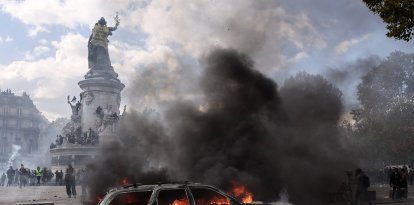
In Paris, police used water cannons and tear gas following clashes with hundreds of protesters, many of whom were masked and some of whom were throwing fireworks.
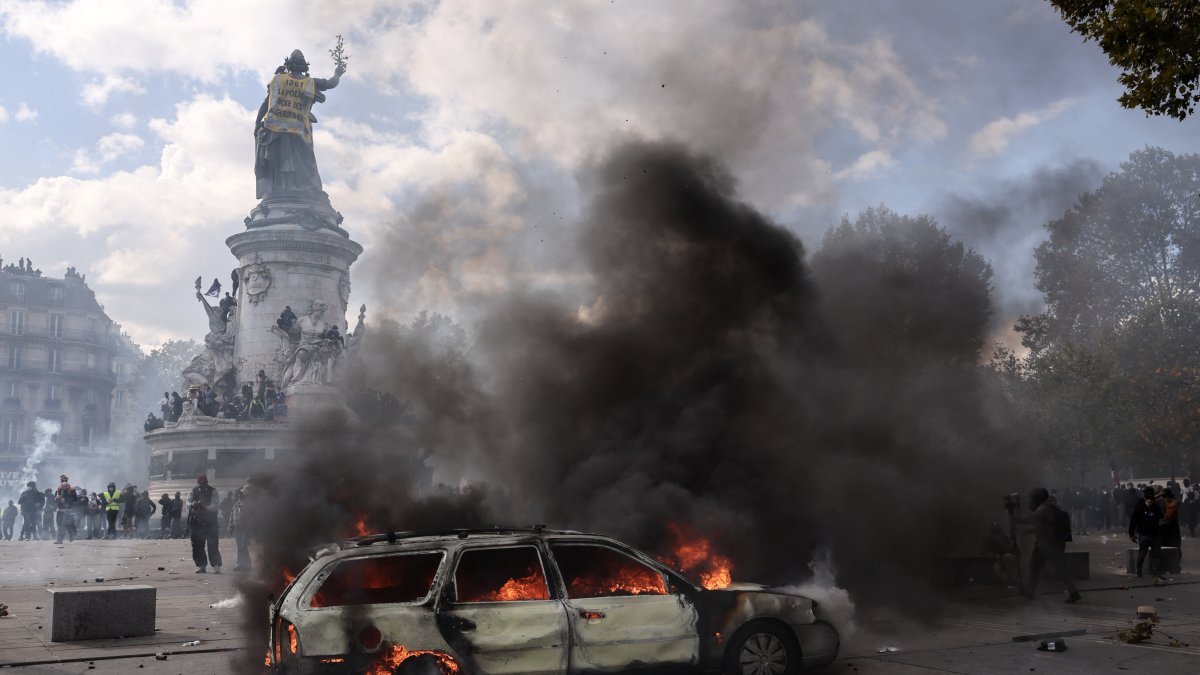
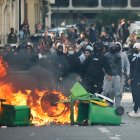
A vehicle on fire during a demonstration at Place de la République in Paris

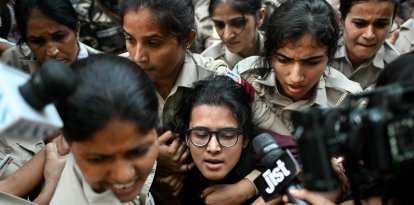
Thousands of protesters clashed with police in Paris, Marseille and other cities across France on Saturday during nationwide demonstrations against the high cost of living, as the country heads toward the presidential election.
These protests, focused on inflation and fuel prices, come on top of the student protests that began a few weeks ago, which also saw violent incidents and which the government has attributed to a maneuver organized by Jean-Luc Mélenchon's La France Insoumise (LFI) and its far-left networks.
World
France: The left capitalizes on student anger as government gives in to demands
Carlos Dominguez
Violence in the streets of Paris and Marseille
In Paris, police used water cannons and tear gas following clashes with hundreds of protesters, many of whom were masked and some of whom were setting off fireworks.
In Marseille, France's second-largest city, protesters stormed City Hall before being driven out by police.
According to AFP, a protester in Marseille shouted, "We are storming the Bastille," referring to the storming of the fortress during the French Revolution of 1789, while a group of masked protesters broke down the door to the mayor's offices using security barriers.
Several vandals entered, and one painted an anarchist "A" symbol on an interior wall before police intervened to disperse them.
At the offices of the French media outlets CNews and Europe 1, in western Paris, windows were shattered when protesters threw projectiles.

More than 160 people arrested nationwide
More than 32,000 protesters took part in some 140 demonstrations nationwide outside Paris shortly after noon on Saturday, according to a source at the Ministry of the Interior cited by AFP.
Police arrested more than 160 people nationwide, according to the same source.
In Paris, where authorities banned protests near government buildings, the Champs-Élysées, and train stations, police arrested about 60 people on Saturday morning.
Society
Trump blames unrest in France on mass immigration and says, 'it's not about the schools'
Diane Hernández
Accusations against La France Insoumise (LFI)
The French government has directly accused the far-left party La France Insoumise (LFI), led by Jean-Luc Mélenchon, of stoking and exploiting the student protests for electoral gain.
Prime Minister Sébastien Lecornu accused LFI in early October of "fanning the flames" of the student demonstrations and seeking to "stoke the violence so as to better condemn it later," all "for electoral purposes."
According to a report by Le Parisien, the prime minister's office, which also believes the movement has shifted toward "urban violence," maintains that there is a "shared assessment by intelligence agencies regarding the movement's origins": they accuse it of being a "maneuver organized by LFI and its far-left proxies."
Mélenchon, 75, a far-left presidential candidate, has backed the student protests and participated in demonstrations in support of the students.
The LFI leader has denied inciting violence, calling the accusation "absurd" and blaming the police for brutally dispersing the protests.
However, his opponents, including the government, accuse him of using inflammatory rhetoric to fuel a heated political climate that incites violence.
Economic crisis and presidential election
Purchasing power in France has declined since 2024, while fuel prices have skyrocketed since the start of the war between the United States and the Iranian regime earlier this year.
The eurozone's second-largest economy is struggling to contain its public debt, which is projected to reach more than 120% of GDP next year—double the E.U.'s 60% limit.
President Emmanuel Macron called for "calm and respect" on Friday night, adding that the right to protest goes hand in hand with "respect for people and property."
LATEST