





María Corina Machado says she “understands” the U.S. three-phase plan to stabilize Venezuela
In an interview with The New York Times, the opposition leader discussed recent energy agreements and the possibility of a democratic future for Venezuela.
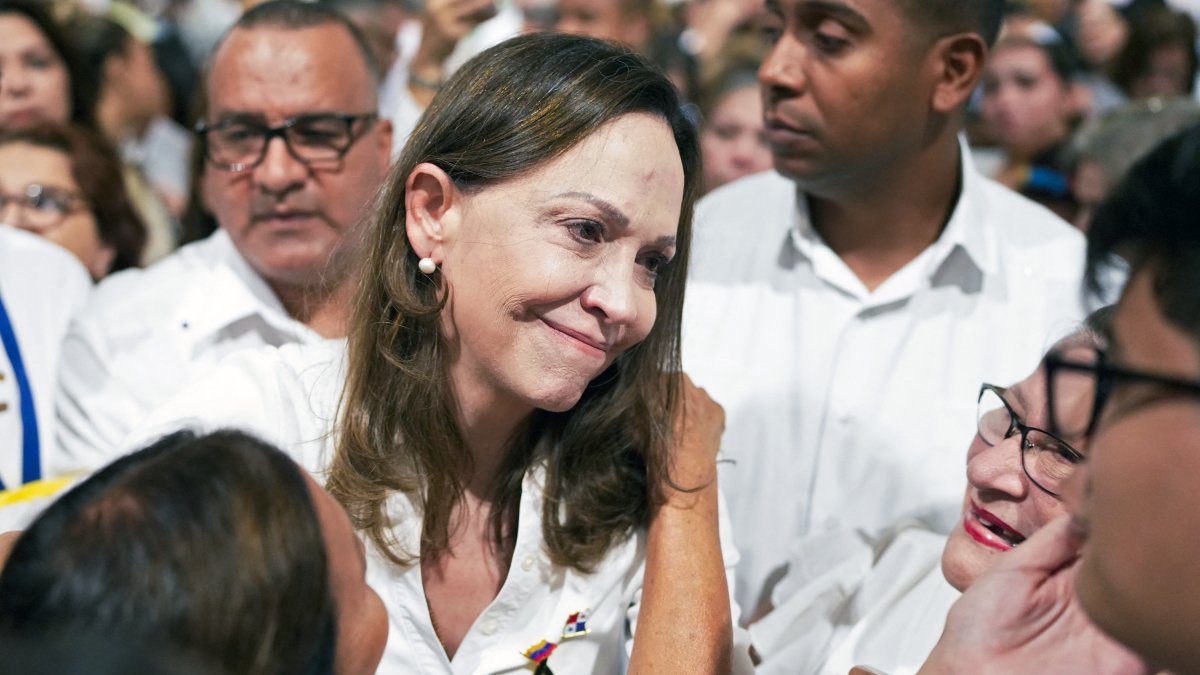
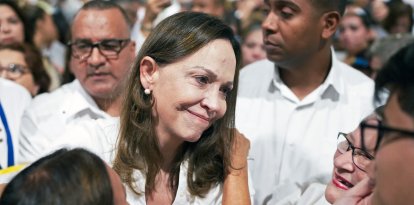
María Corina Machado.

Nobel Peace Prize laureate and Venezuelan opposition leader María Corina Machado said she understands the logic behind the three-phase plan Washington designed for Venezuela after the capture of Nicolás Maduro on Jan. 3, a road map that calls for stabilizing the country, its economic recovery and, in a final stage, the transition to democracy. However, she made it clear that she does not agree with one of its central pieces, which is keeping Delcy Rodríguez at the head of the regime.
“I understand the logic and the rationale,” Machado said of the decision to move gradually, in an interview with The New York Times in Panama. Still, she argued that the process could have been carried out without Rodríguez, whom she considers part of the criminal system that ruled the country, although she acknowledged that, given the circumstances, it is in the interest of Venezuelans that the plan works.
The opposition leader had already laid out her position two weeks ago in a column published in the New York Post, titled “Why I must return to Venezuela — and the people must vote.” In that piece, Machado argued that the Jan. 3 operation opened a historic opportunity for the country and said the key step to guarantee stability was to set a date for free presidential elections within one year, because only an elected government could offer the legal certainty that foreign investment needs.
Machado also addressed the state of her country's oil sector, in which she questioned businessman Alejandro Betancourt's track record and his role in managing energy resources.
Machado described Betancourt's track record as "obscene corruption" and dismissed him as a viable business partner for a future democratic administration.
Independent audits, both inside and outside Venezuela, have shown that the businessman amassed his fortune through no-bid power-plant contracts that overcharged the state. In her statements, Machado directly identified him as "one of the main culprits for what our people are suffering right now" regarding the electricity crisis.
Legal transparency and the future of institutions
When asked about the status of the commercial commitments currently being signed by the Trump administration and the regime led by Delcy Rodríguez, Machado emphasized that respect for the constitutional framework will be the sole criterion for determining the validity of any energy agreement.
"I want to be very clear now: if these contracts that are being signed, these agreements that are being signed, comply with Venezuelan law, they will be respected," the leader stated. However, she stressed that those partnerships established outside the bounds of the law or with actors tainted by financial irregularities will lack institutional legitimacy.
On human rights, the opposition leader reaffirmed that complaints filed with international organizations against current high-ranking officials must be processed through formal judicial mechanisms.
"In our Constitution and in international treaties there are crimes that are not subject to amnesty or pardon," she pointed out, proposing the creation of an independent truth commission and specialized courts.
Prospects for a return to democracy
Despite obstacles that have prevented her from returning to the country after multiple air and sea attempts, Machado reiterated her determination to return to Venezuela "sooner than expected" to support the institutional change process. Recent Bloomberg opinion polls show support for her leadership at 52% among those surveyed.
Machado concluded that true economic stability and the attraction of international capital will require the restoration of the rule of law and the free market.
"Venezuela will be free. We will bring our children back home, build democratic institutions that will last for generations, have open markets that will offer unparalleled conditions for international investment , and turn our country into a source of stability for the entire region," she asserted.

LATEST