





ANALYSIS
Europe's technological and military dependence: Starlink exposes its strategic weaknesses
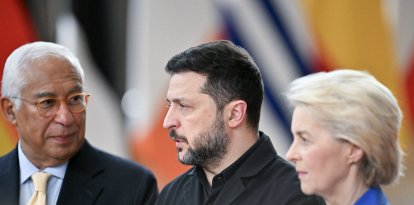
The E.U.'s foreign policy chief, Kaja Kallas, acknowledged this ahead of the Brussels summit, which was also attended by Ukrainian President Volodymyr Zelensky: "Starlink is really necessary for Ukraine and unfortunately in [the] short term Europe can't replace this capability."

Kaja Kallas, E.U. high representative for foreign affairs

The restrictions reported this week on Ukraine's use of Starlink have forced European Union (E.U.) leaders to acknowledge an uncomfortable reality: Europe cannot replace, in the short term, American technology that is essential to Ukraine's defense.
Europe talks about autonomy, but depends on the U.S.
The EU's foreign policy chief, Kaja Kallas, admitted this ahead of the Brussels summit, which was also attended by Ukrainian President Volodymyr Zelensky: "Starlink is really necessary for Ukraine and unfortunately in [the] short term Europe can't replace this capability."
Kallas's remarks come after Kiev reported slowdowns in the system, while Ukraine uses Starshield—the military version of Starlink—for combat communications, medium-range strikes and interceptor drones.

Politics
Elon Musk clarifies Pentagon, White House decide on restrictions on Starshield satellite network in Ukraine
Andrés Ignacio Henríquez
Kallas acknowledged that the European Defense Agency has identified the "critical capabilities" that Europe lacks and must develop as soon as possible. For his part, Latvian Prime Minister Andris Kulbergs stated: "Starlink is the key for Ukraine actually to fight or fight back."
Likewise, Dutch Prime Minister Rob Jetten stated that on Thursday he had spoken with French President Emmanuel Macron about "how we, as Europeans, can provide more of these kinds of services in the not too distant future."

E.U. committed to IRIS²
The E.U. is promoting its own alternatives, such as Govsatcom, a bridge program already operational since 2026 that pools and shares the capabilities of existing government satellites from various member countries, and the future IRIS² constellation, its sovereign satellite communications network designed to provide secure and independent connectivity.
The first IRIS² launches are scheduled for 2029, with services rolling out gradually starting that year and full operational capability expected by 2030. In the meantime, Europe will continue to rely heavily on U.S. technology such as Starlink for high-capacity, low-latency communications, especially for military applications.

American technology makes the difference
Elon Musk clarified on Wednesday on X that any disruption does not depend on his company, but on the U.S. government: "Any limits on speed or usage are decided by the US military and ultimately POTUS." In other words, Starshield is a U.S. defense capability, not a private switch that Musk can turn on or off at will.
British Defense Minister Wes Streeting revealed that he discussed the Starlink issue with his American counterpart, Pete Hegseth, on Thursday. "It's not yet clear to us in the UK what happened, why the service interruption occurred. But I am reassured, and was reassured directly by Secretary Hegseth, that the service has been restored," he told the BBC on Friday.
LATEST