





Treasury lifts sanctions against Jorge Rodríguez, president of Venezuelan regime's National Assembly
The document, which is strictly technical in nature, merely notifies the removal of his name and the various variations under which it appeared on the list, without detailing the reasons for the decision or clarifying whether other restrictions—such as those related to visas—remain in place.

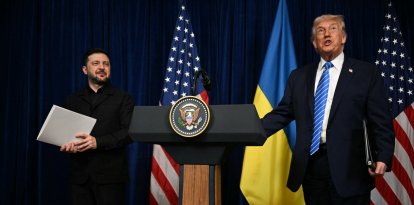
Delcy Rodríguez (L), Jorge Rodríguez (C) and Representative Luis Eduardo Martínez

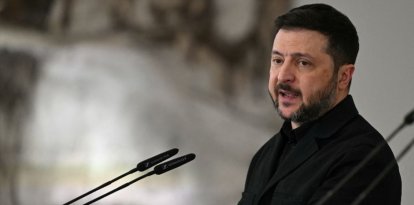
On Wednesday, the Treasury Department removed Jorge Rodríguez, president of the National Assembly and brother of the interim president of the Venezuelan regime, Delcy Rodríguez, from its sanctions list.
The notice published this Wednesday by the Office of Foreign Assets Control (OFAC) of the Department of the Treasury confirms the removal of Jorge Jesús Rodríguez Gómez from the list of Specially Designated Nationals (SDN).

What changes in practice
The measure means that the Chavista leader is no longer subject to OFAC sanctions and that U.S. individuals and companies can once again conduct financial transactions with him without needing a special license.
The document, which is strictly technical in nature, merely notifies the removal of his name and the various variations under which it appeared on the list, without detailing the reasons for the decision or clarifying whether other restrictions—such as those related to visas—remain in place.

World
Rubio calls on the entire Venezuelan opposition to join the dialogue with Chavismo
Diane Hernández
Washington eases pressure on the regime
Jorge Rodríguez had been added to the list in September 2018, during the first term of Donald Trump, as part of U.S. sanctions against senior officials of the Venezuelan regime for their alleged involvement in acts of corruption and repression.
The move comes months after Washington lifted sanctions against Delcy Rodríguez on April 1 and is part of a new phase in relations between the United States and the Venezuelan regime following the capture of Nicolás Maduro in January.
Since then, the Trump administration has insisted that Venezuela must hold elections as part of the transition process, although Trump has noted on several occasions that it is still "too soon" and that there is no set timeline. During his meeting with Delcy Rodríguez in New York last September, Trump reiterated the need for the country to hold elections, according to White House sources.
A monitored transition
Since then, Delcy Rodríguez, sister of the National Assembly president, has assumed the interim presidency by appointment of the Supreme Court of Justice, which is controlled by the Chavistas. The National Assembly, also dominated by the ruling party, has maintained institutional control of the regime, while Washington has been lifting sanctions on key figures in its inner circle, such as Delcy herself and, this Wednesday, Jorge Rodríguez.
The National Assembly has also played a key role in opening up Venezuela's oil sector to Washington's interests. But its legitimacy continues to be questioned by the Venezuelan opposition, which points out that the 2020 elections were boycotted and that the congress democratically elected in 2015 was stripped of its powers by the regime.
LATEST