Elon Musk backs Donald Trump's agenda and foresees an era of superabundance driven by artificial 'superintelligence'
Far from a bleak outlook, Musk asserted that rapid technological advancement will usher in an era of unprecedented abundance for society.
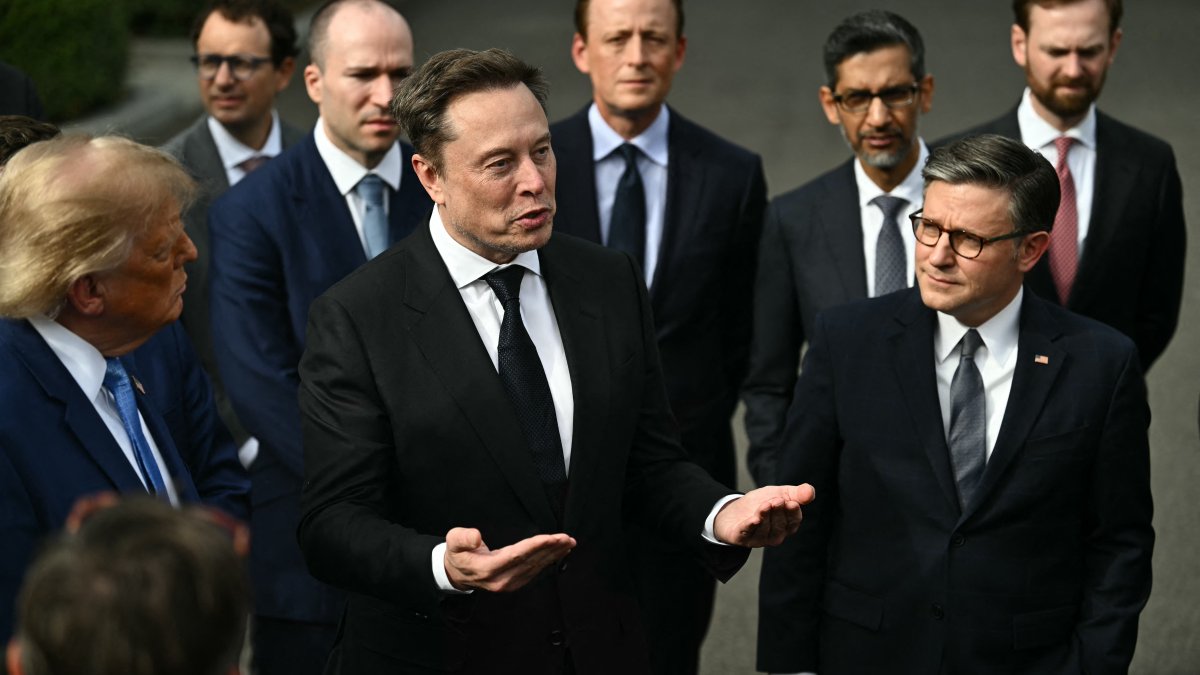
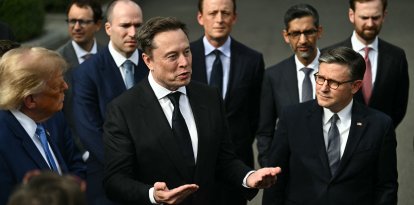
Elon Musk, alongside President Donald Trump, speaks to the press on September 29.

President Donald Trump led a historic meeting at the White House on Tuesday alongside top tech leaders, where he advocated self-regulation in the sector and announced the signing of an executive order to officially rename artificial intelligence "superintelligence."
Flanked by figures such as Nvidia CEO Jensen Huang and business magnate Elon Musk, the president highlighted the Republican Party's unity on developing data centers and private-sector innovation ahead of the upcoming midterm elections.
After the meeting, attended by Vice President JD Vance and key Cabinet members, Musk eased public fears of a supposed wave of poverty caused by AI. The entrepreneur argued that the most likely scenario is not massive job losses, but a positive transformation in the economy and in access to essential services.
From basic income to universal high wealth
Far from a bleak outlook, Musk asserted that rapid technological advancement will usher in an era of unprecedented abundance for society.
"I believe that by far the most likely outcome is an era of abundance where we not only have a universal basic income, but a high universal income," the founder of Tesla and SpaceX stated during his speech.
The entrepreneur emphasized that deploying robotics and superintelligence will democratize elite services such as advanced medicine.
"When you have robots and superintelligence, it means that everyone in the world can have better medical care than anyone here, including me. And wouldn't that be wonderful?" he told the press.
Evolution of the labor market and support for self-regulation
Addressing concerns that automation will destroy jobs, Musk compared the current moment to the historic transition that the IT sector underwent with the advent of digital computers.
"Jobs are going to change. Jobs have always changed. Being a computer used to be a job; there used to be buildings full of people doing calculations, but now digital computers do those tasks," he explained, noting that the demand for labor will remain high as professional roles evolve.
President Trump reaffirmed that the technology market does not require stifling regulatory frameworks, but rather operational freedom to compete globally against blocs such as Europe.
Along the same lines, Jensen Huang, CEO of Nvidia, argued that the private sector should lead innovation in security, ensuring that the development of "superintelligence" continues to protect local communities without hindering the dynamism of the U.S. economy.


Technology
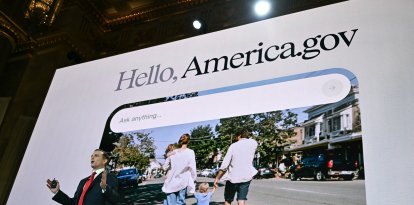
Goodbye to bureaucratic chaos and wasted time: Trump Administration launches America.gov
Alejandro Baños

Society
Trump brings together AI giants at the White House amid debate over regulation
Diane Hernández
LATEST