ANALYSIS
Trump's shift on AI: From 'very dangerous' to the launch of America.gov
Trump has gone from warning about deepfakes to rolling out the largest digital modernization project in the history of the administration.
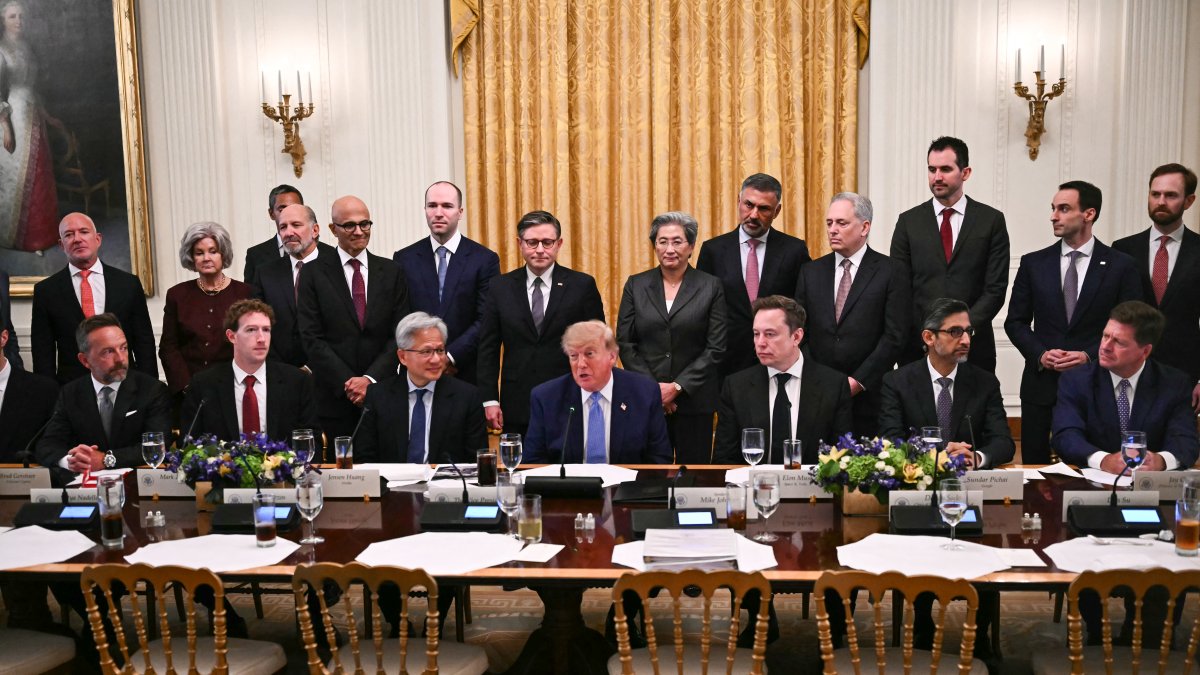
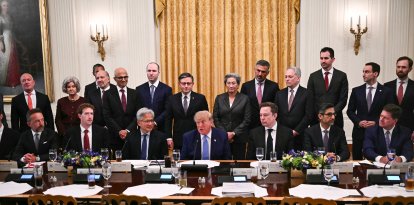
Donald Trump with executives from several of the leading technology companies at the White House. September 2026

"Anyone who has used Grok, or Gemini, or ChatGPT will understand instantly how to use America.gov. Not complicated." With this succinct statement, Donald Trump introduced a digital tool through which he and his cabinet aim to make life easier for all Americans.
America.gov is a platform that brings together all federal websites into a single portal, with the goal of simplifying and streamlining all bureaucratic procedures or searches related to matters of public interest, using artificial intelligence (A.I.).
This initiative represents Trump's firm commitment to staying at the forefront and to the full integration of A.I., even for public purposes. This technological resource, although now extremely useful, has not always had the president's approval and support.
The day Trump called A.I. "very dangerous"
The fact that he has now decided to side with A.I. stands in stark contrast to his assessment of this technology not long ago. A little over two years ago, in August 2024, Trump—who at the time was in the midst of his election campaign to return to the White House as president—publicly expressed a highly negative view of A.I., asserting that it poses a serious risk.
"[Artificial intelligence] can be a very dangerous thing. I think [A.I.] is maybe the most dangerous thing out there of anything, because there’s no real solution. ... I saw somebody ripping me off the other day where they had me making a speech about their product. I said I'll never endorse that product. You can't even tell the difference. It looks like I'm actually endorsing it," the president stated in an interview on Fox Business's "Mornings with Maria" program in 2024.

As time went on, amid the proliferation of A.I.-generated images simulating, for example, his arrest or his receiving endorsements he never actually received, Trump's position remained unchanged. "It can make things better and safer, but if it gets into the wrong hands... you look at what's happening with deepfakes and banks. If it goes wrong, it's a very dangerous thing," he said, referring to the ravages of misinformation and deepfakes generated by A.I.
White House dinner with Zuckerberg, Cook, Gates and co.
His return to the White House led to a shift in his stance on the matter. After seeing only risks and drawbacks for some time, Trump began to recognize the benefits that A.I. brings.
In September 2025, despite having previously held discussions with them, he summoned the CEOs of several of the most important tech companies to analyze the state of the sector and share their insights and ideas for driving development and innovation. Mark Zuckerberg (Meta Platforms), Tim Cook (Apple), Bill Gates and Satya Nadella (Microsoft), and Sam Altman (OpenAI) were among those in attendance at that dinner meeting held at the White House.
"I was very proud to have that discussion with a number of our colleagues who I think are running great companies. You know, it was sort of a historic conversation," Zuckerberg said after the meeting, referring to Trump. "It's great we all get together and talk about how the United States could lead in this key area and apply it even to the poorest outside the U.S., as well as to our great citizens," Gates said.
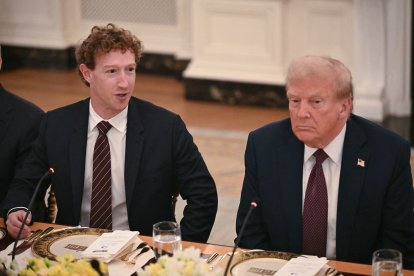
Mark Zuckerberg and Donald Trump during the meeting held at the White House in September 2025
One person who did not attend was Elon Musk, an advisor to the president, for personal reasons.
Putting the brakes on Beijing: A.I. as a geopolitical chessboard
This ideological shift regarding this digital tool also occurred when the president observed that the United States' greatest geopolitical and economic enemy, China, was stepping up its efforts and allocating more resources to its tech companies to assert itself as a global leader in this specific technological field.
Consequently, Trump adopted a protectionist stance to safeguard the ecosystem of the U.S. A.I. industry and its technological development and began taking measures against his rival—such as banning the entry of new Chinese humanoid robots—in addition to preventing risks from espionage and cyberattacks that could threaten national security and the safety of Americans.
Trump's new mantra: Goodbye to regulation, hello to A.I.
However, as A.I. development has advanced, Trump and his Chinese counterpart, Xi Jinping, have met on several occasions to discuss the matter, either virtually or in person. The most recent meeting took place face-to-face just a few days ago during the Chinese leader's visit to Washington, D.C.
At this meeting, the president put A.I. at the center of the talks, to such an extent that he decided to rename it "super intelligence" and, after having described it as "the Greatest Economic Development Engine in History" and having come out strongly against the regulations being called for by certain sectors.
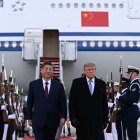
"A big day with President Xi of China. Super Intelligence (SI) will be a big topic of discussion, but I want to leave it exactly where it is. That is China’s position also. Our guardrail is the DOJ!" Trump said before meeting with the leader of the Chinese communist regime.
America.gov: The A.I.-powered one-stop shop
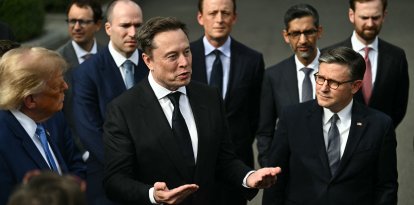
Days after discussing A.I. with Xi, Trump decided to once again convene several executives from the country's leading tech companies at the White House. At this meeting, held on Sept. 29 and which Musk did attend on this occasion, the president defended the sector's self-regulation and announced the signing of an executive order to officially rename artificial intelligence as "super intelligence," even though he had already referred to this technology in that way on occasion.
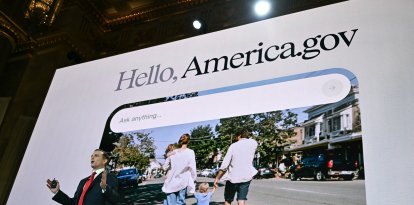
On the same day, the Trump administration, at an event attended by numerous figures from the tech ecosystem, launched the first phase of America.gov, which unifies every single federal website into a single platform. "America.gov is a secure, intelligent, and service-oriented single point of entry through which an individual can sign in, communicate in plain language, receive accurate answers, and, where authorized and technically available, complete government transactions without having to navigate multiple Federal agencies’ websites," the White House reported.
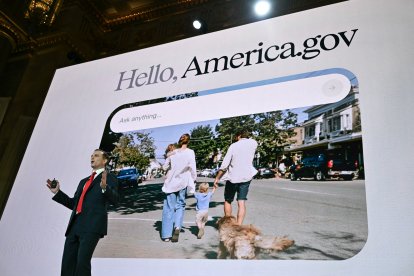
Launch of America.gov. Sept. 29, 2026
In this first phase, "Americans can ask any question on America.gov and get an up-to-date answer" through a chatbot on the website. Questions can be asked in English, Spanish and French, and users will receive answers in the same language used. Additionally, the service is free and ad-free. The Trump administration added that new features will be available before the end of the year, with many more to follow in 2027.
Just two years after those negative comments, Trump has shifted his rhetoric on A.I. to such an extent that he has decided to roll out the largest digital modernization project in the government's recent history.
LATEST