Gov. Ron DeSantis halts execution of inmate, 74, just hours before it was scheduled to take place in Florida
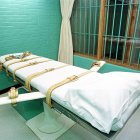
The decision, communicated in a letter sent to Randall Polk, warden of the Florida State Prison, halts the execution that was scheduled to take place Tuesday.

Ron DeSantis. | Joseph Prezioso

Florida Governor Ron DeSantis officially suspended the execution order issued against William Lee Thompson, a 74-year-old inmate sentenced to death for a brutal murder committed in Miami-Dade County in 1976.
The decision, communicated in a letter sent to the warden of the Florida State Prison, Randall Polk, halts the execution that was scheduled to take place Tuesday.
Although the letter did not explicitly detail the reasons for the stay, the move came just weeks after Thompson's legal defense team submitted arguments regarding the prisoner's serious health condition. According to reports submitted by his attorneys and human rights advocates, the prisoner suffers from advanced dementia, heart failure and severe cognitive impairment.
Medical evaluations and the standard of mental capacity
After signing the initial order in September, DeSantis issued Executive Order 26-192 to appoint a panel of three psychiatrists tasked with examining the inmate's mental state.
The measure responded to claims by the defense, which argued that Thompson did not understand the nature of the execution or the reasons for his conviction. A neuropsychologist had previously determined that the prisoner did not acknowledge that he had been sentenced to death and even claimed that George W. Bush was still president.
Grace Hanna, executive director of the organization Floridians for Alternatives to the Death Penalty, confirmed that the official psychiatric evaluation was conducted in early October. "He didn't know where he was, claimed that Bush was the president and at times didn't even acknowledge that he had been sentenced to death," Hanna said, referring to the evaluation of mental capacity required by state law to carry out the death penalty.
The stay of Thompson's execution was announced a few hours after the Florida Supreme Court rejected a stay motion filed by his defense team.
Meanwhile, the state is proceeding with the scheduled execution of James Robertson, 63, convicted of murdering his cellmate at the Charlotte Correctional Institution in 2008.
A long legal history stemming from a 1976 crime
The case against Thompson dates back to March 30, 1976, when he, along with Rocco Surace and two women, stayed at a motel in Dade County. According to court records, Thompson and Surace demanded that the women ask their families for money.
Unable to obtain more than $25, the victim, Sally J. Ivester, was systematically beaten with a belt, a club and a chair leg and also suffered burns, which led to her death from internal bleeding.
Thompson was arrested two days after the crime. In September 1978, he pleaded guilty to first-degree murder, kidnapping and sexual assault, receiving his first death sentence.
Over the course of more than four decades, the case went through multiple appeals, sentence overturns by the Florida Supreme Court and new sentencing hearings, until, in 1989 , the death penalty was upheld and remained in effect until the governor's recent intervention.

Society
Pete Hegseth says the public will witness the execution of the perpetrator of the Texas military massacre
Andrés Ignacio Henríquez

LATEST