The 2027 fiscal year begins: What's changing and how the federal government will operate
The new fiscal year begins on Oct. 1 and will end on Sept. 30, 2027. Washington will avoid an immediate government shutdown thanks to a temporary funding bill that will keep most spending at the previous year's levels until Dec. 11.
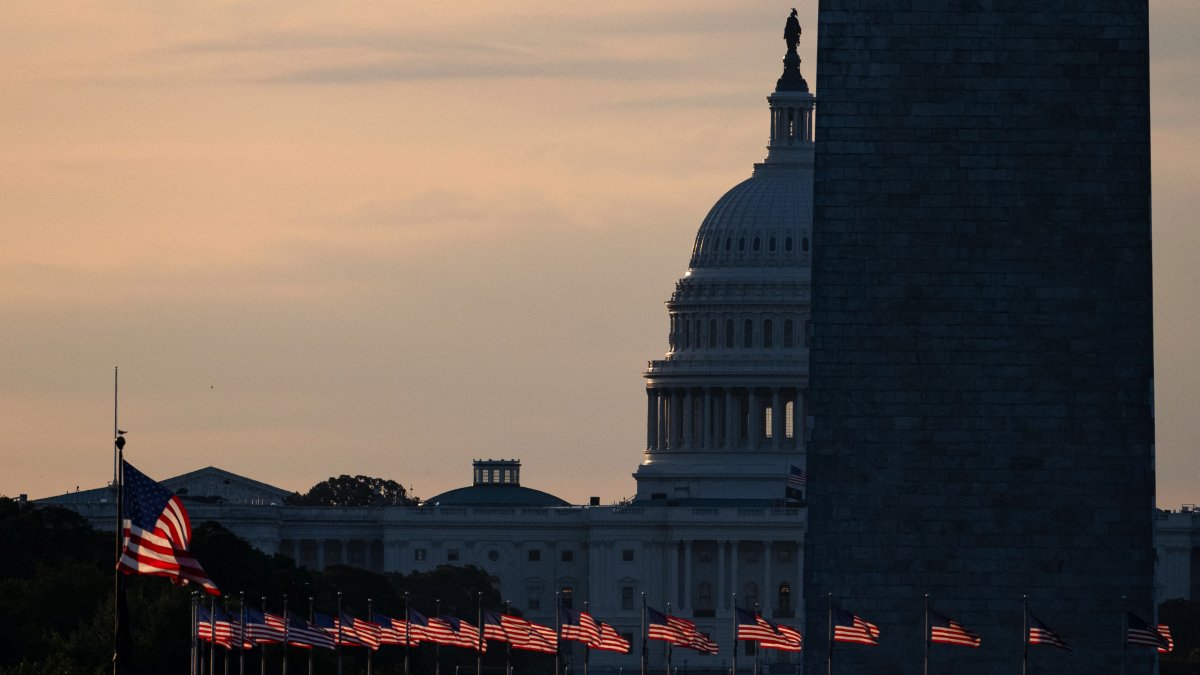
View of the dome of the U.S. Capitol and the Washington Monument

This Thursday, Oct. 1, the country begins its 2027 fiscal year, the period the federal government uses to organize its revenues, expenditures and budget programs, which will run through Sept. 30, 2027.
Unlike the calendar year, the U.S. federal fiscal year begins on Oct. 1. This system has been in effect since fiscal year 1977, when the start date was moved from July to October.
The change in the fiscal year means that, beginning this Thursday, federal agencies will begin tracking their expenditures, obligations and revenues as part of FY2027, but it does not mean that the entire budget proposed by the Trump administration automatically takes effect.
There will be no government shutdown on Oct. 1
The most important factor this year is that Washington is beginning the new fiscal year without the immediate threat of a partial government shutdown.
On Sept. 2, President Donald Trump signed the Continuing Appropriations and Extensions Act, 2027, a temporary funding resolution that allows federal agencies to remain operational from Oct. 1 through Dec. 11, 2026.
The law provides, with certain exceptions, that federal projects and activities continue to be funded on a temporary basis at the rate established by the appropriations approved for fiscal year 2026.
This means that the government enters FY2027 without all of the final appropriations for the new fiscal year having been approved.
On Sept. 28, the White House Office of Management and Budget (OMB) issued instructions for distributing those resources starting on the first day of the new fiscal year.

What is a continuing resolution?
In this case, the temporary funding will remain in effect until one of three things occurs first: the corresponding permanent appropriations bill is passed, a law specifically excludes a particular program, or Dec. 11 arrives.
In addition, the legislation generally restricts the launch of new projects that were not funded during FY 2026 and mandates that the temporary funding be applied in a way that preserves Congress's ability to determine the final amounts at a later date.
The legislation includes, however, exceptions for certain activities, including food programs such as WIC, the needs of the 2030 Census, NOAA weather systems, judicial security, certain activities of the FBI and certain military programs.
Trump's proposed budget for 2027
In April, the Trump Administration presented its budget proposal for FY2027, which sets out the Executive Branch's priorities, but does not in itself constitute an authorization to spend: it is up to Congress to pass appropriations bills.
Among the White House's main proposals is a reduction of $73 billion, or approximately 10 percent, in non-defense discretionary spending compared with FY2026 levels.
Conversely, the administration proposes a significant increase in funding for defense. The plan calls for $1.5 trillion in total budgetary resources for defense in 2027, including approximately $1.15 trillion in discretionary spending and $350 billion in mandatory resources linked to the budget reconciliation process.
The proposal also includes $40.8 billion in discretionary budget authority for the Department of Justice, about $4.7 billion more than the level approved for 2026, according to the White House.
For immigration and border security, the budget is supplemented by previously approved multiyear funding. The White House notes that ICE would retain $2,200 million for 41,500 detention beds in its base funding, while other previously approved resources would allow for a significant expansion of the system's capacity.
Among other priorities, the presidential proposal includes funding to modernize air traffic control, build new ships, develop missile defense systems, increase nuclear capabilities and fund programs for veterans.
However, these figures represent the administration's proposal and do not necessarily reflect the spending levels that will ultimately apply for FY2027.

Economy
From $7 trillion in spending to $40 trillion in debt: Fiscal Year 2026 by the numbers
Joaquín Núñez
Automatic spending cuts also take effect
The start of FY2027 also triggers certain automatic reductions in mandatory spending previously established by law.
In April, Trump issued a sequestration order mandating that, effective Oct. 1, direct spending from non-exempt accounts be reduced in accordance with OMB estimates.
Under current law, the reductions amount to 8.3% for certain mandatory defense appropriations, 5.7% for non-exempt non-military mandatory programs and are capped at 2% for Medicare and certain health care programs, although numerous programs are excluded from the mechanism.
These reductions stem from budget rules previously approved by Congress and should not be confused with the discretionary cuts proposed in the presidential budget.
The next key date: Dec. 11
The federal government will be able to continue operating starting Oct. 1 under the already-approved temporary funding. The next critical date will be Dec. 11, when the temporary resolution expires.
Before then, Congress must pass the corresponding spending bills for FY2027, approve another temporary extension, or adopt a combination of both options to prevent a shutdown of agencies whose funding remains pending.
The new fiscal year will end on Sept. 30, 2027, at which time FY2027 will conclude and the next federal budget cycle will begin.
LATEST