ANALYSIS
Biden-appointed judge dismisses Riley Gaines' lawsuit against NCAA, with appeal expected
Gaines and more than a dozen current and former college athletes filed the lawsuit in March 2024. They alleged that the NCAA violated their rights under Title IX by adopting and enforcing policies that allowed biological males to compete in women's events and use women's facilities.
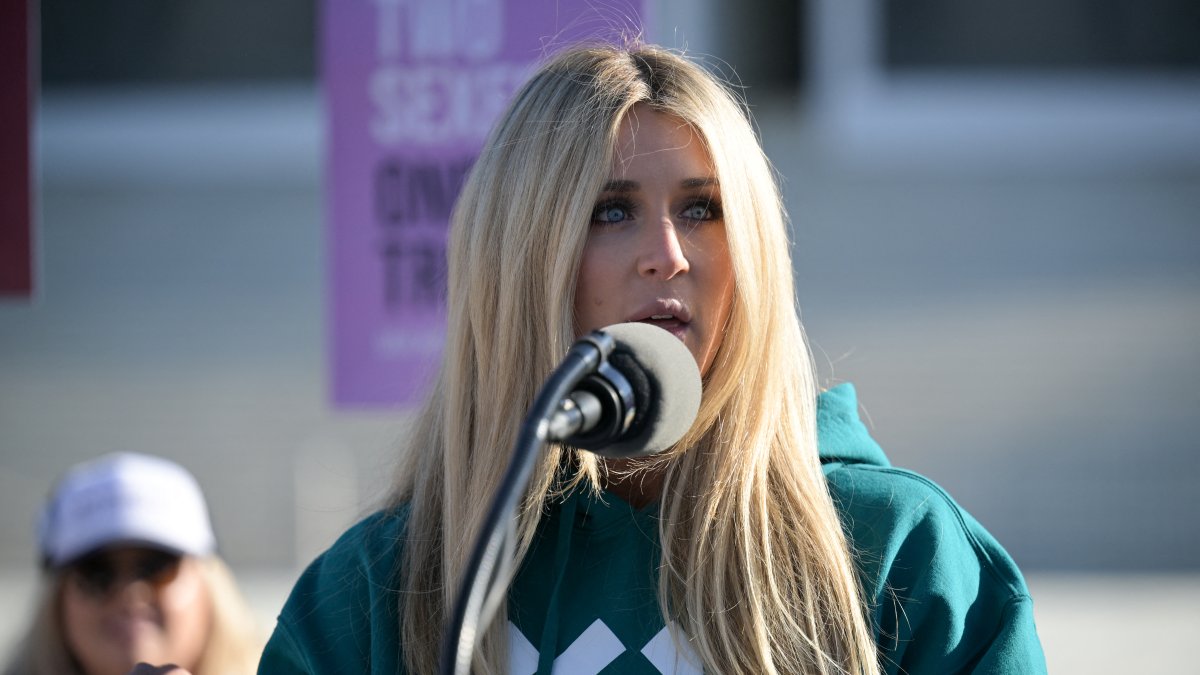
Conservative activist Riley Gaines—File Photo

A federal court dismissed on summary judgment the lawsuit filed by former swimmer Riley Gaines and the Independent Council on Women's Sports (ICONS) against the NCAA, concluding that the NCAA is not a recipient of federal financial assistance subject to Title IX, the law that prohibits sex discrimination in any educational program or activity that receives federal funds.
According to reports, Tiffany R. Johnson of the Northern District of Georgia ruled in favor of the NCAA on Monday. Johnson was nominated to the federal bench by former President Joe Biden in 2024. The ruling did not address whether the NCAA's former policy discriminated against female athletes.
What Gaines and the athletes alleged
Gaines and more than a dozen current and former college athletes filed the lawsuit in March 2024. They alleged that the NCAA violated their rights under Title IX by adopting and enforcing policies that allowed biological males to compete in women's events and use women's facilities.
The case centered on the 2022 Division I Women's Swimming and Diving Championships at Georgia Tech, where Lia Thomas, a former swimmer at the University of Pennsylvania, became the first openly transgender athlete to win a Division I national title.
Gaines, then at the University of Kentucky, tied with Thomas for fifth place in the 200-yard freestyle final. The plaintiffs also claimed that they shared locker rooms with Thomas during the championship.
Gaines: "This momentary setback will not deter me or other women athletes"
Gaines announced that she will appeal the decision to the Eleventh Circuit Court of Appeals. The plaintiffs have 30 days to file notice of appeal.
"This momentary setback will not deter me or other women athletes in the least," Gaines said in a statement reported by Fox News. "Rest assured, we will be appealing this decision. We are on the side of truth."
The activist expressed confidence that Americans will rally to support the fight against the NCAA in defense of female athletes.
Kim Jones, co-founder of ICONS, stated that the organization believes Judge Johnson was wrong and predicted that the appeals court will conclude that the NCAA is covered by Title IX.
"We will not give up our fight for women and girls’ rights in sports," Jones said.
NCAA has already changed its policy, but debate continues in Congress
The NCAA no longer uses the eligibility policy challenged in the lawsuit. In February 2025, following an executive order by President Donald Trump, the organization amended its rules to prohibit athletes assigned male at birth from competing on women's teams.
However, those athletes may still practice with women's teams and receive certain benefits, such as health care, under the new rules.
Separately, and not as a legal follow-up to Gaines' lawsuit, the Senate approved on Monday, by a vote of 77-22, the Protect College Sports Act (PCSA), a bipartisan bill led by Senators Ted Cruz (R-Texas) and Maria Cantwell (D-Wash.).
The bill would establish national rules on athlete compensation, transfers and eligibility, in addition to granting certain antitrust protections to the NCAA, conferences and schools. The bill now moves to the House of Representatives.
Kim Jones argued in The Wall Street Journal and before the Senate that the PCSA is a Trojan horse: on the surface, it regulates NIL—an athlete's right to be compensated for their name and likeness—and transfers between colleges; but on the inside, it could provide the NCAA with antitrust protection that makes it difficult to sue the organization over the rules it uses to determine who competes in each division, the central issue in cases such as that of Riley Gaines.
What's next: The battle in the Eleventh Circuit and on Capitol Hill
Separately, the debate over the legal framework for college sports will move to the House of Representatives, where the scope of the Protect College Sports Act and the NCAA's future role in regulating eligibility and compensation will be determined.
For the plaintiffs, the case is not merely a technical one: it is a fundamental dispute over what equal opportunity for women in college sports means and who should guarantee it.
LATEST