







Trump promoting bipartisan bill to stem outflow of Hollywood productions, restore US dominance in film industry
Trump's announcement comes on the heels of the Republicans' major setback in the midterm elections.
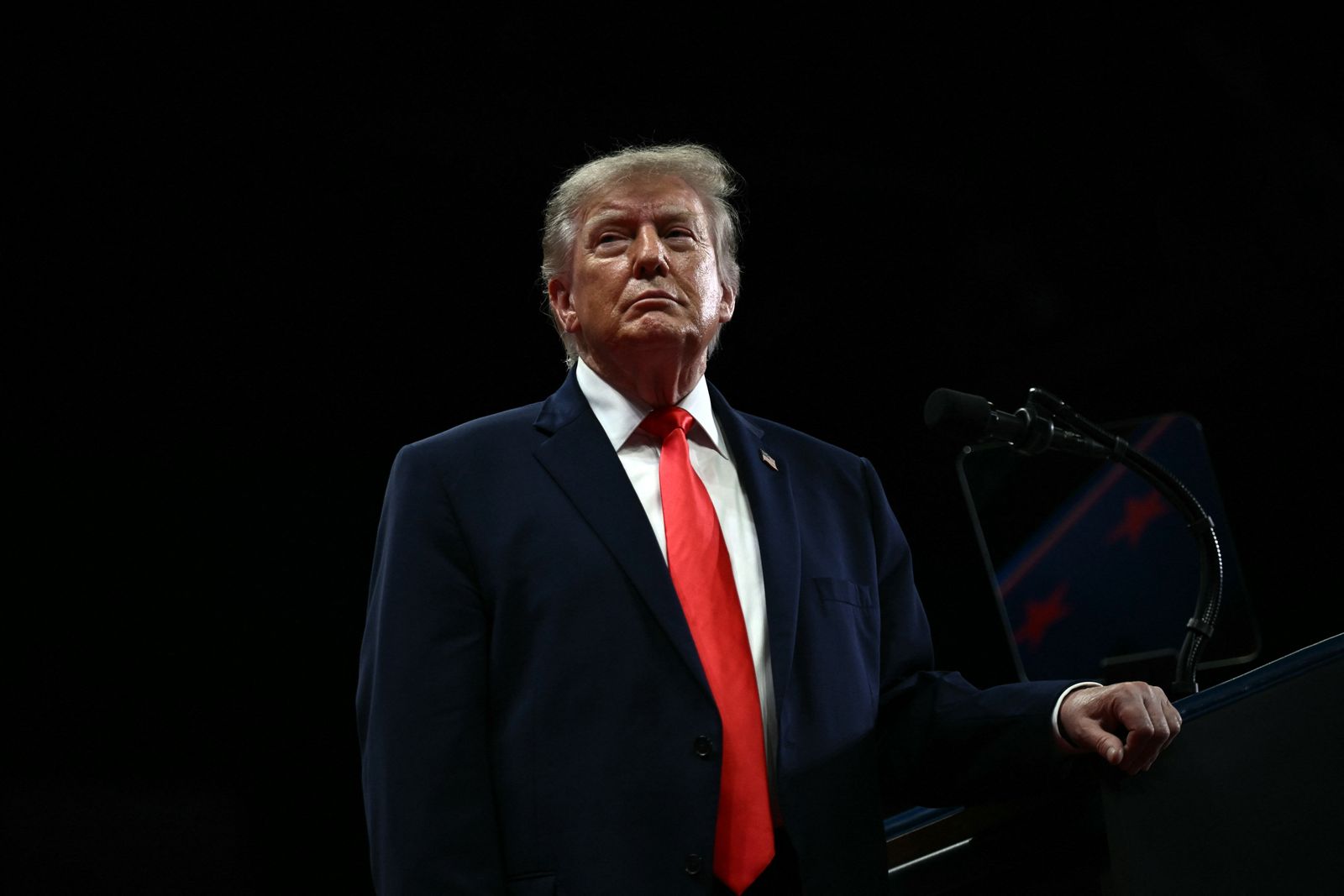
Donald Trump in a file photo.
President Donald Trump announced this Friday that he will work with both Democratic and Republican senators to advance a legislative initiative to strengthen the country's film industry and bring back productions that have moved to other countries in recent years. In a post on his official Truth Social account, Trump stated, "Everyone feels strongly about the Motion Picture and Television Industry — and so do I, and we all want to save it. It was MADE IN AMERICA, and must STAY IN AMERICA."
The Republican leader also indicated that he will have the support of Republican Senators Katie Britt (Alabama), Bernie Moreno (Ohio), Tim Scott (South Carolina), Thom Tillis (North Carolina), Tim Sheehy (Montana), John Cornyn (Texas) and Steve Daines (Montana). Representing the Democratic Party will be Dick Durbin (Illinois), Chris Coons (Delaware), Alex Padilla (California), Raphael Warnock (Georgia), Adam Schiff (California) and Mark Warner (Virginia). Trump also highlighted the initiative's impact on employment: "Importantly, hundreds of thousands of Blue Collar Workers will be positively affected, BIG TIME, by the passage of this Bill."

A September report from the Motion Picture Association estimated that a federal incentive program could double U.S. film and television production by 2032. Furthermore, it estimated that the proposed tax credit would create approximately 143,000 jobs annually in the sector. Trump defended the economic viability of the measure and asserted that the tax revenue generated by the resulting increase in activity would more than offset the cost of the incentives.
Trump's announcement comes on the heels of the severe setback suffered by Republicans in the midterm elections, in which the Democrats unleashed a "blue wave" and secured majorities in both the House of Representatives and the Senate. Following the results, the president expressed his willingness to seek agreements with the opposition and mentioned the possibility of pushing for bipartisan immigration reform. Although he has since sent mixed signals about his willingness to cooperate, the joint support for this initiative to revive the film industry could represent another attempt to build bridges with Democrats in light of the new composition of Congress.
🛠 Do you think there is an error in this article?
Recommendations





LATEST


