Duffy says flying is safe, but warns of further delays and cancellations following FAA's nationwide shutdown
After more than four hours of a complete halt to takeoffs, Secretary Sean Duffy assured the public on Saturday that the airspace is safe, although airlines are still dealing with thousands of cancellations and delays.
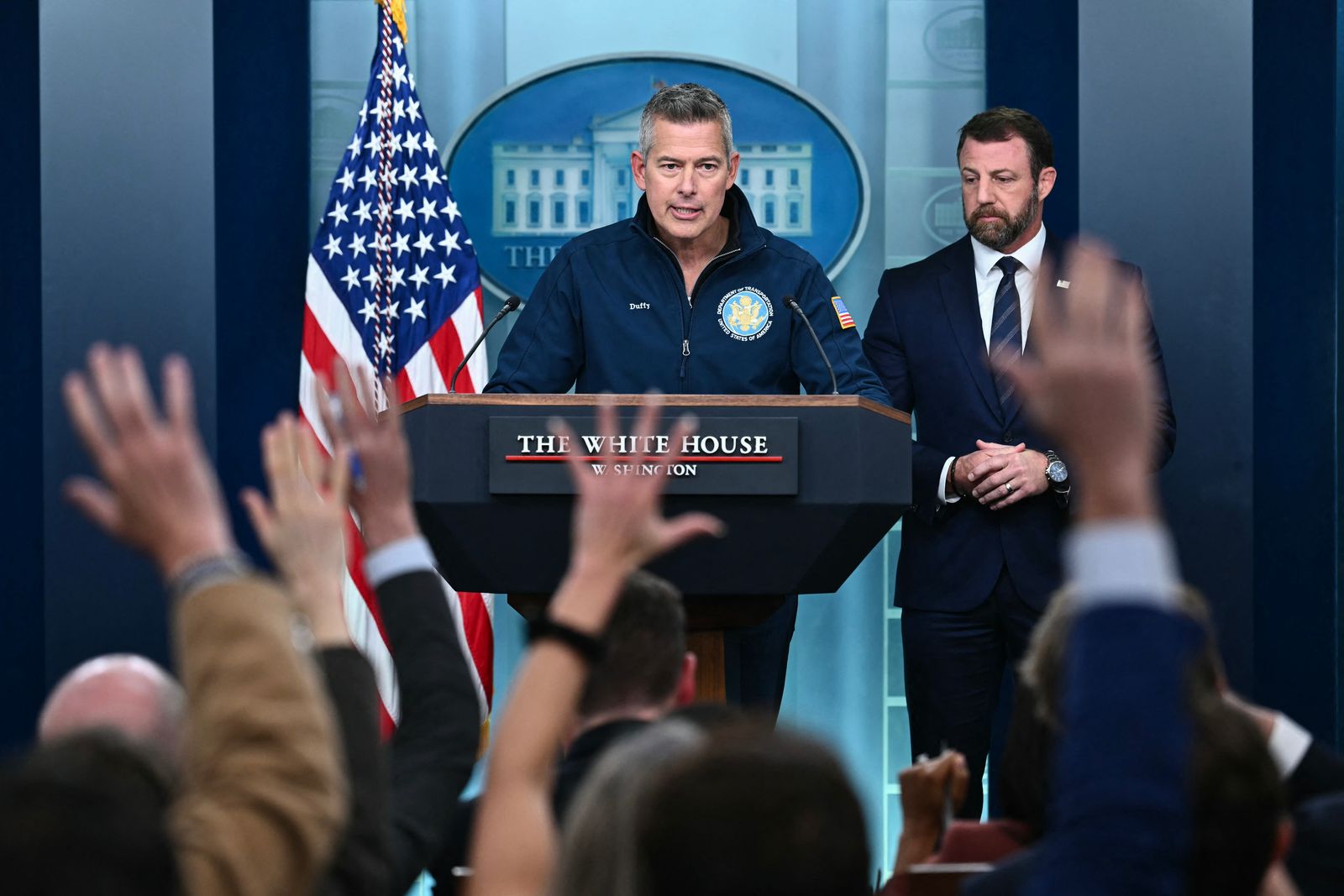
Secretary of Transportation Sean Duffy

Transportation Secretary Sean Duffy stated on Saturday that it is safe to fly following the unusual nationwide suspension of departures ordered on Friday by the Federal Aviation Administration (FAA), but warned that delays and cancellations will continue as airlines reschedule their operations.
"Operations are slowly returning to normal this morning," Duffy wrote on X. "Planes are pushing back, taxiing, and taking off, and it is safe to fly," the secretary added.
However, he noted that passengers "will continue to see some delays and cancellations as carriers reschedule flights and reposition aircraft/crews where they are needed most."
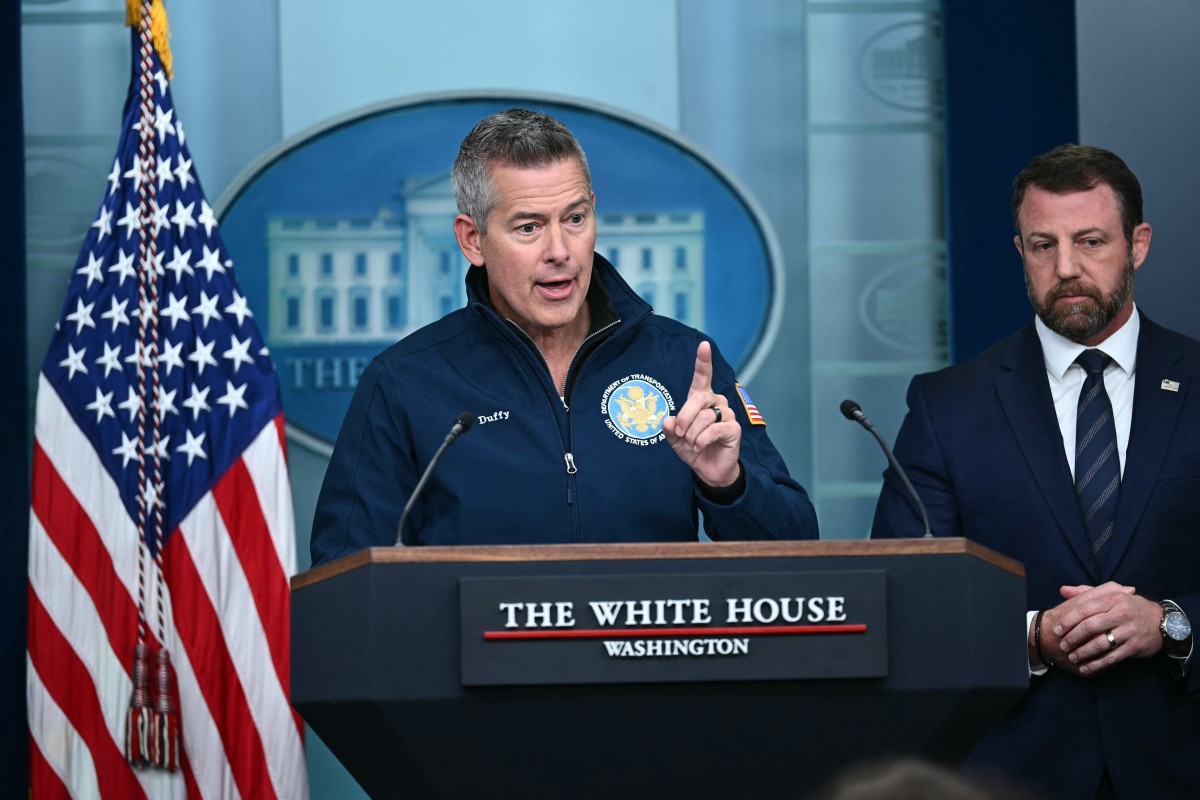
Thousands of flights affected
On Friday, the FAA ordered a nationwide suspension of takeoffs, known as a “ground stop,” after detecting communication problems at several air traffic control centers. The agency justified the measure due to "extraordinary circumstances and for safety reasons" and noted that technicians were investigating the malfunction.
The suspension began at 3:54 p.m. Eastern Time and was lifted at 8:15 p.m., after more than four hours. The impact was immediate and massive. According to FlightAware, on Friday, there were 9,159 cancellations and 7,190 delays on flights from, to, or within the United States, figures compiled by CBS News.
Flightradar24 put the total at nearly 10,000 flight cancellations to or from U.S. airports as of 11:30 p.m. on Friday. The company noted that Delta Air Lines and American Airlines each had more than 2,200 cancellations, while United Airlines reached approximately 1,800. 1687
On Saturday morning, FlightAware had recorded more than 3,300 cancellations —3,395 according to Newsweek, which cited FlightAware—and nearly 1,008 delays before 6:45 a.m. Eastern Time.
A slow recovery
Duffy acknowledged that the recovery will take time, as airlines must reorganize routes, aircraft and crews to make up for the accumulated backlog. The FAA indicated that flights would resume gradually, in coordination with the air traffic control system, and that incoming international flights would be handled on a case-by-case basis.
The secretary also linked the outage to the need to modernize federal aviation infrastructure and called on Congress to fund the upgrade of critical systems. Duffy argued that, without that investment, similar incidents could recur and the safety of U.S. airspace could be compromised.
The secretary submitted his request to Congress for $30 billion, the amount he had previously requested, along with OMB Director Russell Vought, of $50 billion in emergency funding. He stated that the country needs "new hardware, new software, and new telecommunications" and warned that, without that full investment, "it will continue to fail."
"This is an emergency. What could be more important than having an air traffic control system that actually works?" said Duffy, calling on Congress to act in a bipartisan manner. Secretary of Homeland Security Markwayne Mullin backed the estimate of $50 billion for a "complete overhaul" of the system.
What passengers should do
The nationwide ground stop, an exceptional measure, has drawn criticism for the vulnerability of the U.S. air traffic control system and has reignited the debate over public investment in critical technology. Duffy insisted that U.S. airspace is "the safest in the world," but acknowledged that the incident demonstrates the urgency of modernizing it.
🛠 Do you think there is an error in this article?
Recommendations





LATEST