2026 college rankings: Texas and Florida surpass Harvard and Princeton
An analysis by City Journal of 115 U.S. universities reveals that none scored higher than 80 out of 100 in an evaluation that includes educational quality, freedom of speech, institutional management and career opportunities.
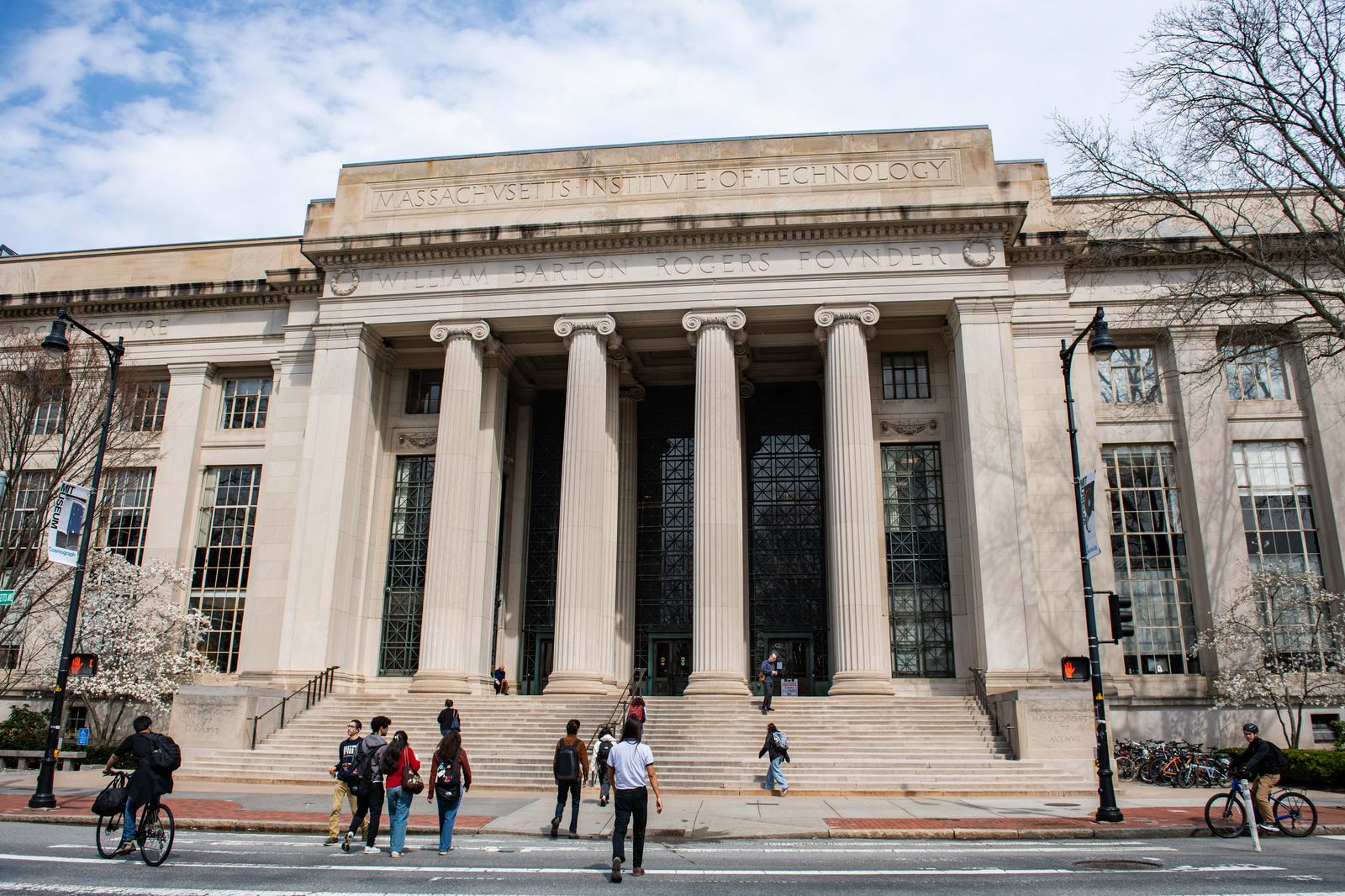
The Massachusetts Institute of Technology (MIT) campus

American universities are facing new questions about the quality of the education they offer and the value of their degrees. A study published by City Journal, a magazine from the Manhattan Institute, concluded that none of the 115 institutions analyzed scored higher than 80 out of 100, while most scored below 60.
The report, corresponding to the 2026 university ranking, evaluated 95 indicators related to teaching, academic freedom, administrative management, student life and graduates' career outcomes.
The results paint a particularly bleak picture: 87 of the 115 universities scored less than 60 points, only seven scored at least 70, and the average was approximately 50 out of 100.
Unlike traditional rankings that place special emphasis on reputation, admissions selectivity or graduation rates, the new study seeks to determine which institutions offer a rigorous academic education, foster debate among different viewpoints and best prepare their students to enter the job market.
What are the best universities in the United States according to the ranking?
One of the main findings is that some of the most internationally recognized universities do not rank at the top.
According to City Journal's complete ranking, the top 10 institutions are:
- University of Texas at Austin: 79.7 points
- University of Florida: 78.1 points
- University of Notre Dame: 75.7 points
- Massachusetts Institute of Technology (MIT): 72.2 points
- Claremont McKenna College: 71.4 points, tied for fifth place
- University of North Carolina at Chapel Hill: 71.4 points, tied for fifth place
- Georgia Institute of Technology (Georgia Tech): 70.3 points
- Purdue University: 67.7 points
- Ohio State University: 67.4 points
- Yale University: 66.5 points
The University of Texas at Austin tops the rankings due to its performance in educational experience and the quality of institutional management. The University of Florida stands out for its free speech policies and the economic return on educational investment.
Notre Dame received the highest rating for student life among the 115 institutions evaluated and ranked among the top 10 for post-graduation outcomes.
MIT stands out in particular for its contribution to its students' career prospects, while Georgia Tech leads the category of academic and career outcomes.

Why don't Harvard and Princeton top the rankings?
The study questions whether a university's historical prestige is sufficient to determine the quality of the education its students receive.
On this list, Princeton ranks 15th, with 64.5 points, while Yale ranks 10th.
The researchers argue that conventional rankings tend to favor institutions with substantial financial resources, highly competitive admissions processes and an established reputation.
However, these factors do not necessarily reveal the intellectual environment within the classroom, the degree of freedom to express differing opinions or the impact that studies have on graduates' career opportunities.
For this reason, City Journal decided not to assign points directly based on institutional reputation or the percentage of students rejected during the admissions process.
This approach yields significant differences compared to other rankings, although its results must be interpreted with the study's specific criteria in mind.
What factors were used to evaluate the universities?
The methodology published by City Journal combines government data, surveys, educational indicators and its own research to evaluate four major areas:
- Career Outcomes (40 points): Job opportunities, return on investment in a college education and the institution's contribution to the professional development of its graduates.
- Educational Experience (30 points): Quality of teaching, academic training, intellectual diversity among faculty, and programs dedicated to history, American institutions and academic debate.
- Quality of institutional management (20 points): Freedom of speech, merit-based criteria for admissions and hiring, institutional independence, and administrative decisions.
- Student Life (10 points): Community, diversity of opinions, political tolerance and freedom to express ideas on campus.
The 2026 edition incorporated more than 25 new indicators compared to the previous year and expanded the number of institutions evaluated from 100 to 115.
Among the new features is an analysis of public statements by university presidents; political donations by faculty and administrators; diversity, equity and inclusion (DEI) policies; and the universities' financial ties to countries such as China, Russia, Iran and North Korea.
The study awards higher scores to institutions that promote institutional political neutrality, eliminate certain diversity requirements in hiring and adopt measures to protect freedom of speech.
These criteria reflect the perspective of the Manhattan Institute, an American think tank focused on free-market policies. Therefore, the ranking should not be understood as a universal measure of university quality, but rather as an evaluation based on specific academic and institutional priorities.

Americans' distrust of higher education is growing
The results come amid growing concern about the performance of American universities.
A Pew Research Center survey published in October 2025 found that 70% of Americans believed the higher education system was heading in the wrong direction.
Gallup reported that confidence in higher education had fallen from 57% in 2015 to 38% in its most recent survey cited by the study.
Furthermore, only 31% of Americans considered obtaining a college education to be very important—the lowest percentage recorded by Gallup since it began asking that question in 1978.
These figures reflect a growing debate about tuition costs, student debt, job opportunities and the role of universities in educating future generations.
What does this ranking mean for students and their families?
The report also identifies significant differences among universities that achieve similar results.
For example, although Texas leads the overall ranking, it ranks 106th on the student self-censorship indicator. Notre Dame, third in the overall ranking, ranks 110th on the indicator of administrative support for freedom of speech.
This means that an institution can excel in its academic programs or career outcomes while simultaneously exhibiting weaknesses in other areas of the college experience.
Nor does the ranking imply that institutions with lower scores necessarily provide a poor education across all their disciplines.
For families considering investing significant amounts of money in higher education, the report suggests analyzing not only a university's prestige but also the quality of its programs, the academic environment and the career opportunities it offers.
The study's central conclusion is that an institution's historical prestige does not, by itself, guarantee a better educational experience. The authors argue that students should have access to more comprehensive information before deciding where to study and how much to invest in their education.
🛠 Do you think there is an error in this article?
Recommendations





LATEST