FAA Lifts Nationwide Flight Suspension: Duffy and Mullin Rule Out a Cyberattack, Point to an Outdated Air Traffic Control System, and Request $50 Billion from Congress
Duffy pointed directly to the infrastructure that supports communications between air traffic controllers and pilots. As he explained, the system's routers crashed due to an information overload and began sending unreliable data, forcing operations to be suspended.
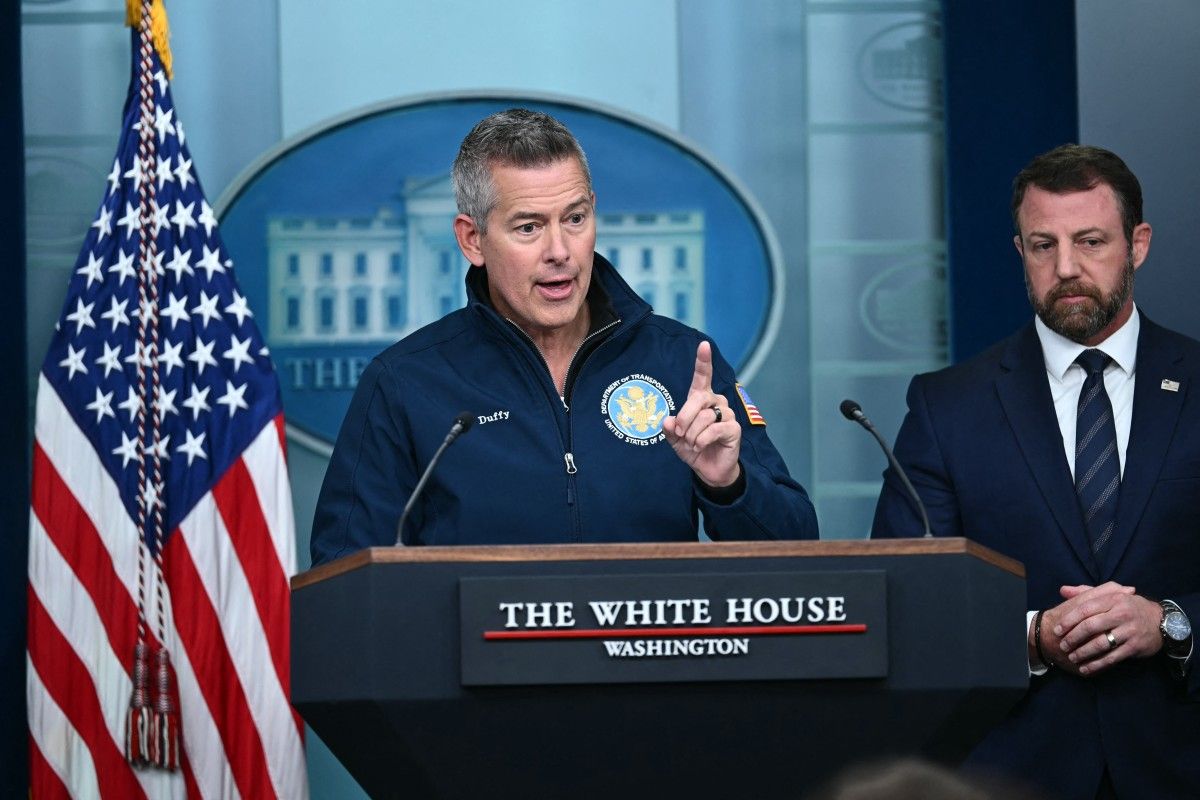
Sean Duffy provides an update on the suspension of flight operations

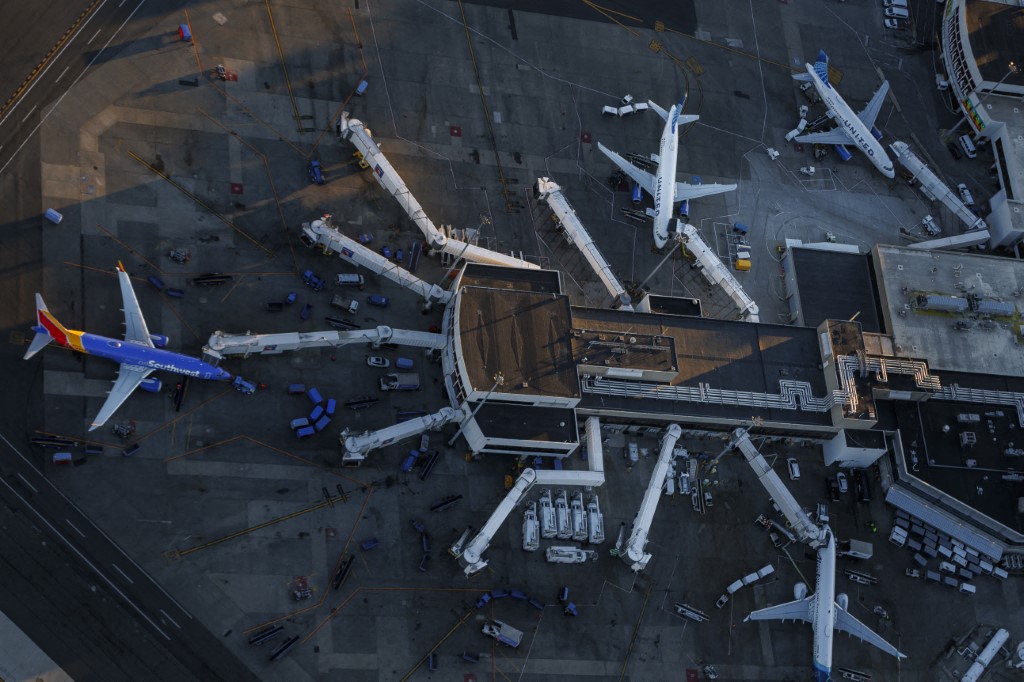
The Federal Aviation Administration (FAA) lifted the nationwide flight suspension after more than four hours of disruption, while authorities attributed the failure to an aging air traffic control system and ruled out any type of cyberattack, an unconfirmed hypothesis that caused alarm on social media.
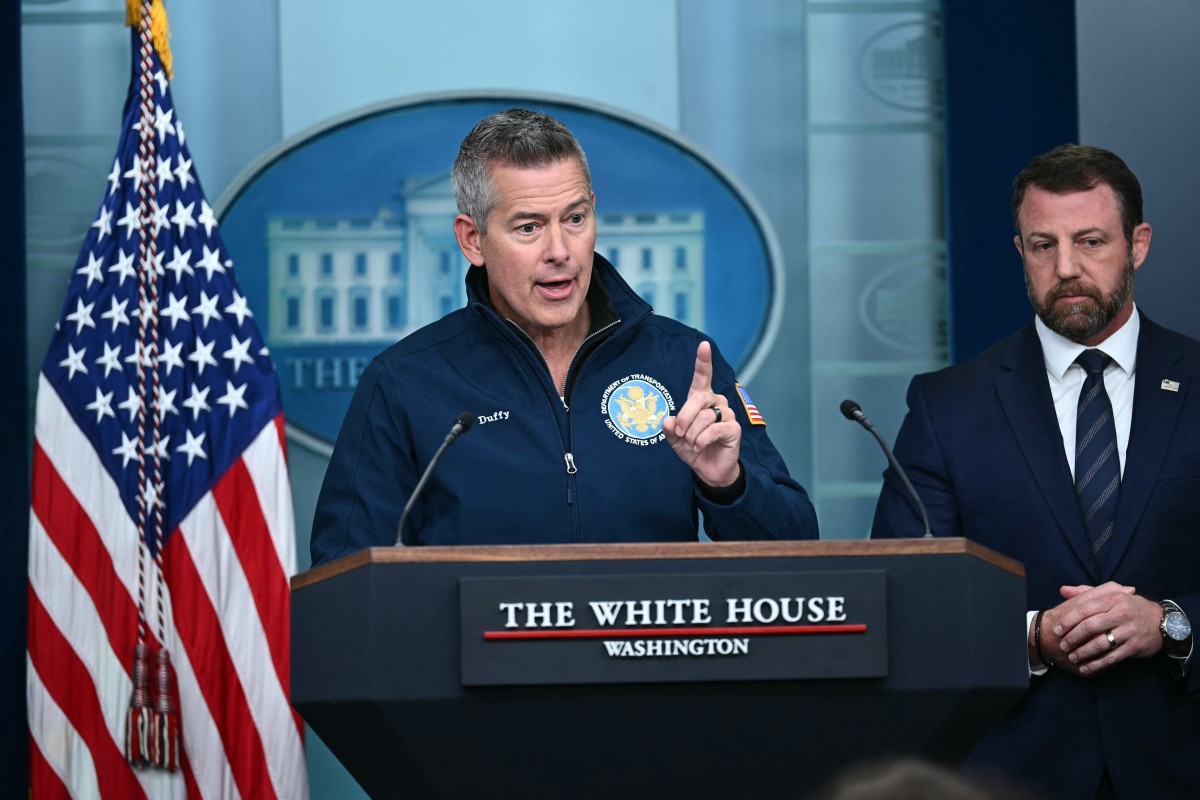
Explanations were provided at a White House press conference led by Secretary of Transportation Sean Duffy and Secretary of Homeland Security Markwayne Mullin.
Duffy pointed directly to the infrastructure that supports communications between air traffic controllers and pilots. As he explained, the system's routers crashed due to an information overload and began transmitting unreliable data, forcing operations to be halted.
"Our routers actually got overloaded with data, and… they started to give us inconsistency in the data from those routers. And because of that, we shut the system down," he said. The secretary acknowledged that some of that equipment was replaced during his tenure, but that the older hardware eventually failed.
When the order was given, more than 3,500 planes were in the air. Duffy assured that all were guided to the ground using the protocols established for this type of incident and that, hours later, fewer than 400 remained in the airspace.
Mullin, for his part, sought to reassure the public and counter the speculation circulating on social media. "I just want to reiterate this: the public was never at danger through this process," he said, explaining that the suspension was ordered as a precaution. The secretary denied that there had been a cyberattack and rejected any link to Microsoft's global outage on Thursday.
President Donald Trump partially foreshadowed that diagnosis. In a phone conversation with Fox News correspondent Peter Doocy, he said there is no indication of a cyberattack or a failure linked to artificial intelligence, and that the problem appeared to stem from "a bunch of old broken stuff" on which the FAA depends.
The press conference also served as an opportunity for Duffy to raise the stakes with Congress. The secretary called for "emergency funding" and raised the request to $50 billion to modernize the air traffic control system, exceeding the more than $30 billion the administration had requested so far. "I’ve asked, the president’s asked for $30 billion. I want $50 billion," he said.
The plan presented by the Department of Transportation in 2025 calls for a new system by 2028, at a cost of approximately $31.5 billion. About $12.5 billion has already been secured through the One Big Beautiful Bill Act, although Duffy insisted that amount barely covers a portion of the project.
The incident has already drawn attention on Capitol Hill. Senators Ted Cruz, a Republican from Texas, and Maria Cantwell, a Democrat from Washington, demanded answers about what happened, and Democrat Tammy Duckworth called for a thorough investigation.
The suspension began at 3:53 p.m. Eastern Time, when a telecommunications failure affected the En-Route Air Traffic Control Centers, which guide flights crossing the country. Some areas of airspace were left completely without control service, and air traffic controllers even warned pilots that they had lost all their frequencies.
Huge impact
More than 5,300 flights were canceled, and more than 10,200 were delayed, according to data from FlightAware. Nearly 500 planes had to return to their departure airports, and more than a hundred were diverted. It was only the third nationwide suspension in the country's history, following the one ordered after the September 11, 2001, attacks and one in January 2023.
Although takeoffs have resumed, normal operations will return gradually. Thousands of planes and crews were left stranded ahead of their next flights, which is expected to trigger chain reactions of delays and cancellations throughout the weekend. Airlines have already canceled more than 300 flights scheduled for Saturday, and several have allowed reservation changes without penalty.
The consequences extended across the Atlantic. At the request of the FAA, Eurocontrol, the authority that coordinates European air traffic, suspended all departures bound for the U.S. from its 42 member countries until midnight Eastern Time. This is a heavily trafficked route, with about 1,180 daily flights between Europe and the North Atlantic last week.
Sports affected
Several NFL teams are scheduled to fly on Saturday for their Sunday games, including the Rams, who are set to travel to Arizona; and the 49ers, who are headed to Dallas; while the Chargers are set to cross the country to Baltimore for Monday's game. The league did not announce any schedule changes and said it is too early to assess the impact. In the NBA, the Brooklyn Nets were stranded in New Orleans while trying to travel to Memphis, and in the NHL, the San Jose Sharks couldn't take off on time for Utah.
It remains unclear whether Sunday's games will be permanently affected, and authorities urged the teams to contact the federal government and the airlines to coordinate their flights.
🛠 Do you think there is an error in this article?
Recommendations




LATEST