Appeals court rules Pentagon ban on transgender military unconstitutional
The ruling upholds a preliminary injunction preventing the Department of Defense from expelling currently serving transgender military members who are part of the lawsuit. However, the court limited the scope of this protection exclusively to active duty plaintiffs, allowing the administration to continue to enforce restrictions on those seeking to enlist who were blocked by the new policy.
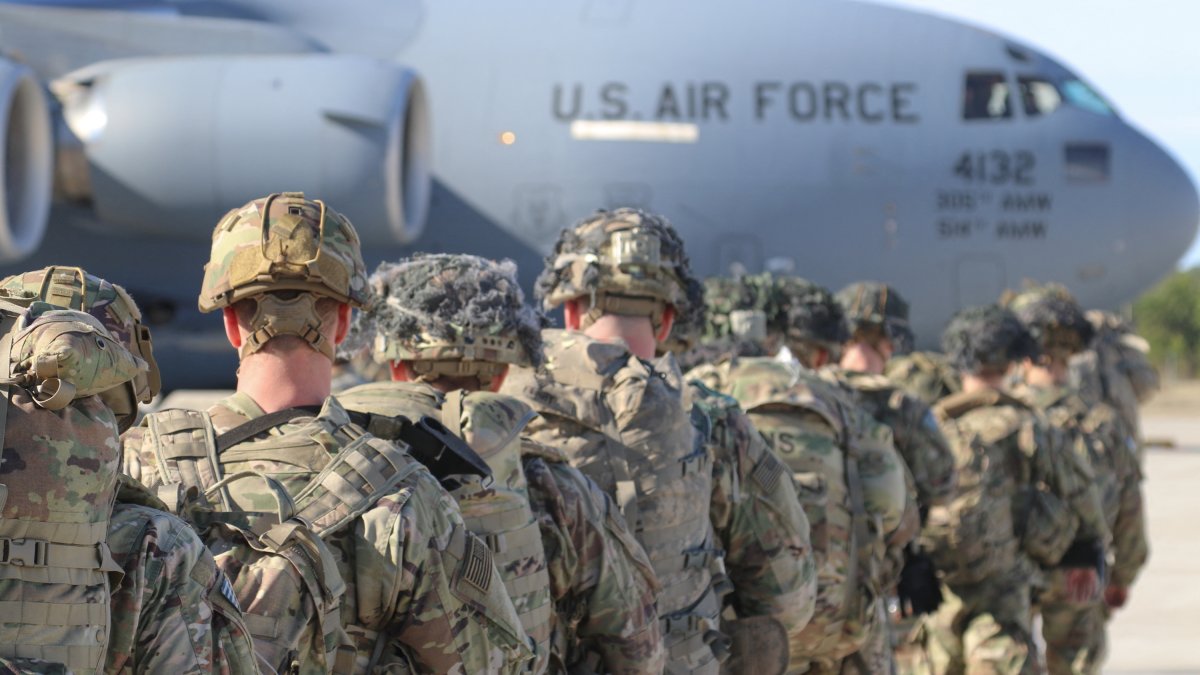
U.S. military-File Image.

A federal appeals court ruled on Monday that a policy pushed by the Trump administration to ban transgender people from military service is likely unconstitutional, in a new judicial setback for the measure.
The decision was made by a divided three-judge panel of the U.S. Court of Appeals for the District of Columbia Circuit, which ruled by a majority of 2 to 1. Judges Judith Rogers and Robert Wilkins concluded that the policy, implemented last year by Defense Secretary Pete Hegseth, would be motivated by prejudice toward transgender people and would violate the constitutional guarantee of equality under the law.
Protection limited only to transgender people who are already serving
Wilkins argued that the government's official justification was "a pretext" and that, in reality, the measure responded, at least in part, to an illegitimate interest in harming a politically vulnerable group. It also noted that Trump himself had declared transgender people "categorically unfit" for military service because of their gender identity.
The ruling upholds a preliminary injunction preventing the Department of Defense from expelling currently serving transgender military members who are part of the lawsuit. However, the court limited the scope of this protection exclusively to active-duty plaintiffs, allowing the administration to continue to apply restrictions to those who seek to enlist and were blocked by the new policy.
Divided court upholds earlier ruling but keeps legal battle open
The appeals court ruling largely upholds a previous March 2025 decision by federal Judge Ana Reyes, who had already determined that Trump's executive order likely violated the constitutional rights of those affected. The government appealed that ruling following the granting of the injunction requested by eight plaintiffs, including six active duty military personnel.
Despite the judicial setback, the decision will not take effect immediately, which gives the administration leeway to request that the case be reviewed by the full court of appeals. In parallel, the Supreme Court (SCOTUS) last year allowed enforcement of the ban while litigation continues, and there are other ongoing cases, including one in Washington state that has also ruled in favor of the plaintiffs.
The division among the justices was reflected in the dissenting vote of Justin Walker, a 2020 Trump appointee, who opposed the majority decision. For their part, Wilkins and Rogers were appointed by former Presidents Barack Obama and Bill Clinton, respectively.
LATEST