The Public Broadcasting Corporation, which funds NPR and PBS, will close following cuts approved by Congress
The corporation has run out of the resources it needs to continue operating, leading to a shutdown that will begin with the elimination of most jobs on Sept. 30.

President Donald Trump in Congress Associated Press / LaPresse Only italy and spain.

The Corporation for Public Broadcasting (CPB), an entity that for nearly six decades has funneled federal funds to public radio and television stations such as NPR and PBS, announced Friday that it will initiate an orderly shutdown of its operations.
The decision, which marks the end of an era for public media in the United States, comes in response to the elimination of its federal funding, approved by Congress and backed by the Administration of President Donald Trump.
A shutdown over federal cuts
The official CPB announcement comes on the heels of two decisive financial blows. In July, the Congress passed a rescissions package that eliminated $1.1 billion in funding previously allocated to CPB for fiscal years 2026 and 2027.
This cut, part of a $9 billion proposal pushed by the White House, also affected international aid programs. In addition, the Senate Appropriations Committee released its 2026 appropriations bill, excluding for the first time in more than 50 years any funding for CPB.
These cuts have left the corporation without the resources it needs to continue operating, leading to a shutdown that will begin with the elimination of most jobs on September 30 of this year.
However, a small transition team will remain until January 2026 to manage regulatory compliance, final distributions, and financial obligations, including music rights and royalties essential to the public media system.
“We are deeply grateful to our partners across the system for their resilience, leadership, and unwavering dedication to serving the American people,” said Patricia Harrison, CPB's president and CEO, in the official statement. Despite the efforts of millions of citizens who advocated to preserve funding, the corporation now faces the "difficult reality of closing our operations."
Federal funding
CPB, created under the Public Broadcasting Act of 1967, annually distributed more than $500 million in federal funds to local stations, NPR, PBS, and content producers, according to notes in The New York Times. In addition, according to CPB financial data, more than 70% of these funds went directly to the more than 1,500 public radio and television stations nationwide, which on average relied on this funding for 13% of their revenue.
NPR received approximately 1% of its operating budget directly from the federal government, although its 1,000 member stations got between 8% and 10% through CPB.
For its part, PBS and its affiliate stations depended on federal funds for about 15% of their revenue.
The Trump Administration's decision.
Eliminating CPB funding has been a priority of the Trump Administration, which has repeatedly accused NPR and PBS of having a liberal bias and producing "leftist propaganda." Since the beginning of his second term, Trump has implemented several strategies to dismantle the public media system:
- May executive order: Trump signed an executive order that instructed CPB to cease federal funding for NPR and PBS, arguing that the current media landscape, with abundant news options, makes government support unnecessary. The order also called for eliminating indirect funding, prohibiting local stations from using federal money to fund NPR or PBS programs.
- Removal of board members: Trump, through a lawsuit, attempted to remove three of CPB's five board members (Laura Ross, Diane Kaplan, and Sony Pictures CEO Tom Rothman, appointed by former President Joe Biden). An action that the corporation challenged in court as exceeding presidential authority, although, ultimately, a judge denied the lawsuit against the Trump Administration.
- Pressure in Congress: In June, Trump formally asked Congress to withdraw the $1.1 billion appropriated to CPB, using the rescission mechanism, which allows the president to propose cuts to already approved funds. This allowed the Republicans to pass the cuts with a simple majority in the Senate.
The rescissions package was approved by the House of Representatives on July 18 by a vote of 216-213 and had the exclusive support of Republicans, except for two senators, Lisa Murkowski of Alaska and Susan Collins of Maine, who opposed it because of the impact on rural stations.
Trump signed the bill on July 4, celebrating on Truth Social the elimination of funding for what he called “ATROCIOUS NPR AND PUBLIC BROADCASTING.”
For her part, Katherine Maher, president of NPR, warned that the cuts represent "an unwarranted dismantling of beloved local civic institutions” and will have a disproportionate impact on rural areas. While Paula Kerger of PBS stressed that the loss of funding "goes against the will of the American people."

Politics
Woke, powerful and controversial: Katherine Maher's reign at NPR on a tightrope
Agustina Blanco
In Native communities, Loris Taylor, president of Native Public Media, called the Senate's decision "deeply troubling," arguing that the 57 Native radio stations and four television stations that rely on CPB are essential to cultural preservation and public safety.
Reactions
Republicans such as Representative Brandon Gill of Texas defended the cuts, noting that state-sponsored media “use it to spew left-wing propaganda that undermines American values.”
State sponsored media outlets receive over $500 MILLION every year from American taxpayers.
— Congressman Brandon Gill (@RepBrandonGill) February 6, 2025
They use it to spew left-wing propaganda that undermines American values.
NPR and PBS have the right to publish what they want — but they don’t have a right to American taxpayer dollars. pic.twitter.com/qb9KD6SQpM
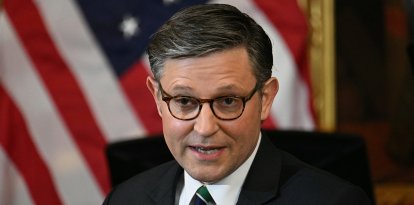
Mike Johnson, speaker of the House of Representatives (R-LA), defended the cuts and criticized NPR and PBS for not being "objective," claiming that public funding for media was a "misuse of taxpayer dollars."
Marjorie Taylor Greene (R-GA) was one of the most strident voices in favor of defunding, accusing NPR and PBS of being "radical left-wing echo chambers." Along those lines, he organized a congressional hearing titled "Anti-American Airwaves," where he questioned NPR and PBS CEOs Katherine Maher and Paula Kerger about alleged ideological biases.
Trump's executive order
Suspension of direct and indirect funding by CPB
The order instructs the CPB Board to immediately suspend all direct funding to NPR and PBS, in line with the Administration's policy of not supporting media that are not fair, accurate, and impartial. It also prohibits indirect funding, ensuring that licensees and permit holders of local public radio and television stations do not use federal funds to support NPR or PBS.
Actions by other federal agencies
The order is not limited to CPB but extends its directives to all executive agencies, whose directors must identify and terminate any direct or indirect funding to NPR and PBS, to the extent permitted by law. In addition, agencies must assess whether NPR and PBS are in compliance with the terms of any existing contracts, grants, or other funding instruments, taking corrective action in the event of noncompliance.
Legal Provisions and Scope:
The order includes severability clauses and general provisions to ensure implementation in accordance with law and subject to the availability of funds. It clarifies that it does not affect the statutory authority of departments or agencies or the functions of the director of the Office of Management and Budget in budgetary matters.
LATEST