The EU's fierce race to censor the US (I): Musk, the scapegoat
Since 2015 and 2016, the European Commission began creating various forums in which European regulators coordinated with platforms, recognizing that addressing the problem of dissenting speech would take several years. The goal was to use the commission to control the global internet and suppress narratives that are outside its agenda and narrative.
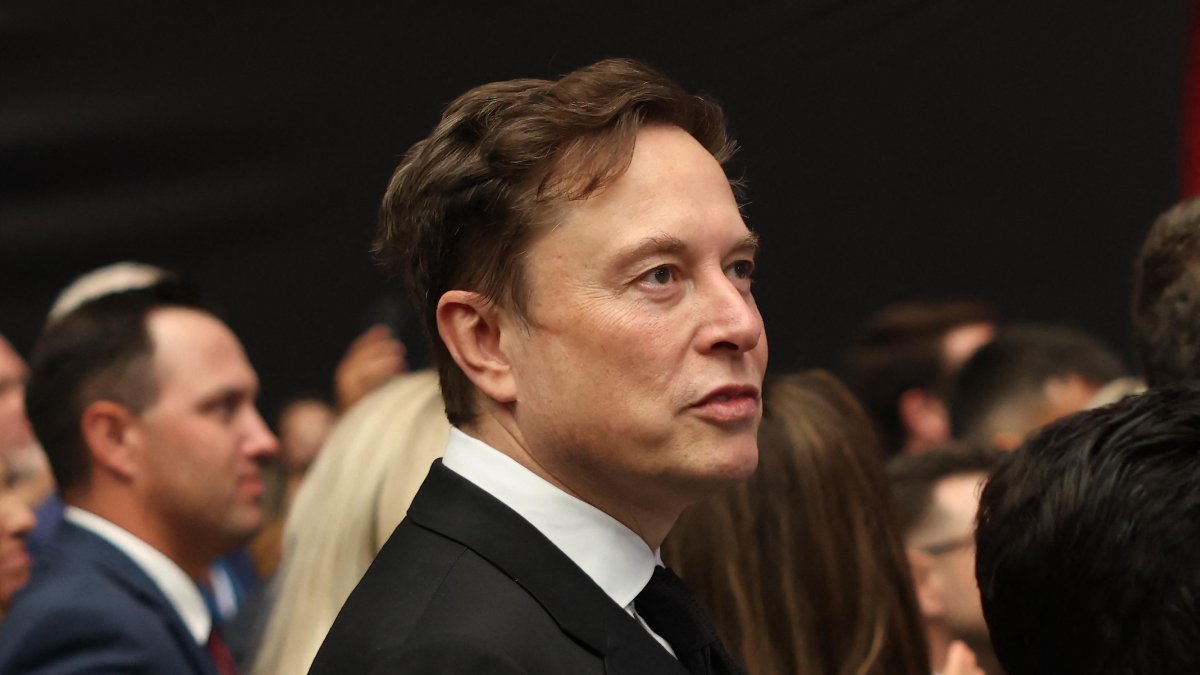
Elon Musk in Arizona/ Patrick T. Fallon
On May 7, 2026, the Paris Prosecutor's Office upgraded to a formal criminal investigation the proceedings opened against X Corp., X.AI Holdings, Elon Musk and former CEO Linda Yaccarino. Musk's response came a few hours later: "They’re faker than a chocolate euro and gayer than a flamingo in a neon tutu!" he wrote against the Parisian magistrates. It's the reaction of someone who has spent 18 months as the most visible target of an unprecedented regulatory campaign, which began with technical fines, escalated to criminal investigations and now threatens to halt the IPO of X and xAI.
But the French case is not an anomaly but a chapter in a strategy that the European Union has been methodically executing and that has an objective that goes far beyond Musk: controlling what is said, who says it and with what consequences in the global digital space. A strategy whose central instrument is the Digital Services Act, and whose scope, as thousands of documents obtained under subpoena by the U.S. Congress show, does not stop at European borders.
Dec. 5, 2025, was the hinge moment. The European Commission announced the first-ever fine under the Digital Services Act: €120 million against X. The formal violations cited sounded technical: the blue check mark for payment, advertising transparency, researchers' access to data. But the reaction from Washington left no doubt about what was really on trial.
Vice President JD Vance, even before the commission officially announced the sanction, wrote on X: "Rumors swirling that the EU commission will fine X hundreds of millions of dollars for not engaging in censorship. The EU should be supporting free speech not attacking American companies over garbage." Secretary of State Marco Rubio was even more direct: the fine was "an attack on all American tech platforms and the American people by foreign governments," adding, "The days of censoring Americans online are over."
In February 2026, the House Judiciary Committee released its second report on the subject, this time with thousands of documents obtained under subpoena from 10 of the world's largest tech companies, documenting that what happened with X was not an isolated incident but the arrival point of a strategy built over a decade. Since 2015 and 2016, the European Commission began creating various forums in which European regulators coordinated with platforms, recognizing that addressing the problem of dissenting speech would take several years. The goal was to use the Commission to control the global internet and suppress narratives that fall outside its agenda and narrative.
The DSA Trap
The Digital Services Act was passed in 2022 and took full effect in 2024. Brussels presents it as an online safety law, a necessary response to the "systemic risks" posed by large digital platforms: disinformation, hate speech, illegal content, electoral manipulation. Its advocates insist that it does not prohibit anything specific but requires processes and safeguards.
But that description collapses as soon as the specific mechanism is examined. The DSA obliges so-called "Very Large Online Platforms" (VLOPs), with more than 45 million users in the EU, to identify and remove "illegal" content under the laws of any of the 27 member states. Not according to a unified European definition, but according to the most restrictive standard available in the bloc. It then requires them to implement systems to mitigate "systemic risks" associated with concepts such as "disinformation," "hate speech," "manipulated information" and "negative effects on civic discourse."
Terms such as "disinformation," "hate speech," and "manipulated information" are too broad and vague to serve as a legitimate basis for silencing speech. By requiring the removal of broadly defined "harmful" content, this legislation paves the way for widespread censorship that curtails lawful and truthful speech under the guise of compliance and security. The result is a sanitized and tightly controlled internet where the free exchange of ideas is stifled.
Penalties for non-compliance are the real driver of the system: up to 6% of the company's annual global revenue. For Meta, that's about $9 billion. For Google, about $17 billion. For X, in the order of $200 million. Faced with a threat of that magnitude, the "voluntariness" of compliance is a fiction. Platforms do not negotiate with the European Commission: they preemptively obey.
The DSA's focus on broad concepts such as "disinformation", "hate speech" and "manipulation of information" may lead to mass removal of online content that would not meet the criteria of the EU Charter and the European Convention on Human Rights. Instead, the DSA lays the groundwork for shadow banning and institutionalized censorship, as several members of the European Parliament pointed out.
Even within Europe, independent free speech organizations have been documenting the phenomenon with hard data for months. La Flamme de la Liberté, a French publication specializing in the subject, publishes monthly the DSA Watch, a tracking dashboard that tracks in real time content moderation on the main platforms. Its diagnosis is blunt: "Freedom of expression has never been so theoretically protected nor so practically threatened."
To understand why the DSA is not simply a European issue, one must understand a mechanism that Professor Anu Bradford of Columbia University dubbed the "Brussels Effect". This is the EU's unilateral ability to regulate global markets by setting standards in competition policy, environmental protection, food safety, privacy protection or regulating hate speech on social networks. Interestingly, the EU does not need to coercively impose its standards on anyone: market forces are sufficient. Given that the EU is one of the largest and richest consumer markets in the world, few global companies can afford not to operate there. The price of access to the single market is adjusting products and policies to European standards, as a result, companies end up applying those standards globally because it's cheaper than maintaining two versions of everything.
The DSA compels American technology platforms to modify their terms of service and content moderation policies globally to align with EU mandates, generating an extraterritorial regulatory effect. Companies face two undesirable options: develop costly country-specific geoblocking policies or globally implement the more restrictive EU-mandated moderation standards to ensure legal compliance. The Brussels Effect is a tool to maintain the EU's role as a global standard setter. In practice, this mechanism produces results that are no longer hypothetical.
The best thermometer of what the DSA means in practice is not the legal texts but the concrete cases of what European regulators have qualified as content that platforms must remove. The list, documented in Judiciary Committee reports and European court records, is revealing. The documents obtained under subpoena show that European censors target core political speech that is neither harmful nor illegal, attempting to stifle debate on issues such as immigration and the environment, for example. At the commission's May 2025 closed workshop regulators labeled a hypothetical post that simply said "we need to take back our country" as "illegal hate speech" that platforms are required to censor.
This is the standard that, via the Brussels Effect, American platforms are being pressured to apply globally. What a bureaucrat in Brussels or a regulator in Warsaw defines as "illegal" or "harmful" is imposed, through the moderation policies of Meta, TikTok or X, on users in Chicago, São Paulo or Mexico City. And now this logic has made a qualitative leap: It is no longer a matter of administrative fines but of criminal charges against American citizens for decisions taken in American territory. The Paris case has become a thermometer for Europe that is measuring how far its machine for attacking freedom of expression can go. What is decided in Paris will mark, to a large extent, how far a member state can go when it comes to censoring a large American technology company.
It is a well-oiled mechanism, long planned and brutally applied, created by a decadent bureaucracy that has definitively abandoned all the values of a free society and that is willing to sink the U.S. in its dictatorial drift.
LATEST