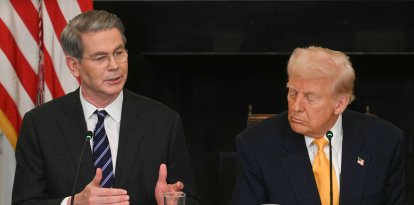
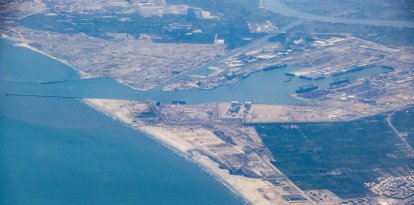
Board of Peace shows ‘peacemaking is going to be effectively led by America,’ Tony Blair says
“Virtually all of the countries there today, they didn’t just turn up. They brought something to the table,” the board executive and former British prime minister told JNS.
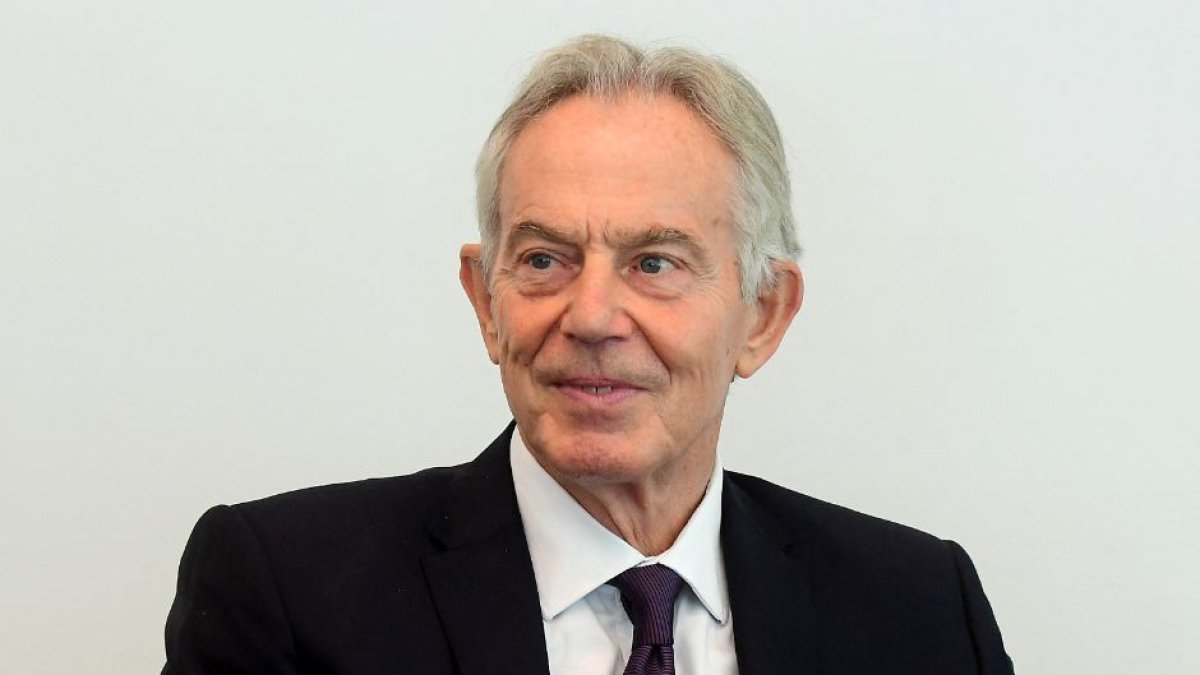
Former British Prime Minister Tony Blair

Former British prime minister Tony Blair has seen his share of failures in the Middle East peace process. But the member of the executive board of the Board of Peace says that this time could be different.
“The challenges are still immense, and you’d have to be foolish—especially after I’ve been dealing with this issue for so long—to be sort of blindly optimistic,” Blair told JNS after the inaugural Board of Peace meeting in Washington on Thursday.
“But there is a plan. It depends crucially on demilitarization of Gaza, of ensuring that this new technocratic committee can govern with authority,” he said. “We just got to try and make it work.”
Questions have long surrounded the board’s ability to succeed. Countries have hesitated to fund reconstruction given that Hamas remains armed and in power. Member states have also been slow to commit troops to the International Stabilization Force meant to enforce the Israel-Hamas ceasefire until there is a new government.
But with five Muslim-majority countries announcing troop commitments on Thursday and billions of dollars in funding pledges revealed, Blair told JNS that “there is real momentum out of today.”
That included an announcement by Nickolay Mladenov, the board’s high representative for Gaza, that 2,000 Gazans had signaled interest in joining the enclave’s police force in the hours after an application was published online.
“There’s got to be a new police force—people who will be vetted by the government of Israel to make sure that we don’t allow people who are going to take that in the wrong direction for the people of Gaza,” Blair told JNS.
“It’s not that people don’t recognize there’s still immense problems, and in Israel, there will still be a lot of skepticism,” he said.
“We have a plan,” Blair said. “We’re pretty committed to delivering it.”
There appeared to be 23 “observer” states and entities among the 49 representatives who attended the event on Thursday. Many states that have declined to be part of the board have said that joining an international body requires parliamentary approval or other constitutional obligations. Some have said that the board intends to undermine the United Nations.

“I think people will want to join in the end,” Blair told JNS. “The trouble with anything like this is that a whole lot of myths spring up, like it’s to replace the U.N. We’re not replacing the U.N.”
Blair said that there needs to be a fair acknowledgment that “the U.N. hasn’t produced the 20-point plan for Gaza. President Trump did.”
“The U.N.’s not handling the Russia-Ukraine peace talks. President Trump is,” he told JNS.
That means that the Board of Peace is “a recognition that the peacemaking is going to be effectively led by America, but with a coalition of supporting countries—for it not to be American unilateralism, but America bringing countries together in support of a common objective peace,” according to Blair.
The board still needs to win over a lot of people and countries, including Blair’s, where British Prime Minister Keir Starmer has derided the Board of Peace.
The United Kingdom sent its ambassador in Washington, rather than a senior government official, to Thursday’s meeting.
Blair told JNS that “virtually all of the countries there today—they didn’t just turn up.”
“They brought something to the table,” he said. “It could be money, but it could be troops. It could be support for capacity building. Whatever it is, come to the table with something, and it’s an open door.”
LATEST