ANALYSIS
The calculations behind Netanyahu’s emergency meeting with Trump
Nuclear negotiations with Iran may serve as an effective smokescreen, providing cover as Washington and Jerusalem again join forces together toward a definitive war.
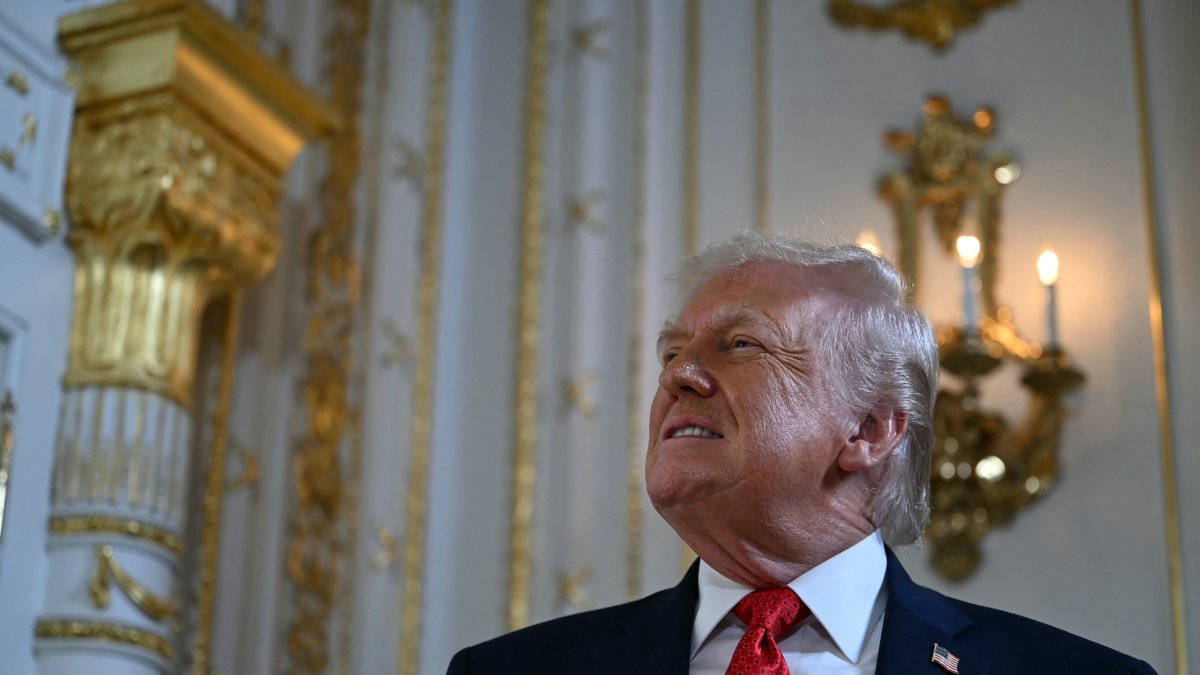
Donald Trump

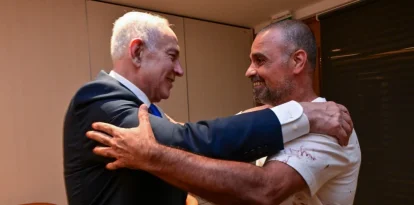
Israeli Prime Minister Benjamin Netanyahu is en route to the White House for his seventh meeting in the United States with U.S. President Donald Trump, barely six weeks after their previous meeting at Trump’s Mar-a-Lago resort in Palm Beach, Fla. Each meeting has carried unique significance in Israel’s two-year-plus regional war against Iran and its network of terror proxies.
The background
Previous meetings proved key in helping Israel secure the necessary weaponry and diplomatic backing to sustain more than two years of complex fighting against Hamas in Gaza, Hezbollah in Lebanon and the Houthis in Yemen. It also included a major campaign to demilitarize Syria and protect minority groups after the fall of its longtime dictatorial president, Bashar Assad.
Equally crucial, the Trump administration reversed unhelpful policies of the Biden administration, which continuously placed diplomatic pressure on the Jewish state. Trump sided firmly with Israel and, more importantly, applied the diplomatic leverage necessary on oft-maligned regional partners and terror supporters, including Egypt, Qatar and Turkey, to force Hamas into releasing all 20 of the remaining Israeli hostages, both living and dead.
The 12-day war
Working in sync with the Trump administration, Israel and its military forces have accomplished the extraordinary, climaxing with the near-flawless 12-day war (a term coined by Trump) in mid-June of last year to dismantle Iran’s air defenses and decapitate its nuclear program. While the offensive took place with unprecedented success, Iran did fire hundreds of ballistic missiles at Israel. Sophisticated missile-defense systems, including the Arrow, David’s Sling and Iron Dome, intercepted the vast majority of missiles fired, but dozens scored direct hits. Miraculously, only 29 were killed in all of the strikes, and no major military installations were rendered incapacitated.
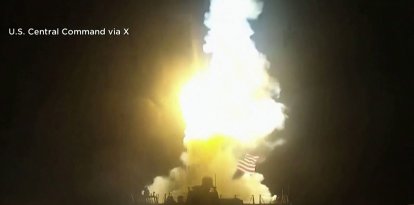
The United States dealt the war’s final definitive blow with “Operation Midnight Hammer,” sending 12 B-2 Stealth Bombers to drop GBU-57 Massive Ordinance Penetrators (aka “bunker busters”) to destroy the underground nuclear reactor at the Fordow site.
Israel’s pounding and shaming of Tehran has weakened the ruling regime substantially, and the nation’s economy is in freefall. Its currency, the rial, has effectively lost more than half its value in six months. In late January, it fell to 1.5 million rial to $1 and is now hovering at an equally concerning 1.3 million rial. The country has been plagued by severe water shortages and ongoing electricity outages, compounding the stress of its citizens.
A new revolution
Iran’s current strategy of attacking Israel and destabilizing the entire Middle East through terror proxies has officially backfired. Israel and America’s successes in weakening Iran and whittling down its regional terror network are now threatening to bring the regime of its Supreme Leader, Ayatollah Ali Khamenei, to its knees.
As a direct result of Israel’s victories and Iran’s failures, the Iranian people have taken to the streets en masse to revolt. Millions have protested against an Islamic Republic that has brought them repression, isolation, shame and poverty. Iranians seek a return toward the path of modernity, freedom and prosperity, akin to the period previously attributed to Shah Reza Pahlavi’s leadership prior to the Islamic Revolution of 1979 that ushered in Ayatollah Ruhollah Khomeini.
Following his death, Khomeini was succeeded by Khamenei. The names are similar, and so are their policies.
In December 2024, Assad fled Syria to Moscow, unable to prevent the forces of now self-established president Ahmed al-Sharaa (his nom de guerre, Abu Mohammad al-Jolani) from taking over the country.

JNS
Netanyahu meets Witkoff, Kushner ahead of White House talks with Trump
JNS (Jewish News Syndicate)
Massacre on the streets
Seeking to avoid a similar fate as that of Assad, Khamenei, the Islamic Revolutionary Guard Corps (IRGC) and the Basij security services have been gunning down protesters across the country in a brutal attempt to cling to power.
Most estimates suggest that tens of thousands of Iranian citizens have been killed, with some alleging as many as 100,000 or more gunned down and executed since the protests began in full force in January. If true, then such numbers exceed the fatalities in Gaza that Hamas has claimed were killed in two years of war with Israel, which came to a halt in October after a ceasefire was put into place.
Trump has kept a focused eye on the situation in Iran and has warned the regime not to open fire on protesters. Yet that is what has happened. He has stated that the United States is “locked and loaded,” essentially ready to back Iranians who have taken to the streets with military force.
‘Help is on the way’
Trump has called the murder of large numbers of protesters a “red line” and has promised Iranians that “help is on the way.” Still, the warnings and threats have gone largely unheeded by the IRGC. And so far, help has not come.
While Trump has yet to order a military strike, he is wary of going back on his word. In 2013, then-President Barack Obama claimed that Syria’s use of chemical weapons on its population represented a red line. Yet when it was revealed that chemical weapons were indeed used as part of a large-scale sarin attack in Ghouta in August of that year, Obama failed to act. Going back on his word sent a reverberating message that the United States and its president were a paper tiger, setting off a domino effect of malign activity across the Middle East.
Ballistic missiles and nuclear enrichment
In addition to murdering protesters, there are estimates that Iran is attempting to rapidly increase its stockpile of medium- and long-range ballistic missiles, and more importantly, missile-launchers. The launchers represent a bottleneck, as many were destroyed by Israel during the 12-day war.
There is also a belief that Iran may be continuing its pursuit—albeit a severely battered one—of developing nuclear weapons. While known facilities were, by and large, destroyed, reports suggest that there may be additional secret facilities and that enrichment of remaining uranium may be continuing in the remnants of bombed facilities.
‘Massive armada’
Trump said he ordered a “massive armada,” including aircraft carriers, naval destroyers and members of the U.S. Air Force to the region in a posture rarely seen, particularly in peacetime.
In return, Iran has taken an aggressive public tone towards Washington and Jerusalem, rather than a tone of appeasement. Iran is threatening to strike back hard if attacked. While pounding the drums of war may be a cultural attempt at signaling strength to its disenfranchised public, Iran’s aggressive stance is unlikely to sit well with Trump.
Simultaneously, Trump has engaged in what may be a final round of negotiations with the regime over Iran’s nuclear program. While he has stated that negotiations have gone well so far and additional rounds may be forthcoming, key disagreements remain.
The Trump-Netanyahu relationship
Media pundits now claim that Netanyahu is frantically racing to the U.S. capital to try to convince the president not to enter into a negotiated deal. Those same pundits suggest, as they have before each meeting, that a major rift is opening up between the two leaders. Some of it, of course, is simply wishful thinking.
Many on the American right have been urging the president to disengage from supporting Israel as part of what they believe is an “America First” strategy. Others on the American left have strangely wed their progressive and anti-capitalist philosophies to those of radical Islamists who seek to destroy the Jewish state.
In Israel, the left-wing wants nothing more than to see Netanyahu out of office, and therefore, is attempting to remove one of his greatest assets: his strong and productive relationship with Trump. They therefore intend to promote a rift, even at the great risk of harming Israel’s strategic position.
But time and again, the meetings between the two conservative leaders prove productive and as strong as ever.
Trump withdrew from the JCPOA
In America and Israel, many of those who claim that Netanyahu is racing to Washington to prevent a new nuclear deal with Iran are the same pundits who heavily criticized the Israeli prime minister for standing up to Obama for entering into the original one in 2015, the Joint Comprehensive Plan of Action, or JCPOA.
Pundits conveniently ignore that Trump is the one who went out on a limb to withdraw from that deal in May 2018. The president has previously noted that “Iran has never won a war, but never lost a negotiation.” Himself a master deal-maker, Trump is unlikely to cave into Iran’s demands, particularly ones that harm the long-term security of Israel, a key U.S. ally.
Trump has stated over and over that Iran cannot possess a nuclear weapon. He said it again at Mar-a-Lago in December, while hosting Netanyahu, that he would support an Israeli attack if it could be proven that Iran was continuing to develop ballistic missiles.
Of the two parties at the negotiating table, Trump enters in the infinitely stronger position, with a major portion of the U.S. military pointed squarely at Iran. By contrast, the Islamic Republic has been badly battered by Israel, has zero air defenses, and is barely holding onto power against domestic demonstrations against the mullahs in power.
Netanyahu is not coming to protest
More importantly, if Trump had determined that it was in America’s best interests to enter into a new nuclear deal with Iran, then why would he agree to talk now with Netanyahu in D.C., barely six weeks after their previous meeting?
He knows Netanyahu as well as any leader and respects his strategic intellect. Furthermore, he already knows Netanyahu’s positions on any such negotiations, as they have already communicated in detail. The prime minister’s demands are straightforward: no nuclear missiles, no enrichment, no ballistic missiles and no terror financing.
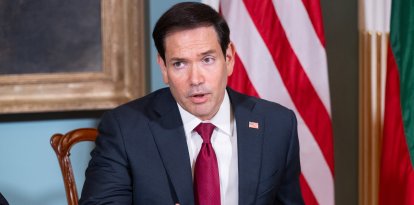
U.S. Secretary of State Marco Rubio has echoed Netanyahu’s concerns. He indicated this week that in addition to the nuclear program, Iran must also come to the table to negotiate on ballistic missiles, the funding of regional terror proxies and the protection of civilian protesters.
As such, Trump would not need Netanyahu to come in person to restate these positions and wouldn’t want him at the White House attempting to sabotage negotiations.
‘No rush to attack’
Many of the same critics who now claim that Netanyahu is racing to Washington to oppose negotiations are those who criticized Trump for not acting on his word weeks ago to back Iranian protesters. Yet they fail to take into account all of the considerations that must be processed before any potential military intervention.
This week, Trump stated that he is in “no rush” to attack Iran. He noted how much time went into America’s “Operation Absolute Resolve” to remove Nicolás Maduro on Jan. 3 as president of Venezuela. America had set up a model presidential compound in Kentucky and practiced for six months before declaring the operation ready. Even then, Trump waited weeks for the appropriate weather conditions necessary to support a successful strike.
Similarly, the U.S. Air Force drilled for years to operate to strike Fordow, using weapons designed specifically for that target. Even then, America waited until Israel successfully neutralized Iran’s Russian-made air-defense systems and cleared the skies before ordering the strike.
Planning for contingencies
That said, Trump won’t rush into a military campaign before all of the details and conditions are properly aligned. He will want to be sure that intelligence and targets have been gathered and are accurate. He would want any strike to be decisive, definitive and as minimalist as necessary to decapitate the Islamic regime.
Plans must be made for every contingency, including potential Iranian retaliation. Tehran could target Israel with hundreds, if not thousands, of ballistic missiles. Plans need to be in place to intercept as many as possible. Iran might attack America’s Al Udeid Air Base in Qatar, as it did after “Operation Midnight Hammer.” Or it could aim for Saudi Arabia. Khamenei might even be persuaded to fire intercontinental ballistic missiles at Europe or the United States.
And, of course, there is a remote possibility—however unlikely and unthinkable—that Iran has at least one deliverable nuclear weapon in its possession, whether produced independently or acquired from Pakistan, North Korea or the former Soviet Union.
Based on the theology of the ruling regime, Washington and Jerusalem must be prepared for any scenario. It must be assessed that Iran would use any weapons in their disposal, especially if the regime feels down to its final moments. As British-American historian Bernard Lewis, one of the West’s greatest Islamic scholars, told me in an interview years ago, “for Iran, mutually assured destruction is not a deterrent, it is an inducement.”
The day after the Islamic Republic
Just as important, Trump will want to be sure that a transitional governance plan is in place following any strike targeting Khamenei. Trump is unlikely to order any military intervention without being assured that there is a successor in place, and that key members of the IRGC and the Basij will turn and fall into line with a pro-Western leadership.
At present, one figure who could succeed in unifying the Iranian nation is the son of the former Shah, Crown Prince Reza Pahlavi. Several weeks ago, it wasn’t clear whether the Trump administration would throw its support behind Pahlavi and what a transition plan could look like. Perhaps he now recognizes that Pahlavi is the best bet right now for transitioning closer toward a peaceful and democratic Iran.
The real purposes of negotiations
The pundits are correct that Netanyahu is racing to Washington, but not to avert negotiations. The strong likelihood is that the outcome of the negotiations has been all but pre-determined.
Trump would prefer to avoid military conflict via negotiations, but only under his terms. Aside from resolutions on the nuclear program, in addition to ballistic missiles, terror financing and massacring protesters, he would also likely demand that Khamenei and possibly other key figures take an exit ramp into exile. A similar off-ramp was offered to Maduro in the weeks leading up to the operation to arrest him.
Negotiations can serve multiple purposes. First, they buy time as America and Israel put war plans, contingencies and transition policies in place. Second, failed rounds of negotiations can go a long way toward helping convince the international community, as well as a skeptical American public, that a military intervention is the remaining option.
Third, they can aid in intelligence-gathering. If high-level Iranians previously believed that an attack was imminent and then went underground, announcing a new round of negotiations could coax those out into a false sense of temporary security. That could expose hiding places.
It has been assessed that Israeli intelligence into critical Iranian military and political targets is even stronger today than during the weeklong war last summer. Netanyahu may be coming to Washington to present critical new intelligence that would significantly aid any military campaign.
A joint American-Israeli campaign?
At this point, a military campaign may be the most probable scenario. And it is also a strong prospect that any military campaign would be a combined American-Israeli effort.
During his first administration, it was reported that Trump was upset that Netanyahu opted not to participate in the January 2020 operation to assassinate Iranian Gen. Qassem Soleimani. At the time, Israel posited that America had the full capacity to complete the mission and also believed that if Israel participated, it risked inviting direct retaliation.
By contrast, Trump was extremely satisfied with aiding Israel in the final days of war last June, after Israel had already succeeded in completing risky elements of the operation.
It has been reported that Netanyahu is coming to meet Trump and his team together this week with the incoming head of the Israeli Air Force, Omer Tishler.
Threat of Iranian retaliation
Israel must already assess that it will be a retaliatory target, whether or not America acts alone. The Iranians this week revealed a billboard in Tehran’s so-called “Palestine Square” showing a map of the Tel Aviv metropolitan area with potential targets for ballistic missiles.
Jerusalem also assesses that Hezbollah could fire hundreds to thousands of its remaining medium- and long-range rockets and missiles. If so, then it will have no choice but to counter with a comprehensive air campaign—and possibly, troops on the ground—in Lebanon. The Houthis in Yemen might also join in by firing ballistic missiles and drones toward the Jewish state—missiles that have reached and landed in Israel.
Israeli citizens are keenly aware they could be targeted, though they recognize that this is a war that must be finished, once and for all. A military campaign will be the final round against the current-day rulers of Iran.
Transforming the Middle East
For Israel, decapitating the Islamic Republic—the terroristic head of the regional octopus—represents “total victory” and would transform the Middle East, as Netanyahu has often said.
Trump similarly wishes to alter the region as part of an economic vision to establish the India-Middle East-Europe Economic Corridor (IMEC) as an alternative to China’s Belt and Road Initiative. IMEC would run from India, through Saudi Arabia, Jordan and Israel, and across to Europe. The region needs to be terror-free and pirate-free for IMEC to become a reality.
Plus, to counter China, Trump similarly seeks a guaranteed source of oil and gas in Iran. As he did in Venezuela, Trump would prefer to divert Iranian resources (at market value) to the West.
Emergency meeting
Netanyahu had originally planned to head to Washington later this month for an AIPAC congressional event. Then it was announced that he would travel to Washington a week from now to attend a meeting of the new Board of Peace regarding Gaza. Yet barely 48 hours ago came an announcement that Netanyahu would head to Washington this week.
It can be construed from such schedule changes that the contents of this emergency meeting need to be delivered and discussed in-person and not via electronic means—and that they need to be addressed immediately.
It could well be that Trump has determined that the military apparatus is firmly in place and delaying further would have diminishing returns. As such, the negotiations may be more than an exercise. They may be an effective smokescreen, providing cover as Israel and America again join forces toward war, and this time, regime change.
LATEST