






ANALYSIS
Facts ‘a bit unusual,’ FIRE says of Brooklyn Law axing pro-Israel event
“When you ban people from freedom of speech, it creates a kind of environment of poison and hatred on campuses,” Hillel Fuld, an Israeli technology entrepreneur whose talk was canceled, told JNS.
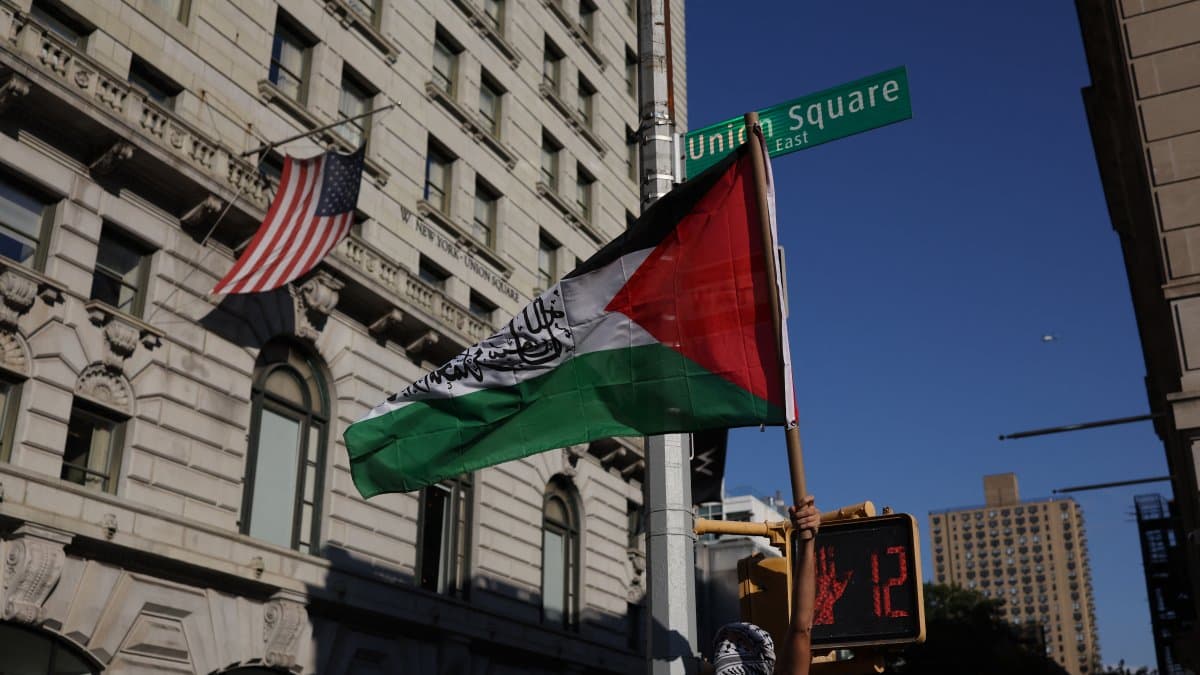

The Foundation for Individual Rights and Expression, a free-speech group known as FIRE, is challenging Brooklyn Law School’s claim that “resource constraints” forced it to cancel a Jewish student event with Israeli-tech blogger Hillel Fuld last October, since the school supported another protest on campus that same day.
In a Jan. 5 letter to David Meyer, the 125-year-old private school’s president, FIRE asked the school administration to respond to the apparent discrepancy by Jan. 20.
In the days leading up to the event, the school’s chapter of Students for Justice in Palestine urged administrators to move the event off campus and announced a protest opposing Fuld’s appearance, per posts it shared on Instagram.
Garrett Gravley, FIRE’s program counsel for campus rights advocacy, told JNS that his group intervened, “because there was pressure to try to silence a Zionist speaker.”
“Whether the school intended for it or not, he did get silenced, and his cancellation was embraced and celebrated as such,” Gravley said. “That should concern everybody who has the same resolve for free speech that we do.”
A Brooklyn Law School spokesman told JNS that the decision to cancel Fuld’s event was unrelated to his views but was due to a shortage of administrative staff. There was an accreditation committee visit scheduled for that day, which meant staff were already busy, the spokesman said.
The law school also directed JNS to a statement, in which the Jewish Law Students Association’s executive board said that the event was canceled due to a scheduling conflict rather than controversy surrounding the speaker.
The student association’s board said on Oct. 25 that “the administration has informed us that the issue stems solely from the timing of the Law School Accreditation Committee’s visit, as any on-campus demonstrations could require attention from administrators, who will be otherwise occupied.”
“The Hillel Fuld event was not cancelled because of who he is or what he has said,” the group stated. “It was simply because he is unavailable on any other day.”
“Otherwise, we would have readily rescheduled per the administration’s request,” it said.
Gravley told JNS that FIRE recognizes the demands of accreditation visits but is questioning how the law school cited staffing limitations when administrators and personnel appeared to be available on campus to oversee a counter-protest the same day that Fuld was scheduled to speak.
“We want to make sure that no matter how ‘controversial’ a speaker is, they can speak and there isn’t any pressure to prevent that from happening,” he told JNS. “Though the law school insists that it wasn’t them catering to pressure, the facts are a bit unusual.”
Gravley added that “whether the school did it with the intent to curb free speech or not, we are just really trying to vindicate the fundamental liberty of expression itself.”
A culture of free speech must be upheld on university campuses, he told JNS.
“We believe that the counter-demonstration should have occurred, but we also believe that Mr. Fuld should have been able to speak for the Jewish Law School Association as well,” he said. “We believe that both of those events should have happened and that Brooklyn Law should have acted in a viewpoint-neutral way at every juncture.”
‘Poison, hatred on campuses’
Fuld disputes the school’s account of the cancellation. He told JNS that he was never offered an opportunity to reschedule and only learned that his event had been called off after seeing public calls to block his appearance.
“I was on a speaking tour, and we received notification from the law school that my event was canceled,” he said. “At the same time, I saw that Students for Justice in Palestine had posted a flyer and a call to action to get me barred from campus.”
“They made a whole campaign, and after it was canceled, they celebrated that it was canceled, so it was clearly their doing,” he told JNS. “I know the law school later said they didn’t have enough administrators, but that’s obviously ridiculous.
Suppressing free speech on campus sets a dangerous precedent, according to Fuld.
“I think we need to realize that this is how things start and can then trickle down to the rest of society,” he said. “When you ban people from freedom of speech, it creates a kind of environment of poison and hatred on campuses where we see events like what happened to Charlie Kirk.”
🛠 Do you think there is an error in this article?
Recommendations

LATEST