ANALYSIS
Nuns sue New York for requiring them to share 'benefits' of suicide with patients, as DOJ watches
Medical Aid in Dying Act goes even further than assisted suicide regimes on West Coast, Australia and New Zealand, drastically limits exemptions, could require medical professionals to falsify death certificates, nuns tell court.
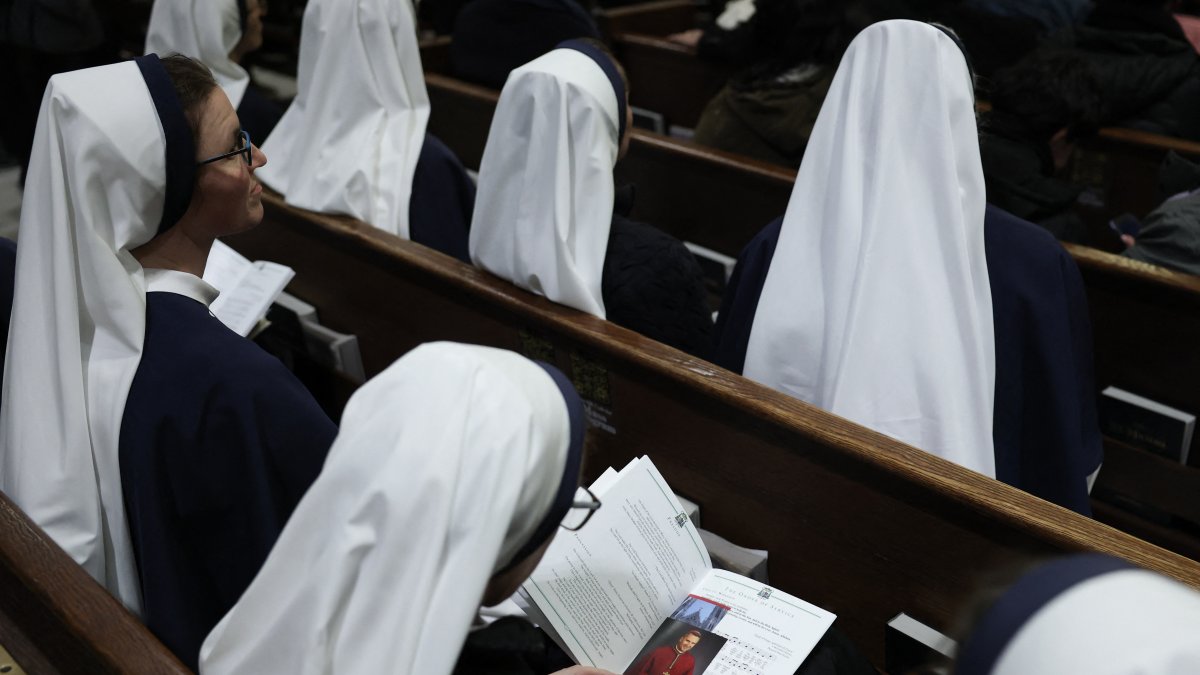
A nun looks through the program of the Solemn Vespers evening prayer at St. Patrick's Cathedral in New York

Democratic administrations and deep-blue states have repeatedly threatened nuns for following the dictates of their Catholic faith, such as by excluding contraception from their healthcare plans and segregating male and female patients in long-term care facilities.
Perhaps the most active antagonist to religious sisters will now impose "crippling fines, professional sanctions, and criminal penalties" on them for refusing to goad terminally ill patients into killing themselves, according to their lawyers.
Carmelite Sisters for the Aged and Infirm, the Dominican Sisters of Hawthorne, Missionary Sisters of St. Benedict, Little Sisters of the Poor, Diocese of Rockville Centre and its Bishop John Barres, and the orders whose hospitals became Catholic Health are seeking a preliminary injunction against New York's Medical Aid in Dying Act, scheduled to take effect Aug. 5.
Flipping the three-decade script on assisted suicide as "death with dignity," the lawsuit filed by religious liberty law firm Becket said the MAID Act removes "the choice of a dignified death" from New Yorkers who actively seek out the nuns' facilities, "secure in the knowledge that they will not be urged to consider cutting short their life through suicide."
Nuns will have to "proactively inform and counsel their patients about their 'option' to kill themselves," including the "benefits" of suicide, and "participate throughout the multi-step process" qualifying patients for life-ending drugs, referring them to "willing" providers if nuns won't directly help them kill themselves, the suit says.
The Empire State is alone in suicide encouragement, according to the suit: West Coast states with legal assisted suicide don't require it, and New Zealand and Australia's state, Victoria, explicitly prohibit raising the issue under their similarly liberal regimes.
These norms "exist for good reason," the suit argues. "Public health researchers have extensively documented that an increase in the public discussion of suicide is often followed by an increase in suicide rates."
The MAID Act could also threaten the nuns' federal Medicare and Medicaid funding because it requires them to facilitate suicides in their facilities, Becket told the court.
Its nominal opt-out "is among the narrowest in the nation," excluding a startlingly broad range of facilities – independent living, assisted living and "enhanced assisted living," including the Benedictine Sisters – because the law doesn't consider them "health care facilities," one of many flaws making it not "generally applicable," the nuns argue.
Religious liberty guidance and federal intervention in court
The Trump administration is already closely watching New York's machinations against Catholics, recently intervening in Dominican Sisters of Hawthorne's lawsuit against the coed housing law, which requires room assignment by gender identity.
Acting Attorney General Todd Blanche gave religious sisters further backing on Thursday, issuing government-wide updated guidance on religious liberty protections that incorporates the past decade's Supreme Court precedent.
Federal agencies must also "proactively consider religious‑liberty impacts when developing rules and policies, designate officers to review regulatory proposals for compliance" and consider "religious‑liberty concerns raised by the public during notice‑and‑comment periods," the Justice Department said.
Compelling religious organizations to tell seekers of contraception and abortion where to find them isn't limited to nuns. The Supreme Court blocked California's mandate in 2018 requiring pro-life pregnancy centers to help women find abortion providers, though blue states still routinely compel their speech.
SCOTUS seemed to fully extricate religious employers from Obamacare's contraceptive mandate in 2020 when it upheld the Trump administration's removal of its predecessor's conscience-killing "accommodation" process, which triggered insurers to pay directly for employees' birth control and abortifacients when employers formally opt out.
That hasn't stopped blue bastions from bearing down on nuns, or lower courts from looking for a way around the ruling.
SCOTUS twice overturned New York courts that upheld the state's abortion coverage mandate, most recently last year after the high court unanimously ruled that religious organizations that serve all comers and not just coreligionists – such as the Carmelite Sisters – do not lose their religious exceptions.
Becket is now representing Little Sisters of the Poor at the 3rd U.S. Circuit Court of Appeals to overturn a federal judge's novel ruling against the Trump administration exemption.
Might require lying on death certificates
The lawsuit alleges a whopping 11 counts against the MAID Act and the 2011 law it amended, the Palliative Care Information Act, which together create a "suicide counseling mandate," as Becket terms it. Two regard federal preemption.
Seven counts stem from First Amendment violations. The laws allegedly infringe on the religious sisters' church autonomy and expressive association, compel their speech and violate their free exercise by not being neutral or generally applicable, and also violate current and prospective patients' free exercise, association and assembly.
Two concern disability. The laws allegedly violate the Americans With Disabilities Act by requiring the nuns to discuss "the option of voluntary suicide" with only disabled patients, and the 14th Amendment by denying them "protections and safeguards" despite diagnoses of terminal illness being "inherently uncertain."
Becket emphasized the federal court could leave the law "generally in force" by simply stopping the coercion of religious providers, if it didn't want to strike it down on federal preemption, ADA or equal-protection grounds.
"The Sisters’ Catholic faith leads them to accept death as the natural end to a life well-lived: neither artificially prolonging it through burdensome technological and medical interventions that provide no reasonable benefit, nor artificially hastening it," yet the "euphemistically-named" MAID Act has "conscripted" them into active killing, the suit says.
The nuns and Catholic Health "risk professional discipline and the loss of their licenses, as well as their status as Catholic institutions," if they comply with the thorough participation in the assisted-suicide process the New York law imposes on them.
The law imposes specific obligations on various plaintiffs based on what their organizations do, according to the suit.
Benedictine Sisters and St. Joseph’s Home for the Aged would have to let residents take self-killing drugs in their home, risking their Catholic affiliation. Catholic Health might have to let its providers, especially for in-home hospice care, falsify death certificates to say that "underlying illness" killed a patient, not drugs.
LATEST