Netanyahu on the Verge of Losing Power: Israel's President Will Task the Opposition Leader with Forming a Government
The first elections since the war in Gaza—which broke out following an attack by the Palestinian terrorist organization Hamas—resulted in neither Netanyahu and his allies nor the Eisenkot bloc securing a majority.
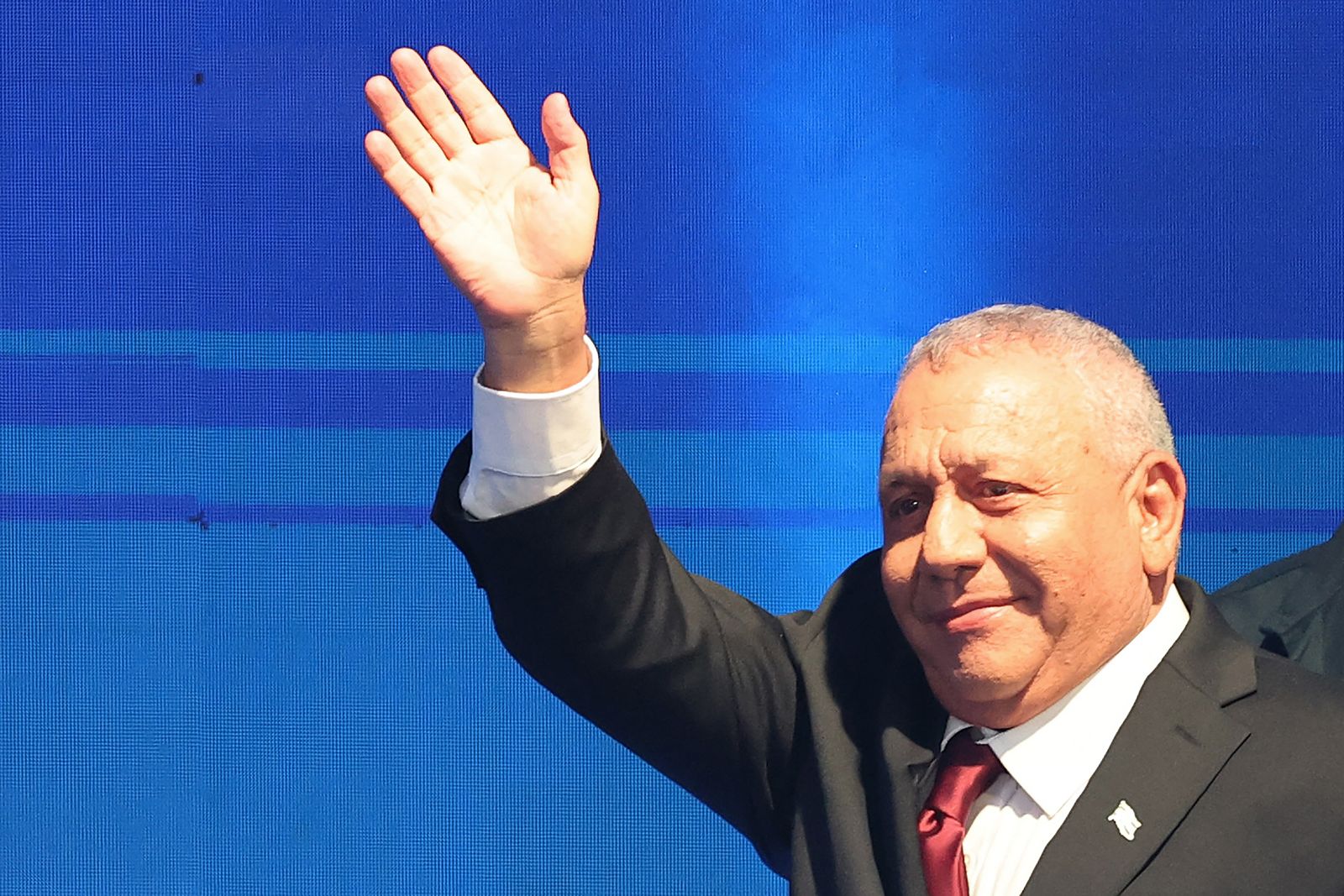
Israeli opposition leader Gadi Eisenkot.
Israeli President Isaac Herzog will task the leader of the opposition bloc, Gadi Eisenkot, with forming a government following the legislative elections in late October, which could oust Prime Minister Benjamin Netanyahu.
The first elections since the war in Gaza, which broke out following an attack by the Palestinian terrorist organization Hamas, resulted in no majority for either Netanyahu and his allies or for Eisenkot's bloc.
However, the opposition leader—a former military chief who has recently entered politics—enjoys the tenuous support of the Arab parties and also opened the door this week to a previously unlikely alliance with the ultra-Orthodox Jews which would be enough for him to govern.
After holding consultations with all parties throughout the week, Herzog announced on Saturday that he will first entrust Eisenkot with "the task of forming a government."
The official appointment will take place during a ceremony on Sunday at the presidential residence in Jerusalem, Herzog's office said in a statement.
"The time has come to form a national emergency government. I will do everything to ensure we rise to the occasion," Eisenkot responded on social media.
In consultations with the president, parties representing a total of 67 members of the Knesset recommended Eisenkot, compared to 46 lawmakers from Netanyahu's bloc.
But among the parties that have thrown their support behind the former Chief of Staff are the Israeli Arab parties—on which certain sectors of the opposition bloc do not wish to rely.
Arabs or ultra-Orthodox Jews
After the elections, Herzog had expressed his preference for a national unity government that would bring together Jewish Israelis across the political spectrum.
Netanyahu also called for a unity government, but the opposition insists that the first step must be his departure.
With nearly two decades in power on and off, the conservative leader is the longest-serving prime minister in Israel's history.
If he is ultimately ousted, he could face prison time for several corruption cases pending against him. He is also the subject of an arrest warrant from the International Criminal Court in connection with the war in Gaza.
In recent days, Netanyahu has lashed out at the opposition for considering pacts with Israeli Arabs—descendants of the Palestinians who remained after the creation of Israel in 1948—as a potential option.
That same Saturday, hours before Herzog's announcement, he labeled the Arab parties as Islamists and claimed that a coalition with them "would dismantle the State of Israel from within."
In response, Eisenkot's Yashar party urged Netanyahu's allies and members of his Likud party to form a unity government led by the former military chief.
The alliance with the Arab parties is causing friction within the opposition bloc, as the far-right factions are not pleased that the government would depend on those parties.
One of them is Avigdor Liberman, a former Netanyahu ally who, although he now fiercely criticizes him, shares his hardline stance on the Palestinians.
On Friday, this staunch secularist opened the door to a pact with the ultra-Orthodox Jews and expressed his willingness to debate a law to exempt them from mandatory military service, contrary to what he had promised during the campaign.
The military exemption for the ultra-Orthodox is causing strong resentment in significant sectors of Israeli society, especially as numerous reservists are deployed in Gaza and Lebanon.
Eisenkot proposed national service for all Israelis, while allowing them to choose a civilian option instead of military service, which would accommodate the ultra-Orthodox to some extent.
Following his appointment, Eisenkot will have 28 days to secure the 61 votes needed to form a government. If he fails to do so, Herzog may grant a 14-day extension before entrusting the task to someone else.
If neither side succeeds, Israel will head toward new elections. Between 2019 and 2022, the country held five elections due to repeated political deadlocks.
🛠 Do you think there is an error in this article?
Recommendations






LATEST