Investigation documents at least 89 young people who died during military service in Cuba
A record compiled by elTOQUE reconstructs deaths that occurred over the past decade. Accidents and suicides account for 72% of the documented cases, while numerous families denounce a lack of transparency regarding the circumstances of the deaths.
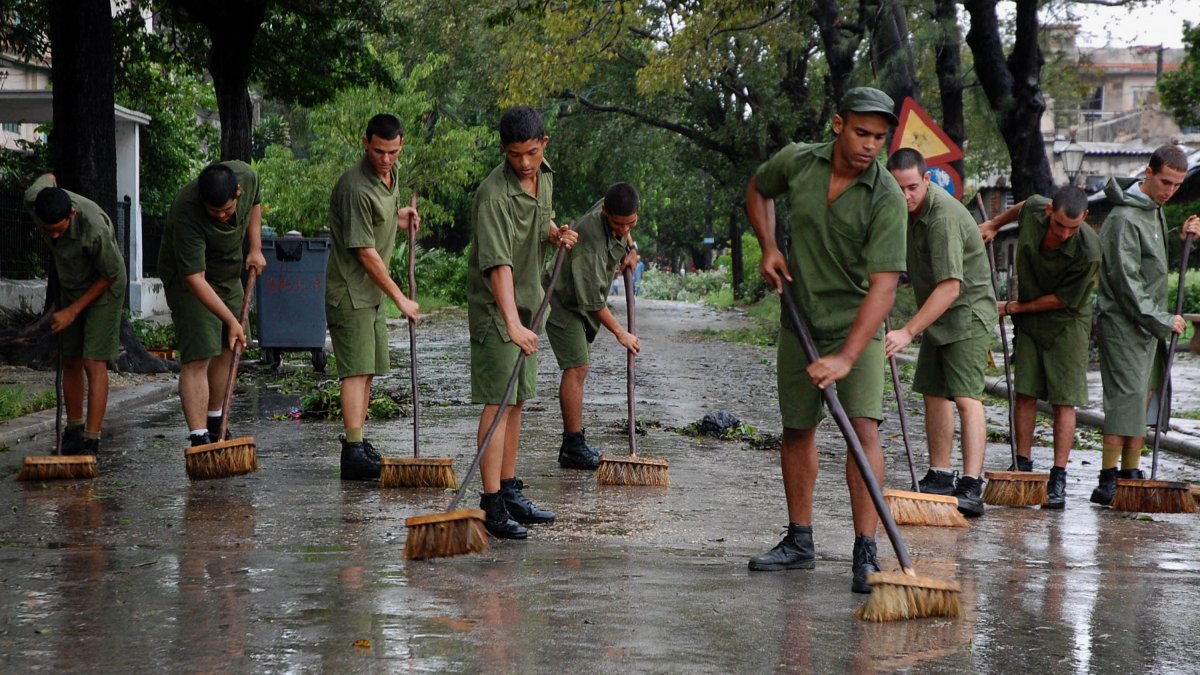
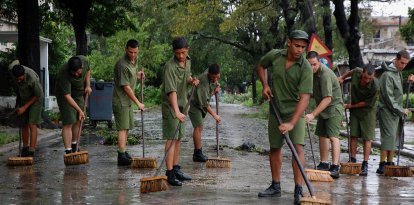
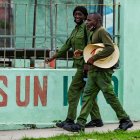
Cuban recruits sweep a street in Havana in 2008 after the devastating Hurricane Ike

At least 89 young people died while serving in active military service in Cuba—also known as compulsory military service—over the past decade, according to an extensive investigation published by the online newspaper elTOQUE, which reconstructed the cases using family testimonies, documents, journalistic investigations and independent reports.
The project, titled "Dying in Uniform: The Children Cuba Turned into Soldiers," covers the period from 2016 to 2026, although the 89 cases included in the registry correspond to deaths that could be documented starting in 2017. Journalist Marleidy Muñoz notes that they did not find sufficient information to verify cases that occurred in 2016, which does not mean they did not happen.
The key data also reflects a strong temporal concentration. Between 2017 and 2021, 15 deaths were documented, while between 2022 and 2025, 70 were recorded, equivalent to 82.4% of the deaths recorded between 2017 and 2025. The comparative analysis excludes 2026 because the year is still ongoing.
Accidents and suicides: The leading causes
Of the 89 recorded cases, 33 were classified as accidents and 31 as suicides. Together, they account for 64 deaths, about 72% of the total. The investigation notes, however, that in at least nine of the cases classified as suicides, the families themselves questioned that classification and reported possible irregularities or cover-ups. These reports do not constitute independent confirmation of homicide.
Another relevant factor is age. The investigation was able to determine the age in 65 of the 89 cases and found that most were 18 or 19 years old. Among the deceased were also six minors under the age of 18: one 16-year-old and five 17-year-olds. According to the database compiled by the media outlet, all six cases were reported as suicides.
The database also identifies 10 deaths linked to health issues: four classified as illness and six as suspected medical negligence. The report itself clarifies that not all of these deaths can be attributed to negligence and includes cases in which family members claim that symptoms, medical histories or prior warnings were not addressed in a timely manner.
Families without answers
One of the main problems highlighted by the report is the difficulty in finding out what happened after the deaths. Of the 46 families interviewed, only eight said an investigation had been conducted into the deaths of their children. According to those family members, the results failed to fully clarify the circumstances or establish responsibility.
The media outlet states that it also contacted military institutions and other government entities linked to several of the cases, requesting information about the deaths and the investigation procedures, but noted that none of these inquiries received a response. This lack of official information constitutes one of the main limitations acknowledged by the study's authors themselves.
The figure of 89 is also not intended to be definitive. The researchers identified at least six other cases for which they were only able to find a photograph and a brief report—material they considered insufficient to include them in the database. Therefore, they caution that the actual number of deaths during military service could be higher than what they have been able to document.
The study thus presents the 89 cases as a documented minimum and not as an official or exhaustive figure, in a context where many of the circumstances surrounding the deaths remain impossible to fully reconstruct.
What is compulsory military service in Cuba?
This framework is key to understanding the cases documented by elTOQUE: young people who died from fires and explosions, accidents, suicides, illnesses, and other circumstances while performing their service. All were under the authority of state institutions at the time of their death. Therefore, regardless of the specific cause of each death, it is the state's responsibility to guarantee their safety and care, investigate what happened and provide explanations to their families. The investigation specifically notes that, in numerous cases, family members report a lack of information, an absence of clear answers and difficulties in determining whether anyone was held accountable.
LATEST