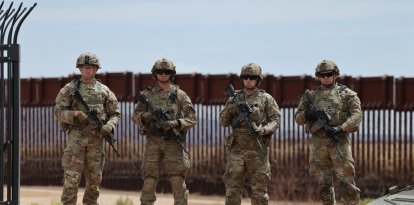






'Devastating costs': CENTCOM says the US naval blockade has cost the Iranian regime $25 billion in oil revenues
Cooper noted that the U.S. government has helped freeze $350 million in cryptocurrencies owned by Iran.
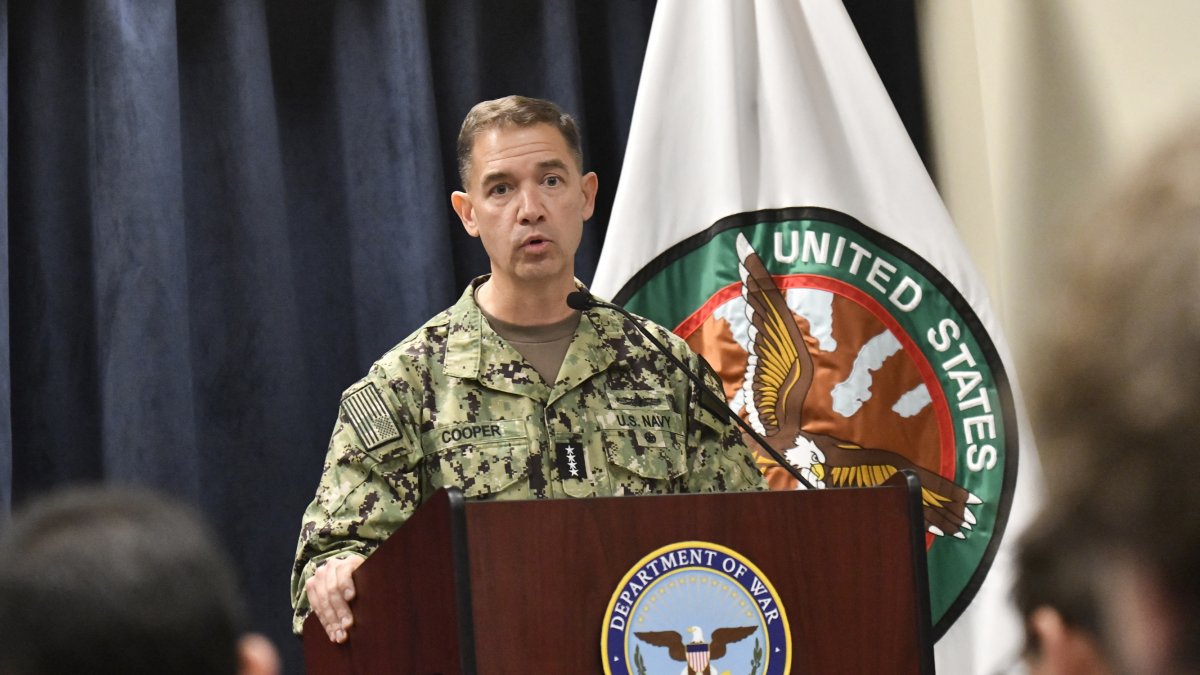
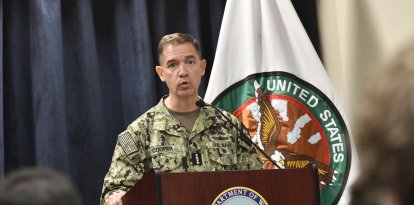
Admiral Brad Cooper, commander of CENTCOM, during a press conference. March 2026
The commander of U.S. Central Command (CENTCOM), Admiral Brad Cooper, stated on Friday that the U.S. naval blockade has cost Iran $25 billion in revenue from crude oil exports. Cooper noted that the U.S. government has helped freeze $350 million in cryptocurrency owned by Iran and that the U.S. Armed Forces have assisted 400 vessels in transiting the Strait of Hormuz over the past week. Similarly, the admiral stated that the pressure campaign is yielding results and that the Islamic Republic is feeling its effects across all sectors of the economy.
"As a point of emphasis, with the exception of the humanitarian assistance we’ve allowed in, Iran has no exports and no imports by sea. The sum total of these actions has imposed devastating costs on Iran’s security apparatus and the IRGC specifically. Iran’s government is withholding salaries, pensions and benefits to workers in industries such as oil and energy, manufacturing, construction, security, and the IRGC itself. The financial strain on Iran’s military has become so significant that there are reports of Iran-aligned militia groups across the region withholding payments to their soldiers in order to funnel money back to the IRGC, which also is not paying its troops," Cooper stated in a video.
The CENTCOM commander's remarks come a day after several media outlets revealed that the White House and the Department of Defense have prepared operational plans to use the Massive Ordnance Air Blast (MOAB) bomb, popularly known as the "Mother of All Bombs," against military installations in Iran if President Donald Trump issues the order.
The information, initially revealed by CNN and corroborated by reports from CBS News, details the military deterrence preparations against the Iranian regime. The bomb is the largest non-nuclear munition in the U.S. arsenal, weighing more than 30,000 pounds and costing an estimated $170,000 per unit. Its history of operational use dates back to 2017, when the Trump administration approved its launch against an Islamic State cave and tunnel complex in Afghanistan.
LATEST