





Historic: Puerto Rico's governor signs an official petition addressed to Trump requesting that the island be admitted as the 51st state of the US
According to the Puerto Rican government, this is the first time in history that the island's executive branch has formally submitted such a request to U.S. authorities.
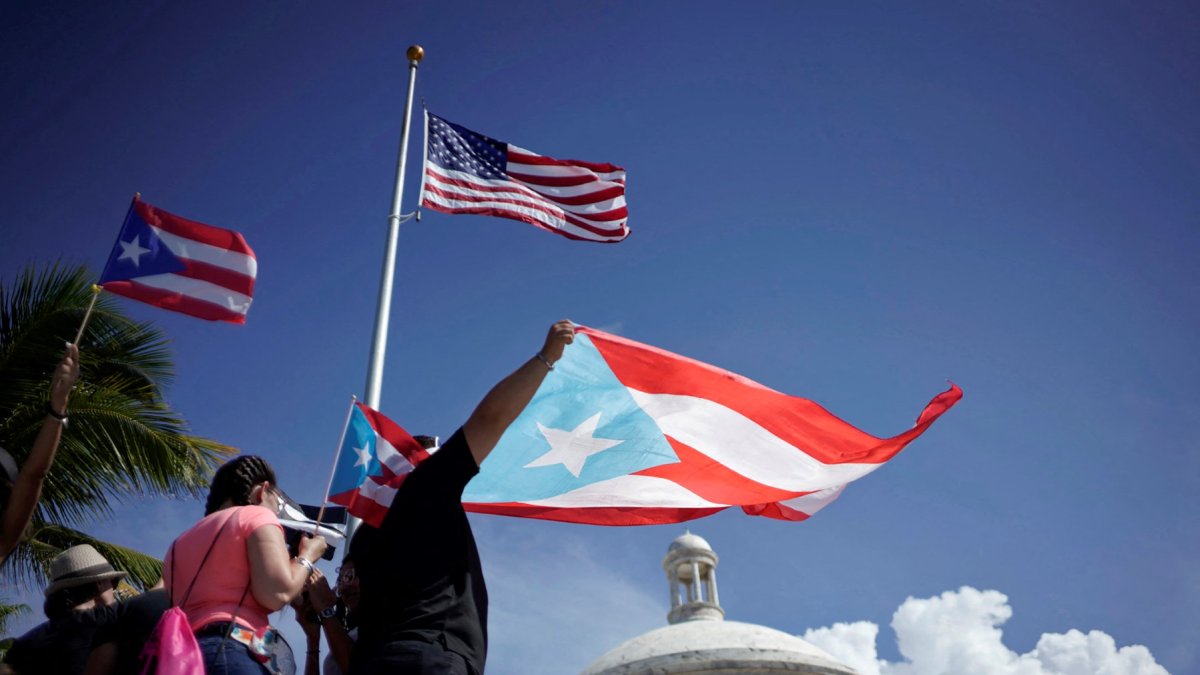
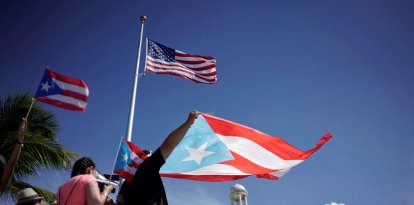
File photo showing protesters waving the Puerto Rican flag

The governor of Puerto Rico, Jenniffer González, signed Joint Resolution 66-2026 on Friday, a measure that enacts into law the island's formal claim to be admitted as a state of the Union.
According to the Puerto Rican government, this is the first time the island's executive branch has officially submitted such a request to U.S. authorities.
The signing took place at a ceremony in San Juan, attended by legislators, members of her Cabinet, and representatives of civil society. The document also bears the signatures of the presidents of the Puerto Rican Senate and House of Representatives. On social media, González presented the measure as a response to a popular demand.
"We highlight a demand that stems from the will of our people: to achieve full equality through statehood," González wrote.
The resolution calls for sending copies of the petition to President Donald Trump, the Senate and House leaders in Washington, and every member of Congress. It expressly asks the president to support Puerto Rico's admission and to work with federal lawmakers to make it a reality.

Politics
Republican representative introduces bill to make Greenland the 51st state of the US
Williams Perdomo
Within the island, the measure establishes statehood as the government's public policy and authorizes it to use its resources to publicize and defend the claim in any available forum, provided it does not neglect other needs of the population. The text was adopted in English and Spanish, the two official languages of Puerto Rico, although in the event of a conflict, the English version will prevail.
The government framed the decision in the context of the United States' 250th anniversary and the 250th anniversary of the Declaration of Independence, presenting it as an opportunity to strengthen the Union by admitting the island.
"It is now up to Congress to heed that will and exercise its constitutional authority to admit Puerto Rico as a state of the Union," González stated.
Beyond its symbolic significance, the resolution alone does not change the island's status. The U.S. Constitution grants Congress the power to admit new states, so San Juan's initiative does not compel Washington to act.
If it materializes, statehood would fundamentally change Puerto Ricans' relationship with the federal government. Although they have been U.S. citizens since 1917, island residents cannot vote for president, nor do they have voting representatives in Congress. Tax-wise, most do not pay federal income tax, but they do contribute to Social Security and Medicare, and the island receives less federal funding than any state. This arrangement has been in place, with various adjustments, since the United States took control of the territory following its war with Spain in 1898.
The debate over status, however, is far from over. Statehood has won the most recent non-binding referendums, but Puerto Rican politics remains divided between those who prefer to maintain the current model and those who advocate independence.
LATEST