





More commercial and military fuel: JD Vance announces Texas refinery expansion
From Tyler, Texas, the vice president said the Defense Production Act supported the project. The law authorizes the executive branch to boost the production of certain goods deemed critical to national security.

JD Vance in Tyler, Texas/ Saul Loeb

JD Vance announced that the Trump administration will expand the Delek refinery in Tyler, Texas. At a city event, the vice president said the administration invoked the Defense Production Act, which authorizes the executive branch to boost production of certain goods critical to national security.
Vance traveled to Texas less than a week before early voting begins in the Lone Star State. There, he endorsed Republican Senate candidate Ken Paxton and other Republicans on the ballot.
Ahead of the midterm elections, one key issue for voters is gas prices. According to the American Automobile Association (AAA), the average price of gasoline on Tuesday was $4.34 per gallon, and diesel was $6.28 per gallon.

Politics
Russian diesel for US: Trump announces deal with Putin aimed at lowering fuel prices
Joaquín Núñez
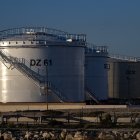
The vice president announced the expansion of the Delek refinery: "Here's what we wanna do, ladies and gentlemen. We want millions of gallons of commercial grade and military spec fuel to come out of this refinery in addition to what it's already producing."
"And what that means for you and your families is lower costs to fly from one place to another. It means lower costs to drive your car and to work every single day. It means a more reliable energy supply, but also a stronger national defense, and it will also mean hundreds of good paying new jobs just like Austin's right here in Smith County," Vance added.
The refinery in Tyler belongs to Delek US Holdings, a publicly traded company that operates other large refineries in Louisiana and Arkansas. According to the company, the Tyler plant currently has a capacity of about 75,000 barrels per day.
What does the Defense Production Act do?
According to the Congressional Research Service (CRS), the legislation lets the government require companies to prioritize government orders for certain goods. It also allows the federal government to offer private companies loans, guarantees, purchase commitments, and other forms of assistance.
LATEST