Rubio states that the Iranian regime has 'lost complete control' of the Strait of Hormuz as the flow of oil returns to normal
The secretary of state added that the Iranians "are much less powerful militarily" than at the start of the war, which broke out in late February following joint U.S.-Israeli attacks on nuclear and military facilities belonging to the Iranian regime.
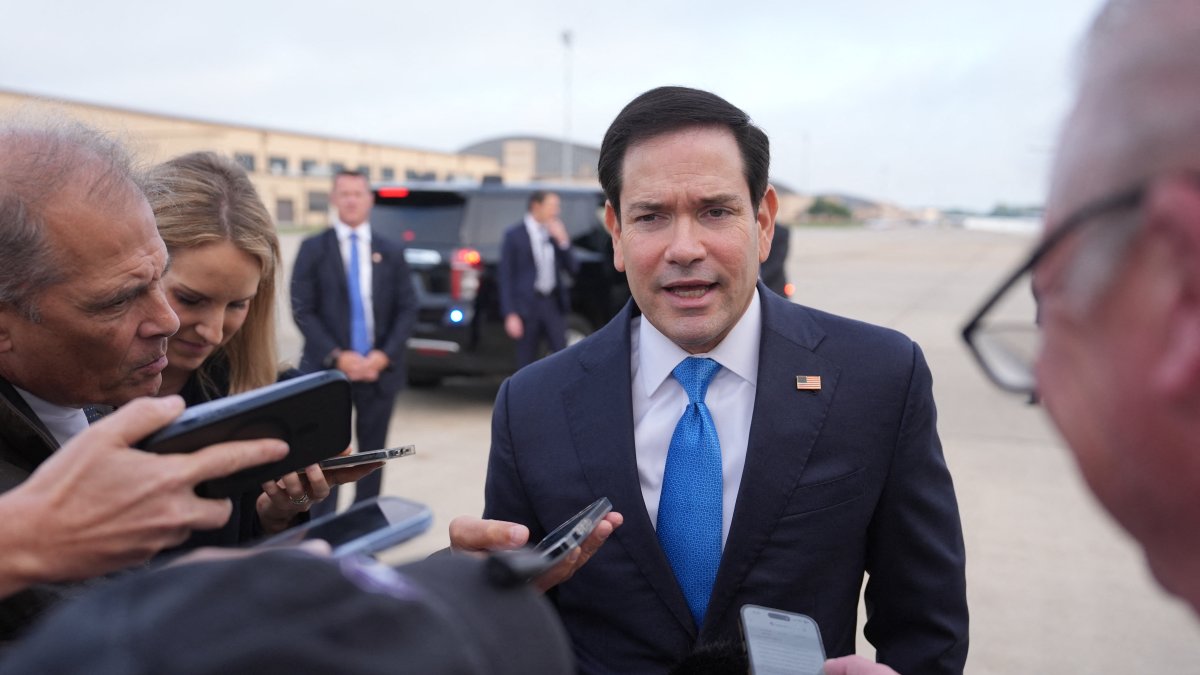
Marco Rubio speaks to the media before departing for Iceland

Secretary of State Marco Rubio, stated Wednesday in Athens that the Iranian regime has lost control of the Strait of Hormuz, the strategic sea lane through which approximately one-fifth of the world's oil passes, and that the flow of crude oil through that route has returned to nearly pre-conflict levels.

Almost as much oil is flowing as before the conflict
During a joint press conference with his Greek counterpart, Yorgos Gerapetritis, Rubio stated: "The Straits of Hormuz are open. There's almost as much oil flowing out now as there was before this conflict began. So they've lost complete control of the Straits."
Rubio added that the Iranians "are much less powerful militarily" than at the start of the war, which broke out in late February following joint U.S. and Israeli attacks on nuclear and military facilities belonging to the Ayatollah regime.
The Iranian economy in a "free fall"
The secretary of state also asserted that the "crippling" sanctions imposed by Washington are taking a toll on the Iranian economy and warned that "the situation is going to become catastrophic" for Tehran.
Every dollar received by the "radical Shia clerics" is spent on Hezbollah and Hamas, he said.
"And anything they agree to that would be acceptable to the United States has to be something that ensures that Iran will never have a nuclear weapon."
According to data from the maritime tracking firm Kpler compiled by AFP, Iran's oil exports have plummeted from 1.85 million barrels per day in the spring to around 255,000 barrels in August, while exports from non-Iranian Gulf countries rebounded to 8.4 million barrels per day in September.
World
US withdraws all its B-1 bombers from UK base at Fairford following alleged foiled terrorist plot
Emmanuel Alejandro Rondón
Recovery of traffic through the Strait of Hormuz and alternative routes
Kpler's data indicates that, for the first time since the start of the conflict, the weekly average of shipments exceeded the pre-conflict average of 18 million barrels per day for several days during the last week of September.
Approximately 40% of crude oil now bypasses the Strait of Hormuz via pipelines, particularly Saudi Arabia's East-West pipeline, which resumed operations on Sept. 22 after being struck by attacks launched from Iraq on Sept. 11.

The struggle over the Strait of Hormuz, the focus of the conflict
Washington, for its part, has maintained a naval blockade of Iranian ports and the Iranian coast since July 14. Centcom reported on Monday that it has already diverted 130 ships attempting to circumvent the blockade.
According to media reports citing the Joint Maritime Information Center (JMIC), nearly 20 commercial vessels, mostly oil tankers, have been attacked in the past month in the strait, the Persian Gulf, or off the coast of Oman.
The cost is passed on to freight rates and insurance, which have reached $1 million per day per oil tanker bound for China. On Wednesday, Brent was trading around $101–102 and WTI near $90, still well above pre-conflict levels.
LATEST