Trump unveils his Donroe Doctrine at the UN: 'The United States will no longer permit threats to America to gain a foothold anywhere in the Western Hemisphere'
Speaking from the podium, the U.S. president left open the possibility of using military force to protect U.S. interests in the region.
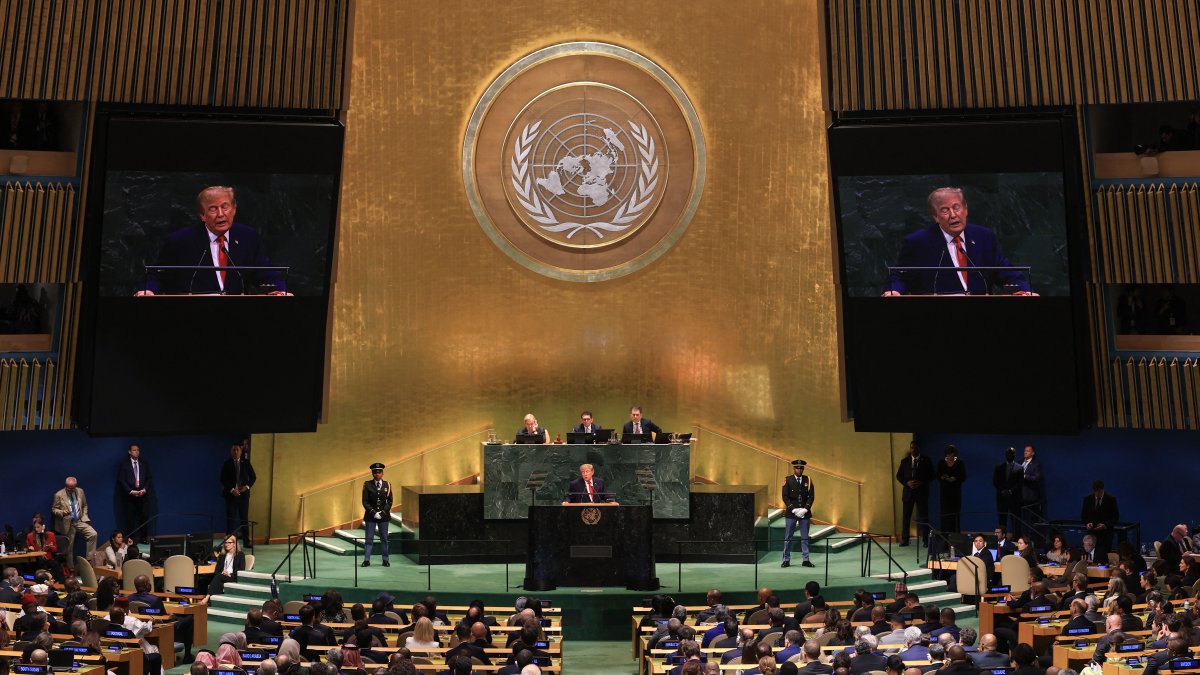
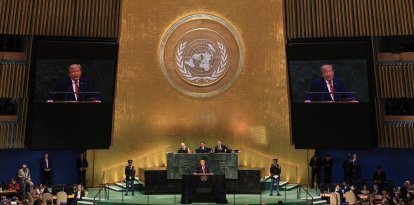
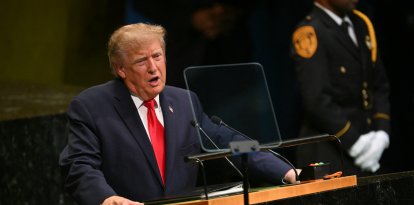
U.S. President Donald Trump addresses the 81st United Nations General Assembly

President Donald Trump delivered one of his toughest messages yet on Tuesday regarding Latin America from the podium of the United Nations General Assembly, warning that his administration is prepared to resort to its "unmatched military might" to protect U.S. interests in the Western Hemisphere.
"The United States will no longer allow threats against the Americas to gain ground anywhere in the Western Hemisphere. And, if necessary, we will use our unmatched military might to secure the vital national interests of the United States," Trump declared, according to an AFP report from the United Nations.
The president linked that warning to three central pillars of his regional policy: pressure on Cuba, U.S. intervention in Venezuela and the crackdown on drug cartels.
Cuba: "Freedom will come"
Trump directed some of his strongest remarks at Cuba and asserted that the island's communist regime will eventually fall. "Cuba will fall," he stated.
"Communism will never reach the United States, but freedom will come to Cuba," he added, arguing that the Cuban regime is currently facing "the strongest pressure it has ever known."
Reuters confirmed that Trump described Cuba as a failed state and presented his administration's policy as a campaign aimed at bringing about profound change on the island. The Cuban delegation left the room during that part of the speech.
The remarks come amid a tightening of the sanctions and economic restrictions imposed by Washington against Havana during Trump's second term.
Venezuela as a warning
Trump also cited Venezuela as an example of just how far the United States is willing to go.
"Our actions in Venezuela are proof of that," he said, referring to U.S. military capability.
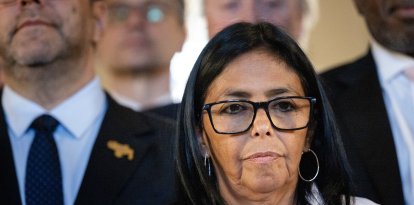
In January 2026, U.S. forces captured the then-Venezuelan dictator Nicolás Maduro and removed him from the country during a military operation. Since then, Delcy Rodríguez—a central figure in Chavismo—has served as interim president and maintains close political and economic ties with Washington.
Rodríguez was at the General Assembly on Tuesday and was scheduled to meet with Trump in New York. Reuters reported that her delegation is also negotiating issues related to energy, debt and mining with U.S. authorities and institutions.
The Venezuelan situation occupies a central place in Trump's new regional policy: the president defended Washington's intervention before the UN and presented it as a demonstration of his country's military superiority.
Politics
Trump defends his policies on Venezuela, immigration and security before the UN: 'America is back'
Williams Perdomo
The cartels, "the Islamic State of the hemisphere"
The third major pillar of Trump's message was the fight against drug trafficking. The president compared Latin American cartels to the jihadist group Islamic State.
"The cartels are the IS of the hemisphere," he said, adding that their members should be "executed, exiled or detained," according to AFP.
Trump designated several criminal groups as terrorist organizations during his second term, and his administration has intensified military operations against vessels suspected of being used to transport drugs in the Caribbean and the Pacific.
The president defended these actions despite criticism from international organizations and some Latin American governments.
His regional strategy has also been embodied in the Shield of the Americas, a security coalition created in March to strengthen cooperation against drug trafficking and transnational organized crime. The White House organized the initiative's inaugural summit in Miami, led by Trump and Secretary of State Marco Rubio.
A region divided over Washington
Speaking before the General Assembly, Lula denounced what he described as new forms of foreign interference in Latin America and defended the sovereignty of the region's countries.
"The division of the world into spheres of influence for neocolonial incursions in search of strategic resources is an anachronistic move," he stated, according to AFP. The Brazilian president also questioned U.S. intervention in Venezuela and has argued that Washington currently gives the impression that it "governs" the South American country.
Other governments in the region, however, have strengthened their cooperation with Washington. Chilean President José Antonio Kast stated this week that the Shield of the Americas aligns with his government's objectives in the fight against organized crime and drug trafficking.
LATEST