






Bipartisan group in House proposes deal to unwind government shutdown
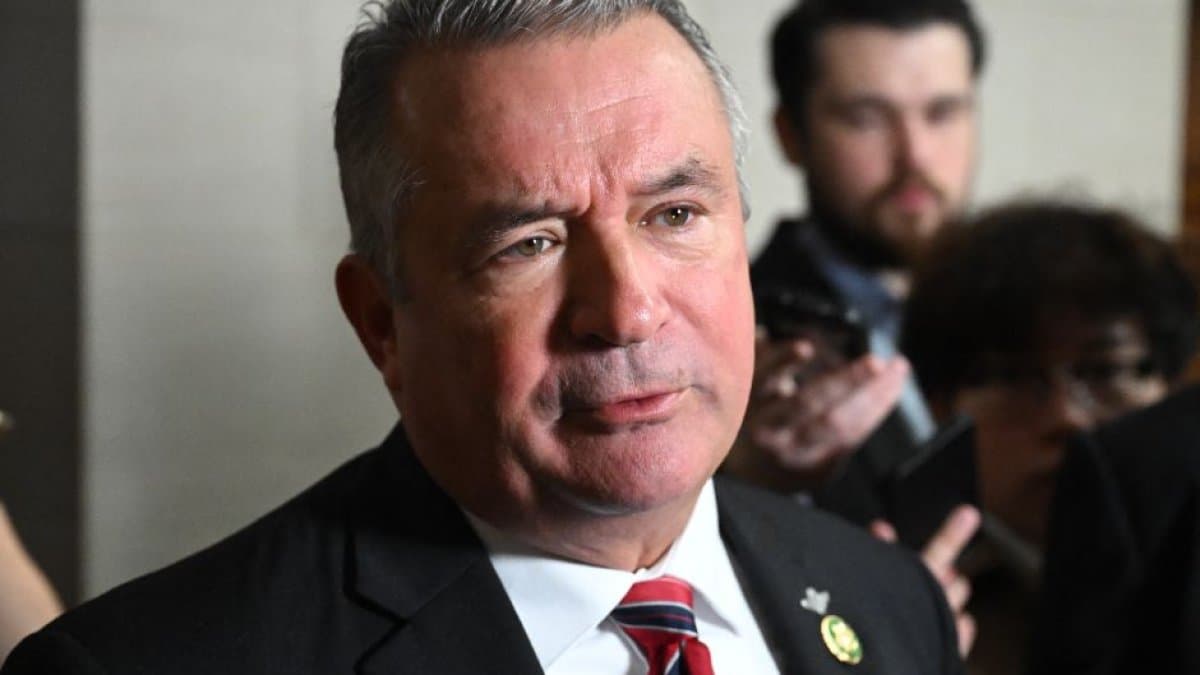
Rep. Don Bacon expressed that he expects the Senate to use this framework as a starting point for negotiations tied to federal funding.

While the government shutdown drags on and negotiations remain stalled, a bipartisan group in the House of Representatives introduced a proposal to temporarily extend the Affordable Care Act's (ACA) expanded subsidies. The initiative seeks to open an avenue for conversation on an issue that has stymied talks between the Donald Trump White House and Democrats.
Republican representatives Don Bacon (Nebraska) and Jeff Hurd (Colorado), along with Democrats Tom Suozzi (New York) and Josh Gottheimer (New Jersey), issued a joint statement outlining the principles of a possible agreement. The proposal contemplates renewing the enhanced tax credits for two years and establishing an income cap to access the benefit, located between $200,000 and $400,000 per year per household.
It is the first formal effort on health since the start of the shutdown. While Democrats are demanding to include extending appropriations as a condition for reopening the government, Republican leaders and President Trump have reiterated that any policy discussions must wait until federal operation is restored.
Limits, controls and conservative pressure
In addition to the revenue limit, the proposal incorporates measures to address potential fraudulent practices in enrollments to ACA plans. This includes greater oversight of brokers and agents, verification of beneficiaries, and transparency in informing enrollees of the value of their tax credits.
However, the initiative avoids addressing key demands from more conservative sectors, such as including explicit restrictions on coverage for procedures to terminate pregnancies.
An attempt to break the stalemate
Bacon said he hopes the Senate will use this framework as a starting point for negotiations on federal funding. While he has criticized Democrats for blocking a temporary measure to reopen the government, he said his party needs a way to address the Democratic demand on the ACA in the context of the shutdown.
Lack of key supporters and ongoing negotiations.
Although the four lawmakers belong to the Bipartisan Solutions Caucus, the proposal does not yet have official backing from the full group. Influential figures within the bloc—such as Republican Brian Fitzpatrick of Pennsylvania—have not signed on, and Republican lawmakers in competitive states are moving forward on their own with initiatives to reduce the impact of rising premiums.
In the Senate, several Republicans have quietly explored compromise formulas but without presenting a public alternative. Meanwhile, in some states, projected premiums for 2026 already show substantial increases, pressuring lawmakers from both parties to seek a solution.
🛠 Do you think there is an error in this article?
Recommendations






LATEST