Political Islam and the danger of Islamization in Texas - Part II
According to several scholars, dawah functions as a precursor to ideological commitment to political Islam.
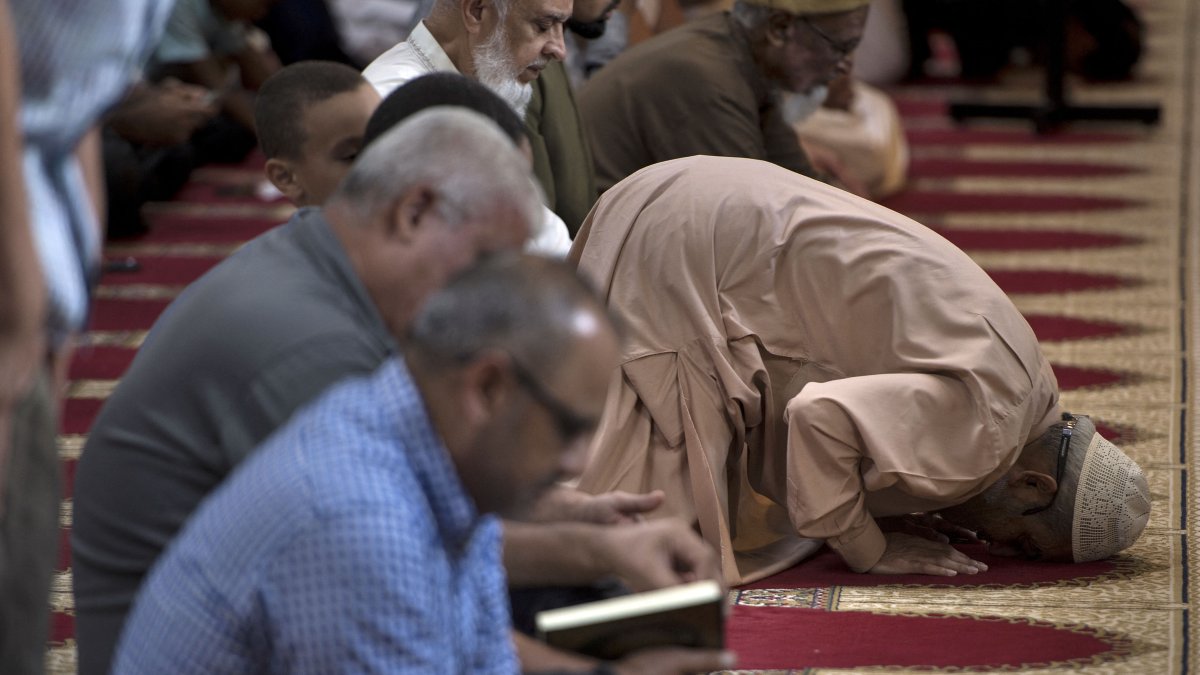
Islamic Center in Texas (Archive)
The paradigm of the Nueces Mosque, with its experiment in ghettoization, is not an isolated case but the visible manifestation of an infrastructure that has expanded throughout Texas, and often with public funding. A long-term strategic design that replicates patterns that can be seen in Europe.
Islam as a complete civilizational system
The Nueces Mosque openly displays on its official Facebook page its ideological framework without any kind of dissimulation. The Nueces Mosque project reveals the maturation of a broader structural model where interaction with society is strategically limited. The mosque functions not only as a place of worship, but as the governance institution around which everyday life is organized.
This approach reflects a strategy, articulated in the various Islamic movements, including the Muslim Brotherhood's own internal memoranda, which emphasize the creation of parallel institutions to achieve a social influence in the long term without direct confrontation.
Dawah: The key step
The Nueces project includes a specific Dawah Center within the complex, which frames universities as ideological positioning fields and positions student outreach as a form of long-term civilizational struggle. Dawah, or Islamic proselytizing, is not simply the sharing of religious beliefs but is a structured form of outreach designed to invite, persuade and cultivate ideological commitment, with the goal of strengthening Islamic identity and broadening adherence.
According to several scholars, dawah functions as a precursor to ideological commitment to political Islam. Reports from the Rair Foundation, indicate that one of the Islamic terrorists involved in the recent Bondi Beach bombing, Naveed Akram, was publicly involved in the Dawah years before the attack, doing public proselytizing since his youth. His radicalization allegedly began at the stage of outreach and ideological immersion.
Sheikh Yaser Birjas of the Texas-based Valley Ranch Islamic Center, originally from Kuwait, proposed that this model be replicated nationally and described mosques as a continuous bridge that guides students from high school through college and back to mosque-centered adulthood, ensuring they always remain in the mosque environment as they advance academically and professionally.
But Texas has a broader Islamist problem than the one identified by Abbott with the Muslim Brotherhood. Since the 2008 prosecution of the Holy Land Foundation, a major Islamist charity based outside Dallas, which is discovered to be funding Hamas terrorism, the individuals and organizations that built and supported that Hamas charity have remained operational.
In 2024, the Muslim American Society of Dallas hosted an event with a convicted Holy Land Foundation official, Abdulrahman Odeh, attended by Khalil Meek and Mustafaa Carroll, director of CAIR-DFW. Members of the Muslim Legal Fund of America and the Muslim American Society, have been accused of supporting local pro-Hamas and anti-Israel student encampments during 2024.

Baitulmaal, a leading Islamist charity in Irving, Texas, has as its director Mazen Mokhtar, who was denounced in the media several years ago after the Middle East Forum revealed his praise for killing Jews. At MAS Katy (Masjid Ar-Rahman), the Katy branch of the Muslim American Society, Main Alqudah, declared in resolutions published by the Assembly of Muslim Jurists of America that women cannot speak in public and insists that girls must be taught to wear the hijab from a young age. And at the Round Rock Islamic Center, just weeks after the Oct. 7 massacre, a sermon was given that argued that Jews kill prophets because "they are their attributes." In an earlier sermon in 2021, a preacher claimed that Zionists torture and murder children. The Houston Islamic Education Center, a major Shiite Islamic center, in 2022, organized the recording and performance of a children's song at the mosque, pledging allegiance to Ayatollah Khamenei. The lyrics of the song were documented by MEMRI.
The Qalam Institute is a paradigm case of a modern resurgence of Deobandi Islam in the United States. One of the most prominent Deobandi institutions operating nationally is the Qalam Seminary in Carrollton, which has trained hundreds of imams who now serve in mosques and Islamic centers across the country, including the Nueces Mosque. Its senior leadership has articulated specific, hardline positions on Islamic law in recorded lectures and public sermons that are on the record and consistent with classic Deobandi jurisprudence, which considers Islamic law as a comprehensive and superior system intended to govern society, not simply a private belief.

Hussain Kamani, co-founder of Qalam, has stated in public speeches true aberrations about adultery, the permissibility of wife-beating, and other behaviors that in Western society constitute crimes. He has described Western society as "filth," portraying the surrounding culture as morally corrupt and spiritually dangerous for Muslims. Abdul Nasir Jangda, Qalam's other founder, has also publicly defended aberrant Islamic sentences and advocated capital punishment for apostasy, and has articulated interpretations implying the supremacy of Shariah.
In the Nueces Mosque, Imam Anwer Imam studied with Kamani and Jangda in Qalam. A Middle East Forum report notes that the mosque's current spiritual leader was trained at the Qalam Institute. Mufti Anwer's subsequent specialization at Takhassus fi al-Ifta is specifically designed to prepare scholars to guide communities on how Shariah should be lived, socially applied and normalized in daily life, especially in contexts where external cultural influence is seen as a threat to religious continuity.
Tablighi Jamaat is a missionary movement that seeks to insulate Muslims from the supposed evil and corruption of the West. Tablighi Jamaat operates in several Texas mosques, including Masjid Yaseen in the city of Garland, one of its main bases of operations in the U.S. Texas is also a key network for the modernist Salafist movement, home to imams such as Omar Suleiman, based at the Valley Ranch Islamic Center in Dallas, and Yasir Qadhi, director of the East Plano Islamic Center, also known as EPIC. Following the massacre of more than 1,200 Israelis by Hamas on Oct. 7, 2023, Qadhi refused to condemn the attacks. Suleiman and Qadhi achieved notoriety thanks to the AlMaghrib Institute, a highly controversial Texas-based organization whose late founder was the no less controversial Muhammad Alshareef. The Islamic Center of Brushy Creek, northeast of Austin, employs Salafist imam Jawad Rasul, another AlMaghrib Institute graduate.
Islamists associated with the Turkish regime have also founded schools, mosques and a sharia court in North Texas, which have operated in close coordination with organizations founded by the Muslim Brotherhood in Dallas. Its founder, Yusuf Ziya Kavakçi, a Turkish-American Islamist cleric who has criticized the designation of Hamas as a terrorist organization has urged the Islamic world to seek the Islamization of the United States.
According to available data, mosque growth in Texas has been rapid and sustained over the past two decades, with a clear acceleration after 2020. According to the American Mosque Survey, Texas went from about 166 mosques in 2010 to 224 in 2020, a notable increase. However, the most recent records indicate that by December 2025 the number amounts to more than 300 mosques, implying astonishing growth in just five years.

Texas almost doubled its mosque infrastructure, consolidating itself as one of the main Islamic poles in the United States and reinforcing the importance of analyzing not only the number, but also the ideological orientation and institutional role of these centers. The United States is entering a critical phase in its encounter with political Islam, in which the movement relies on the guarantees of liberal democracy, using civic participation and cultural entrism to promote a worldview that, paradoxically, rejects the very foundations of the Republic and tolerance. This strategy of adaptation is what needs to be understood.
The result is a civic substructure that competes with the American value system rather than integrates with it. America now has a window of opportunity to act. But the infrastructure is already built. The funding model is already operational. The leaders are already in place. Texas, as the epicenter of this expansion, represents a laboratory for the institutionalization of political Islam. Europe has already paid the price of inaction: divided cities, perpetual tensions and a gradual erosion of its founding values.
LATEST