Europe divided over actions to take against Israel
“Member states disagree on how to get the Israeli government to change course,” said E.U. foreign policy chief Kaja Kallas.
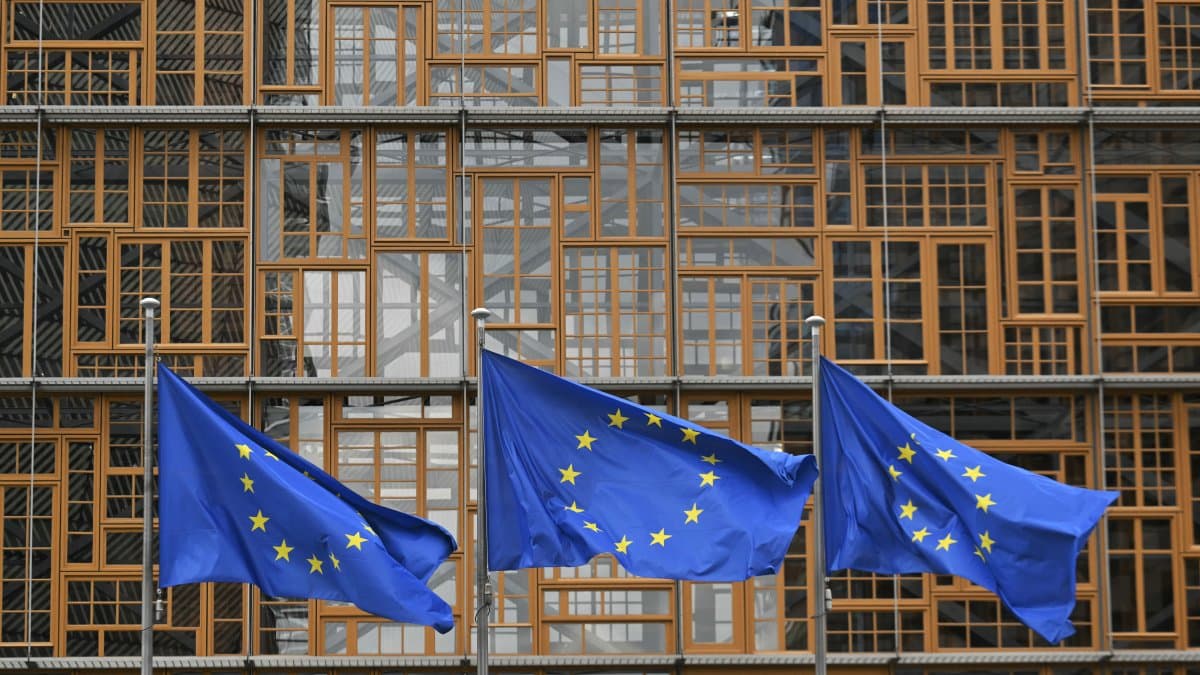

European Union foreign ministers were divided over what to do to punish Israel over its war in Gaza, preventing them from agreeing on a plan of action at an informal meeting in Copenhagen on Aug. 30.
A statement released by the High Representative for Foreign Affairs and Security Policy Kaja Kallas following the meeting gave the impression that the council on the whole opposed Israel’s decision to expand its war operations into Gaza City.
“Israel’s announcement that Gaza City is now a combat zone threatens to worsen the humanitarian situation. If a military solution was possible, the war would already be over. Gaza needs less war, not more war,” Kallas said.
She also criticized Israel’s plan to build in Judea and Samaria, presumably referring to the government’s approval of housing construction in E1, an area within the western boundaries of Ma’ale Adumim that would connect the buildup part of the city with Jerusalem.
Outside of sanctioning government ministers (at least seven European countries have banned right-wing Israeli Cabinet members Bezalel Smotrich and Itamar Ben-Gvir), and suspending arms exports to Israel, Kallas was short on specifics regarding what other options were discussed, saying only that “a broad majority of member states gave more ideas.”
According to Euractiv, a media network focused on E.U. affairs, Danish Foreign Minister Lars Løkke Rasmussen said his country was ready to support suspending trade cooperation with Israel, sanctioning far-right Israeli ministers and banning imports from “illegal settlements,” i.e. Jewish communities in Judea and Samaria.
Politics
Marco Rubio denies and revokes visas of Palestinian officials ahead of UN General Assembly
Williams Perdomo
“What more can we do to really improve the situation; we will explore those ideas further. But it is clear that member states disagree on how to get the Israeli government to change course,” Kallas said.
Emanuel Navon, a senior fellow at the Jerusalem Institute for Strategy and Security (JISS), told JNS, “When it comes to foreign policy decisions, the European Council has to have unanimity. Thankfully, it never happens.
“Luckily, we have allies in Europe. As long as they’re trying to isolate Israel via the European Council, we’re OK. They’re not able to gather 27 votes against Israel. It’s impossible,” Navon said.
Those opposed to Israel are the usual suspects, such as Ireland and Spain, he said. Eastern European countries support Israel.
Although countries opposing Israel know such meetings lead nowhere, they hold them to show their constituents that they are doing something, Navon said.
Even so, he warned that Israel must not become complacent simply because of the extreme unlikelihood that all 27 EU member countries will align against Israel.
“It’s very important to always be proactive in Europe and make sure that we don’t get surprised. We should never assume that we have those allies. We have to keep in touch with them to make sure that they stay on our side,” Navon said.
Israel must also take action against hostile governments, he said, praising Israel’s decision to close its embassy in Ireland in December of last year. Foreign Minister Sa’ar cited the “extreme anti-Israel policy of the Irish government.”
“Ireland has basically become an enemy country,” said Navon.
He also emphasized that Israel should reach out directly to Europeans to influence public opinion, something he said Israel is not doing enough.
World
Report | Massacres without borders: The legacy of Palestinian terrorism around the world
Leandro Fleischer
“Israel should use this opportunity to remind the European public how their economies have benefited from Israel. Talk directly to the audiences there. Israel joining R&D programs in Europe is not a favor to Israel. It’s a favor to Europe,” he said.
Lastly, Navon suggested requesting the assistance of the current friendly U.S. administration to exert its clout to penalize hostile governments.
Washington can help European countries who turn against Israel understand that they face retribution if they punish America’s staunchest ally, he said.
“The Trump administration can make sure that those hostile governments in Europe pay a price for ganging up against Israel,” Navon said.
Netanyahu: Starmer’s support for Palestinian state ‘shameful’
Netanyahu posted the Aug. 20 interview in its entirety to his X account on Thursday.
Asked by Kisin whether recognition of a Palestine state would “encourage Hamas to continue their resistance,” Netanyahu said, “Of course, it does.”
Speaking of the terrorist group, which invaded Israel on Oct. 7, 2023, the Israeli prime minister said, “They commit the greatest savagery against Jews since the Holocaust, and the prime minister of Britain says, ‘We’ll reward you with a de facto state,’… which is committed openly to repeating the October 7 massacre over and over and over again.”
Western leaders like to repeat that Israel has a right to defend itself, but “they recognize Israel’s right to defend itself as long as Israel doesn’t exercise that right,” Netanyahu said.
© JNS
🛠 Do you think there is an error in this article?
Recommendations



LATEST