ANALYSIS
Red Sea cables cut, slowing internet across Asia and Mideast
The cable failures occurred near Jeddah, Saudi Arabia and affected major systems such as SMW4 and IMEWE, which route internet traffic between Asia, the Middle East and Europe.
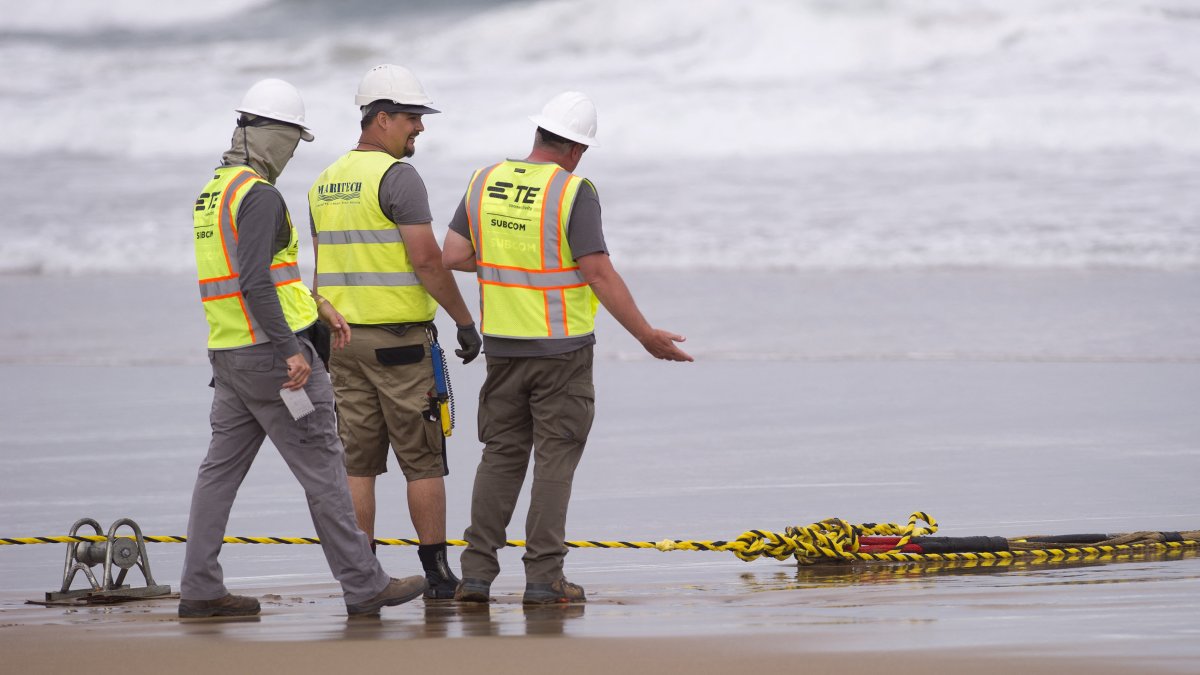
Trabajadores instalan un cable de fibra submarina en una foto de archivo.

Several undersea cables in the Red Sea were cut on Saturday, causing widespread internet disruptions across the Middle East and parts of Asia, including the United Arab Emirates.
The cause of the incident was not immediately clear, according to the Associated Press, which cited concerns about Houthi terrorists in Yemen potentially targeting the infrastructure as part of their terror campaign against Israel.
The cable failures occurred near Jeddah, Saudi Arabia and affected major systems such as SMW4 and IMEWE, which route internet traffic between Asia, the Middle East and Europe.
Microsoft confirmed the outages
Microsoft confirmed the outages, reporting increased latency in the Middle East for its Azure system, while traffic not routed through the region was unaffected.
The Houthis have attacked vessels in the Red Sea area with missiles and drones on more than 100 occasions since 2023, sinking four and killing at least eight people, according to AP.
In 2024, cables belonging to four big telecom networks—including the Asia-Africa-Europe 1 (AAE-1), TGN Atlantic, Europe India Gateway and the Seacom system—suffered damage, the cause of which was not clear, The Guardian reported at the time.
Yemen’s internationally recognized government had issued a warning regarding a potential Houthi threat to these subsea assets shortly before, and Israeli media reports attributed the damage to the terrorist group, according to the report.
However, the Houthi rebels denied responsibility.
LATEST