

The world's religious landscape is heading toward a significant demographic shift — a concern that experts have been warning about for more than a decade. In about nine years, Islam could displace Christianity as the world's largest religion, according to projections released Wednesday by the Pew Research Center, one of the leading institutions in the field of religious demography.
The study is based on data from 2020, when there were 2.27 billion Christians and 2.02 billion Muslims worldwide. Although both religions continue to grow, they do so at very different rates, and by 2035, Islam is projected to take the lead by about 50 million followers.
The explanation lies not in conversions, but in births: "It's the babies," summarized Conrad Hackett, Pew's lead demographer, who clarified that changes in religion have a much smaller impact than fertility rates.

Between 2020 and 2025, Muslim women had an average of 3.1 children, compared with 2.5 for Christian women — including Catholics, Protestants and Orthodox Christians. The rest of the world's women averaged 1.6, below the 2.1 needed for a generation to replace itself. During that period, about 252 million babies were born to Muslim mothers and 208 million to Christian mothers, and Islam is the only major religious group in which births are expected to continue rising in the coming decades.
This gap may widen over time, as projections indicate that the world's population will grow by 29% between 2020 and 2070, with Christians growing by 30% and Muslims by 80%. Hindus and Jews would gain adherents in absolute numbers but lose share of the total, and Buddhists would decline in both number and proportion, partly due to the demographic winter that is also affecting China, Japan and South Korea.
Pew explains that this growth will be centered in sub-Saharan Africa, where the majority of the population is Christian or Muslim and where a large portion of the world's population growth will be concentrated. By 2070, more than half of the world's Christians will live in that region and the Congo will surpass the U.S. as the country with the most Christians, with 299 million. As for Islam, Pakistan would take the top spot, ahead of India, Nigeria and Indonesia — which currently holds the top spot.

The West at the heart of the matter
The West, on the other hand, is heading in the opposite direction. According to the projection, Europe will lose 17% of its population by 2070, directly impacting Christianity. The data is devastating, as it suggests that the number of European Christians would fall by one-third, from 505 million to 324 million, while the proportion of Muslims on the continent would rise from 6% to 13%.
In the U.S., Christianity will cease to be the majority religion by around 2065. Today it accounts for 62% of adults, but the number of Christians is projected to drop from about 217 million in 2020 to about 174 million in 2070. In Canada, that threshold will be crossed much sooner, in 2030. In both countries, the decline goes hand in hand with the rise in the number of people with no religious affiliation, who are projected to account for 41% of the U.S. population.
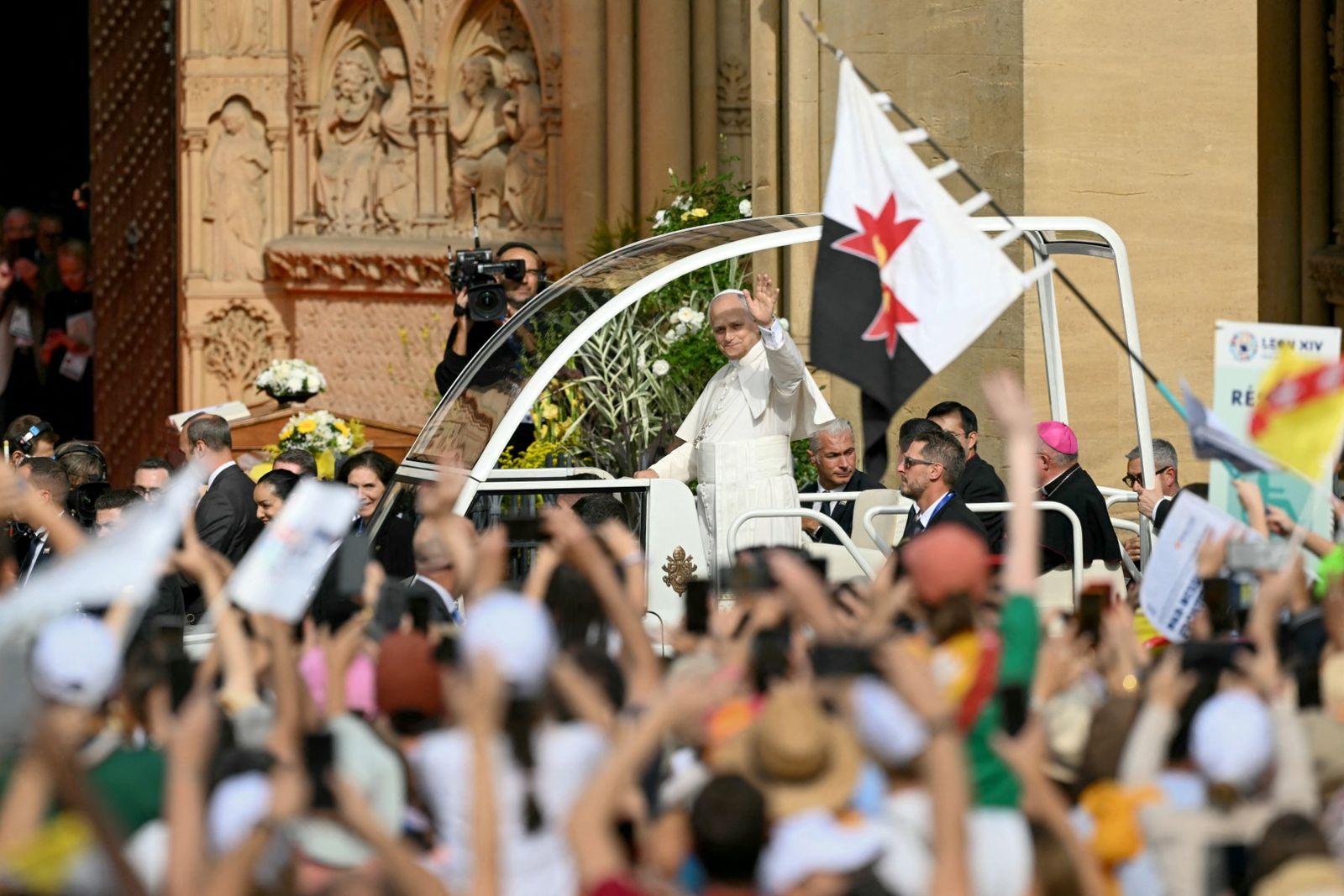
This group — those described as "religiously unaffiliated" — already constitutes a majority in 10 countries, including Japan, the Netherlands, New Zealand and Uruguay. France, the United Kingdom and South Korea would join the list before 2070. It is therefore no coincidence that Pope Leo XIV prioritized visiting predominantly secular Western countries such as France and Uruguay once he had recovered from the lung cancer that recently required him to undergo surgery.