ANALYSIS
Trump vs. Sánchez: The clashes that have put Spain in Washington's crosshairs
Defense spending, NATO, the war in Iran and U.S. military bases have pitted the U.S. president against the head of Spain's socialist government, in a relationship marked by public recriminations and trade threats.
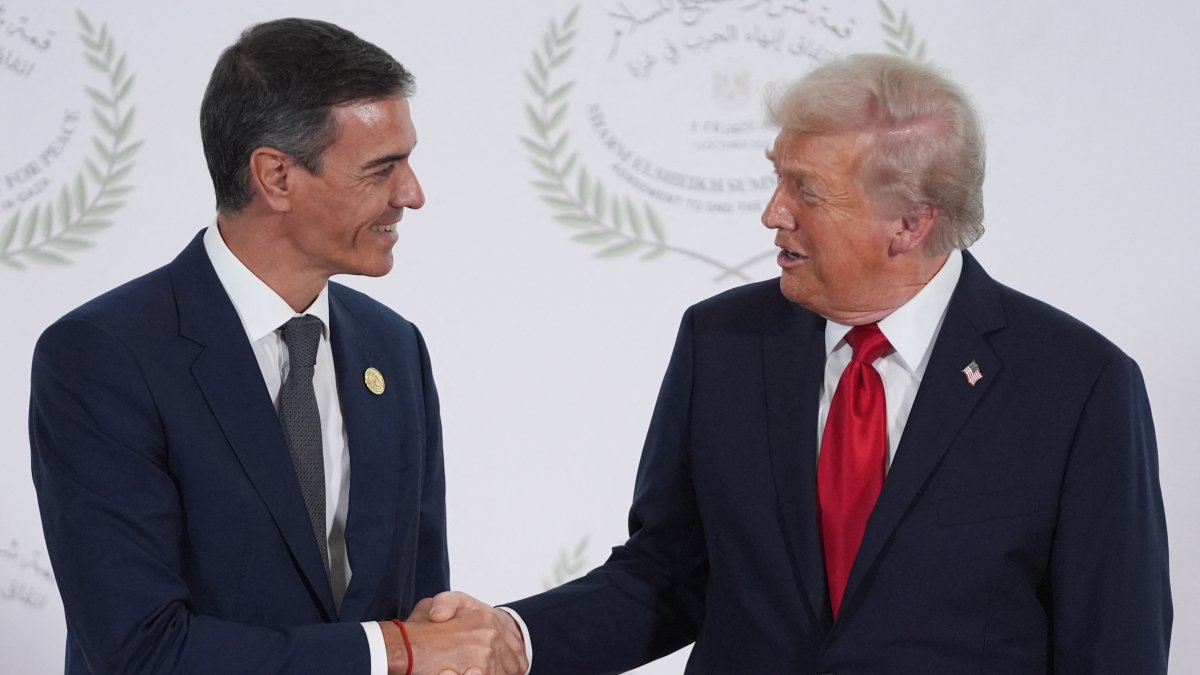
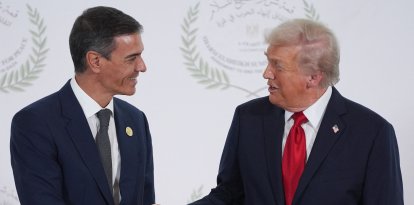
Pedro Sánchez and Donald Trump

Pedro Sánchez and Donald Trump have been at the center of a series of disagreements in recent months that have placed the Spanish socialist government at the heart of one of the main sources of conflict with the U.S. administration. Defense, NATO, Iran and the use of Spanish military bases have defined a relationship in which Trump has gone so far as to call Spain a "terrible partner" and to order a review of cutting off trade between the two countries.
The standoff over defense spending
One of the main points of contention began over NATO countries' commitment to increase their defense spending. While Trump demanded that allies reach 5% of GDP, Sánchez maintained that Spain would not meet that target and argued that the country was already significantly increasing its military spending. In July 2026, ahead of the NATO summit in Ankara, the Spanish government reiterated that it would not raise spending to that percentage.
Spain was the only member of the Alliance that did not commit to the 5% target agreed upon at the previous summit, a position that once again pitted Sánchez against Trump.
Trump: Spain is a "terrible partner"
The confrontation reached one of its most tense moments during the NATO summit in Ankara in July 2026.
Trump publicly criticized Spain again, calling it a "terrible partner" within NATO. The U.S. president questioned Spain's contribution to the Alliance and ordered his Treasury Secretary, Scott Bessent, to cut off trade with Spain.
“I don’t want to do any trade with them,” Trump said during the summit. He also called Spain "hopeless."
The clash over the war in Iran
The confrontation was not limited to military spending. Trump also expressed his displeasure with Sánchez over Spain's position on the war in Iran.
The Spanish socialist government refused to allow the use of certain bases and Spanish airspace for U.S. operations related to the conflict. Trump subsequently linked his criticism of Spain both to defense spending and to its stance on the war.
In Ankara, Trump once again lashed out at Spain precisely because of these differences.
Despite Trump's harsh public statements, Sánchez attempted to defuse the tension after the Ankara summit. The Spanish president stated that he had had a "very cordial" conversation with Trump.
Sánchez explained that the two even discussed informal topics, including soccer, even though Trump had publicly attacked Spain shortly before and had ordered a halt to bilateral trade.
Trump, for his part, went so far as to say the following day that Spain had "completely redeemed itself" after the Spanish government agreed to a payment request related to NATO. However, he stated that he still had issues with Spain.

The rift extends to the UN
The rift between the two became apparent again in September 2026, when Sánchez did not attend the reception hosted by Trump for delegation heads during the United Nations General Assembly.
The Spanish government justified the absence on scheduling grounds and noted that the invitation had arrived after Sánchez's trip had already been arranged. Foreign Minister José Manuel Albares denied that it was a "snub."
The incident came after months of public clashes between Washington and Madrid.
Differing stances on the war in Israel
The differences between Pedro Sánchez's socialist government and the Trump administration have also intersected with Madrid's stance on Israel. Sánchez has maintained one of the most critical positions in Europe toward the government of Benjamin Netanyahu, and in September 2025 announced new measures against Israel, including the formalization of the arms embargo that Spain claimed to have been enforcing de facto since 2023, restrictions on ships transporting fuel for Israeli forces, and a ban on entry into Spain for individuals who had directly participated in what the Spanish government described as "genocide" in Gaza.
World
Spain: The endless list of corruption cases plaguing socialist leader Pedro Sánchez
Alejandro Baños
Sánchez's stance prompted a reaction from Israel, which accused the Spanish president of antisemitism and announced entry restrictions for two members of the Spanish government. But the confrontation also reached Washington: the State Department expressed its concern over Spain's measures against arms shipments to Israel and argued that Spain was turning its back on Israel.
The invasion of Ceuta
The incident also had a strong political impact in Spain. The crisis continued in the following weeks: in September, the government estimated that between 9,000 and 10,000 migrants remained in the city.
LATEST