From Salem to Colombia: Two Trials, One Shadow
The judge did not argue; she proclaimed. The judge did not prove; she interpreted. Moreover, openly illegal acts—such as wiretapped recordings obtained without oversight or legal sanction—were admitted without hesitation.

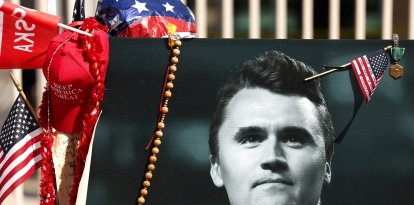
Supporters of Álvaro Uribe express their support in Bogotá on July 28.
By Gabriela Febres-Cordero:
In 1971, as a teenager attending a boarding school on the East Coast of the United States, I traveled with my literature teacher and classmates to the small town of Salem, Massachusetts—a visit meant to immerse us in the setting of the infamous 17th-century witch trials. We wandered through streets steeped in legend and superstition, where monuments stood as somber reminders of those exemplary convictions and punishments.
Back at school, we began reading The Crucible (1953), Arthur Miller’s play inspired by the events of 1692. Our teacher’s goal was to bring the story to life in a play we would perform at the end of the school year. I was assigned the role of Abigail Williams, the 12-year-old girl whose erratic behavior—hysteria—triggered a wave of accusations, arrests, and public executions: a witch hunt in the most literal sense. The inquisitorial atmosphere, the characters, the victims, and the trial itself became etched into my memory.
Decades later, in Colombia—a nation celebrated for its legal tradition in Latin America, cradle of distinguished constitutional scholars and staunch defenders of due process—that story of Salem resurfaced in my mind, now tinged with anxiety and bewilderment.
In The Crucible, it was enough for someone to claim that “my neighbor’s curse killed my cattle” for Reverend Parris to order an arrest. No evidence was required. The mere “sense of a jinx” became truth, and suspicion turned into judgment. The logic of due process was irrelevant; one was not judged by facts, but condemned by perceptions.
It is impossible not to draw a parallel with the recent trial against former President Álvaro Uribe Vélez.
Over ten hours of reading the 'grounds of the ruling', the judge effectively established a prelude to the verdict, saturated with subjective assessments and lacking conclusive evidence. Phrases like “Mr. Álvaro Uribe Vélez knew how illicit his actions were,” “his conduct was perceived as domineering,” and “justice does not kneel before power” were put forth as evidentiary grounds, though they were, in truth, no more than personal opinions. As in the Salem witch trials, subjectivity was elevated to the status of evidence
The courtroom in Bogotá, much like Reverend Parris’s pulpit in Salem, became a stage for omnipotence and moral chastisement. The judge did not argue; she proclaimed. The judge did not prove; she interpreted. Moreover, openly illegal acts—such as wiretapped recordings obtained without oversight or legal sanction—were admitted without hesitation.
I am not a lawyer. I do not speak from the intricacies of legal technicalities, but from the conscience of a citizen. And as such, I cannot turn a blind eye to these parallels.
Two historical moments. Two different societies. Two trials separated by more than 300 years... and yet, the same script. As if justice had learned nothing.
This is not a play. It is real life. It is our democracy. And it is at stake.
Anyone with a cellphone in hand — anywhere in the world — and access to YouTube could witness the expressions, gestures, and remarks steeped in bias against former President Uribe and his defense team. Over sixty hearings were broadcast live, unfiltered. The public became a direct witness.
Political correctness demands silent compliance with the ruling. But I ask: should a citizen who has witnessed, with their own eyes, these tirades and the thinly veiled hostility toward the defense, be expected to suppress their judgment? Is it the citizen’s duty to accept, without question, what feels unjust merely because it is delivered in robes and from the bench?
I don’t claim to have a definitive answer. But I do hold one certainty: democracy does not defend itself. It requires vigilant eyes, a critical conscience, and voices willing to provoke discomfort.
----
Gabriela Febres-Cordero is founder and president of United for Colombia, a nonprofit advancing access to prosthetic care for landmine survivors in Colombia.
LATEST