The pope is more than a man: Why, regardless of our beliefs, we must safeguard the institution
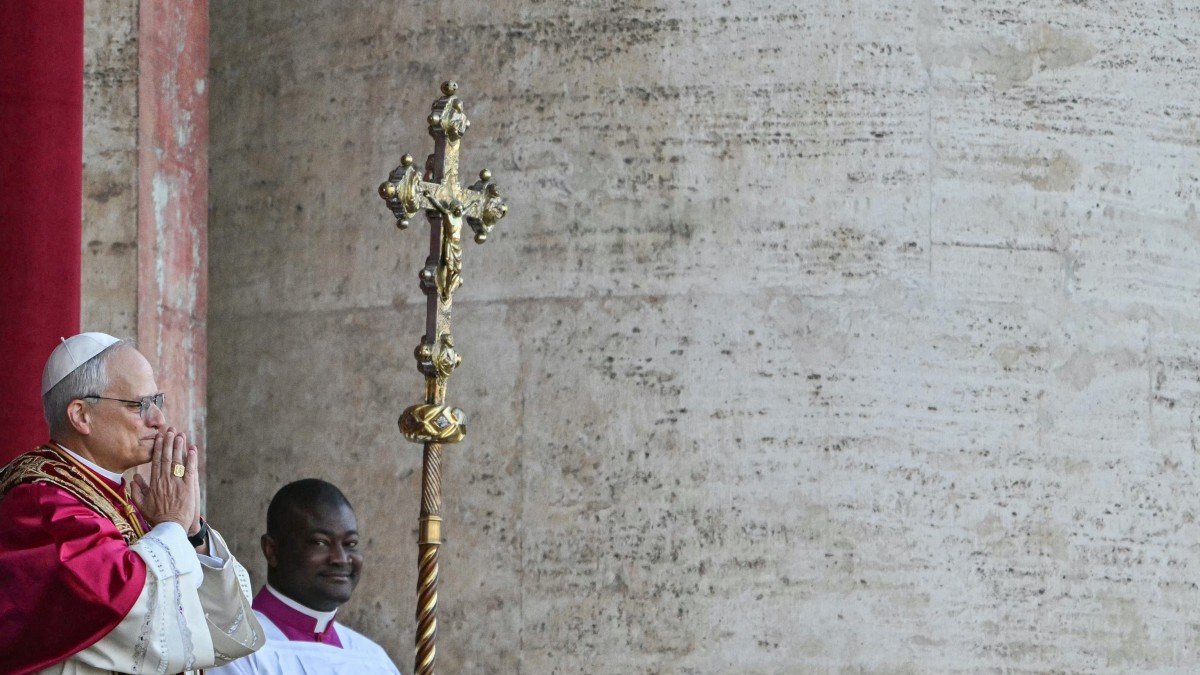
Pope Leo XIV offers the blessing for the first time at his presentation.
There was white smoke. Protodeacon Cardinal Mamberti was in charge of introducing him: the new pope is Cardinal Robert Prevost, who decided adopt the name Leo XIV. He is the first American pope in history, although he is profoundly Latin.
The spiritual journey that has had the world waiting with bated breath since the death of Pope Francis on April 21 is over. Then, although it is an event that many of us have already experienced, we were once again amazed by the Catholic Church, with its impressive display of tradition, solemnity and doctrine.
The pope's funeral, the conclave, with the smoke emanating from the chimney that everyone kept an eye on, always accompanied by a pair of seagulls, and the presentation of the new pope, put the whole world in suspense. It can be said, with peace of mind, that there is no other event that captures universal attention in this way.
All the emotion and admiration of the rituals provoked reflection in many. One of the appreciations, which perhaps crossed the minds of most, is that this is who we are. That's where we come from. From Rome. From the Catholic tradition.
The pope is much more than a man. Leo XIV may be a great pope, or a gray one, but what he represents has a weight that transcends his ordinary existence. Chesterton said that the papacy "is the oldest, immeasurably the oldest, throne in Europe; and it is the only one that a peasant could climb.... [It] is the only real elective monarchy left in the world; and any peasant can still be elected to it."
What Leo XIV stands for sustains us. All of us. Atheists, agnostics, Protestants, Jews or Buddhists who live in the West. It sustains us all. Because the papacy, the institution, the pontificate, with the Catholic supreme pontiff, which goes back to Peter more than 2000 years ago, is the greatest symbol of our civilization.
Regardless of our beliefs, if we live in the West, we are heirs of the Christian and particularly Catholic tradition. That tradition, with its symbols, is built around the pope. We come from that tradition. It gives us stability, as Byung-Chul Han would say, because rituals stabilize us. And ritual is tradition. And, as Roger Scruton would say, tradition unites us, gives us meaning, causes and drives us. It is from tradition that nations, their sovereignties, and our freedoms are born.
And from that tradition, the Catholic tradition, of which the pope is the pillar, we inherit that which dignifies us.
The College of Cardinals elected Leo XIV under Michelangelo's frescoes and in front of his Last Judgment. The Creation of Adam, probably the most important painting in world history, was commissioned by Pope Julius II.
"The Last Supper" by Da Vinci; "The School of Athens" by Raphael Sanzio. To Catholicism we also owe "Las Meninas," because Velázquez painted it in Catholic Spain. Without Catholicism, Dalí would not have painted his "Christ of Saint John on the Cross." Gregorian chants, which elevate us, would not exist, Mozart would not have made his "Requiem" and Dante would not have written "The Divine Comedy."
There are the basilicas and cathedrals, towering over the great cities of the world, which bring us closer to God, and of which every man is proud. There is no aesthetic research without considering the history of Catholicism. And then there is the natural law and its development in positive law. St. Thomas with reason, with the care of privacy and the separation of church and state. With scholasticism, tolerance or the protection of the indigenous people in the Americas.
The Western study of Aristotle, or Plato; science, morality or human dignity. Subsidiarity, conscience as an inner court or charity as a virtue.
There is no way to speak of the history or greatness of the West without referring to the Catholic institution. In that sense, the pope, as the highest authority of that institution, with a tradition that has lasted more than 2000 years, unalterable, with his worldly vices but his spiritual endeavor, becomes a symbol that we all, regardless of our religious or political whims, must take care of. We pray, then, for Pope Leo XIV, that he may make the world realize his greatness. And may the world take care of that greatness.
LATEST