
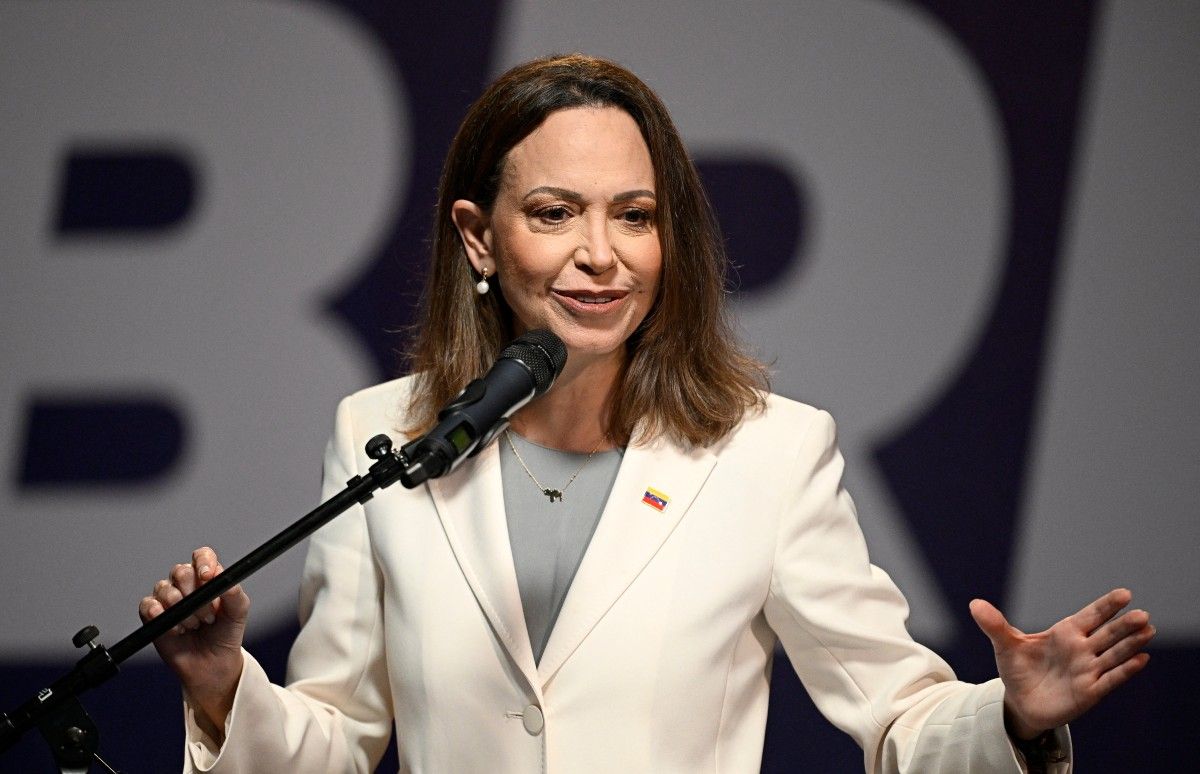
Less than a month after returning to Venezuela following months in exile, the opposition leader and Nobel Peace Prize laureate Maria Corina Machado proposed a long-term alliance with the U.S. which, she said, would not be limited to oil and would encompass security, the economy and the institutional reconstruction of the country, especially the Armed Forces.
Machado outlined her plan in an exclusive interview with Bloomberg, the first interview she has granted to an international media outlet since her return in October, and she also summarized it in a post on X: "We have the opportunity to build a broad, long-term strategic alliance between Venezuela and the United States."
Machado identified as a shared priority dismantling the drug trafficking and organized crime networks that operated for years alongside the Chavista regime, and to build a professional armed forces, subordinate to democratic civilian authority. According to her proposal, Washington needs a reliable partner in the region, and Venezuela needs to regain control of its territory and rebuild its institutions.
The economic ties, moreover, would extend far beyond crude oil: "Our interest is for the United States to understand that Venezuela is a long-term ally, a long-term strategic ally," Machado explained to Bloomberg, listing natural gas, minerals, rare earth elements, telecommunications, security and migration as some areas for cooperation.
Tierra de Gracia, the plan for oil
At the heart of the proposal is a profound transformation of the energy industry, which Machado dubbed "Tierra de Gracia." The plan calls for the gradual withdrawal of PDVSA, the state-owned oil company, from operations and to transfer them to private Venezuelan and foreign companies, replacing individually negotiated contracts with open bidding processes , and to create an autonomous hydrocarbons agency that separates regulation from operations. The government would continue to benefit from oil, but through taxes and royalties, without directly controlling production.
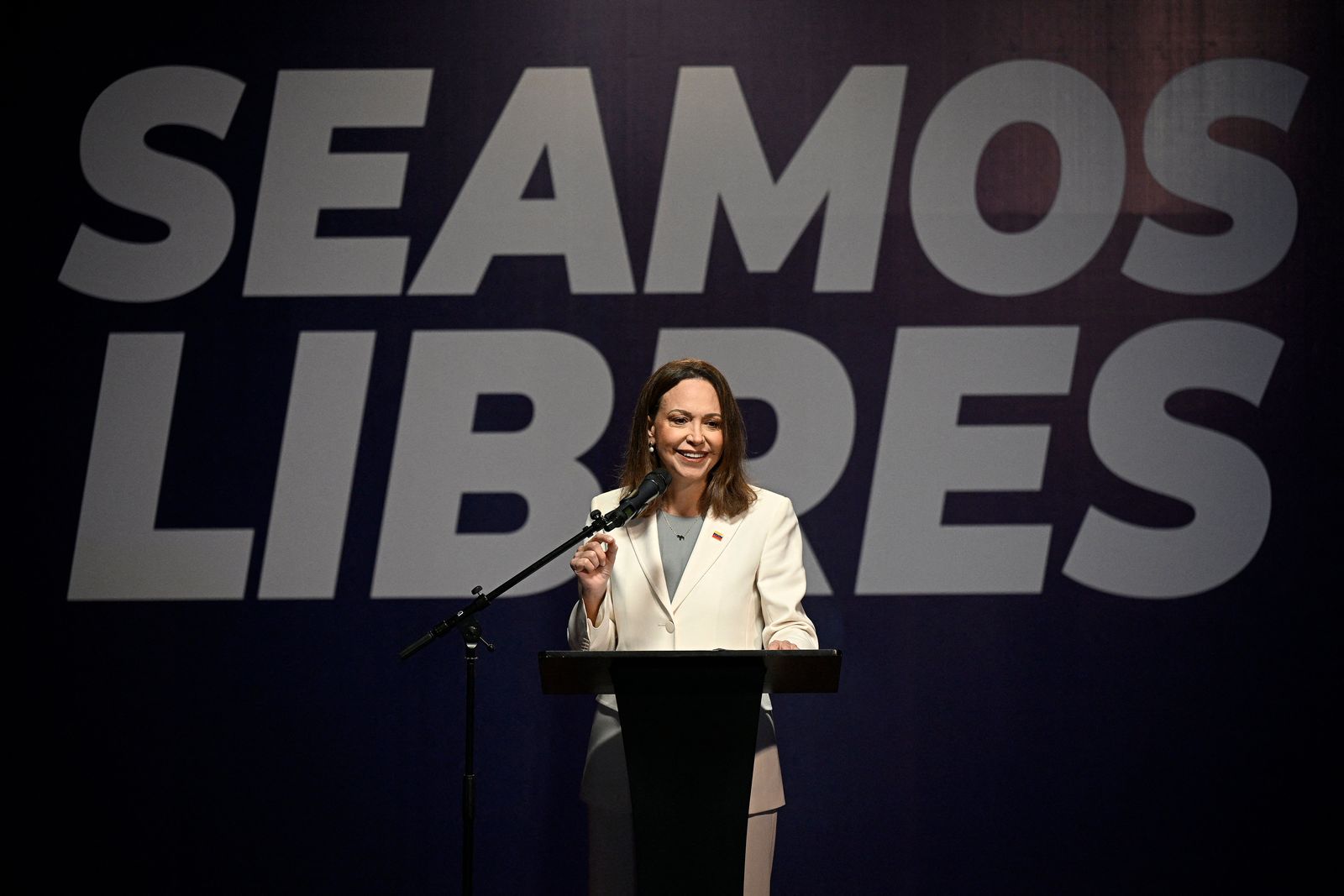
The idea goes far beyond the opening promoted this year by Delcy Rodríguez, leader of the interim regime, who gave more room to private capital but kept PDVSA at the center of the model.
This is not a new stance for Machado, who has advocated for the privatization of the sector for two decades—a time when discussing the issue in Venezuela was practically taboo, with virtually all of the country's political figures promoting a statist model. As she recalled, many people told her back then that she had lost her mind, but she maintained that it is precisely the poorest Venezuelans who value private property the most.
Contracts Under Review and the Shadow of Betancourt
The plan raises questions about the dozens of oil agreements signed since Maduro's ouster on Jan. 3. Machado assured that contracts entered into legally will be honored, although all will be reviewed on a case-by-case basis to ensure they do not violate the law, the Constitution, or the country's interests. Among them is the $1 billion agreement that the Trump administration signed with businessman Alejandro Betancourt, a man accused of corruption, due to his close ties to the Chavista regime—a deal that Democrats in Congress are already planning to investigate.

Far from threatening the companies that arrived under the interim regime, the opposition leader compared their investments to financial options that would gain value with solid institutions and predictable rules, and she anticipated that they would be the first to adapt to her conditions.
Electricity, debt and the return of talent
Machado also warned that there will be no oil recovery without resolving the electricity crisis. Current operations alone require some 1,600 megawatts, while the country faces a generation deficit of nearly 3,600 megawatts. Her proposal focuses on natural gas, hydroelectric, solar, and wind power to attract industries such as data centers and telecommunications.
The leader also acknowledged that capital alone is not enough unless the engineers and technicians who emigrated return—a development that requires functioning schools, healthcare, and housing. On the financial front, she proposed an agreement with the IMF and a restructuring of the debt—estimated at between 150,000 and 200,000 million dollars—under terms that allow for growth and repayment to creditors.

An election date
The entire project hinges on elections for which no date has yet been set. Machado, who remains the country's most popular political figure, wants to run for president, although it is unclear whether the 15-year ban that prevented her from running in 2024 is still in effect.
The transition is moving forward under the U.S.-backed roadmap, which is part of the three-phase plan spearheaded by Secretary of State Marco Rubio. That plan calls for appointing a new Supreme Court before mid-December, then renewing the National Electoral Council, and—once the new institutions are in place—for Rodríguez to declare the presidency vacant, which would trigger a six-month period to hold elections.
Machado, who remains outside the formal negotiations, expressed her willingness to speak directly with Rodríguez if that helps the transition, and she endorsed Republican Senator Bernie Moreno's proposal to hold the election on July 24, 2027—a date she considered perfectly feasible. For her, the electoral calendar is also an economic issue: "An election gives certainty. It reduces risk, reduces the discount rate and makes an investment in the country much more profitable."