The economy, healthcare and Iran top voters' priorities for the midterms
Fifty percent of voters consider the economy and health care to be extremely important issues in deciding how they will vote, while 47% cite the situation in Iran. Democrats express greater concern about most issues, while Republicans prioritize immigration and crime.
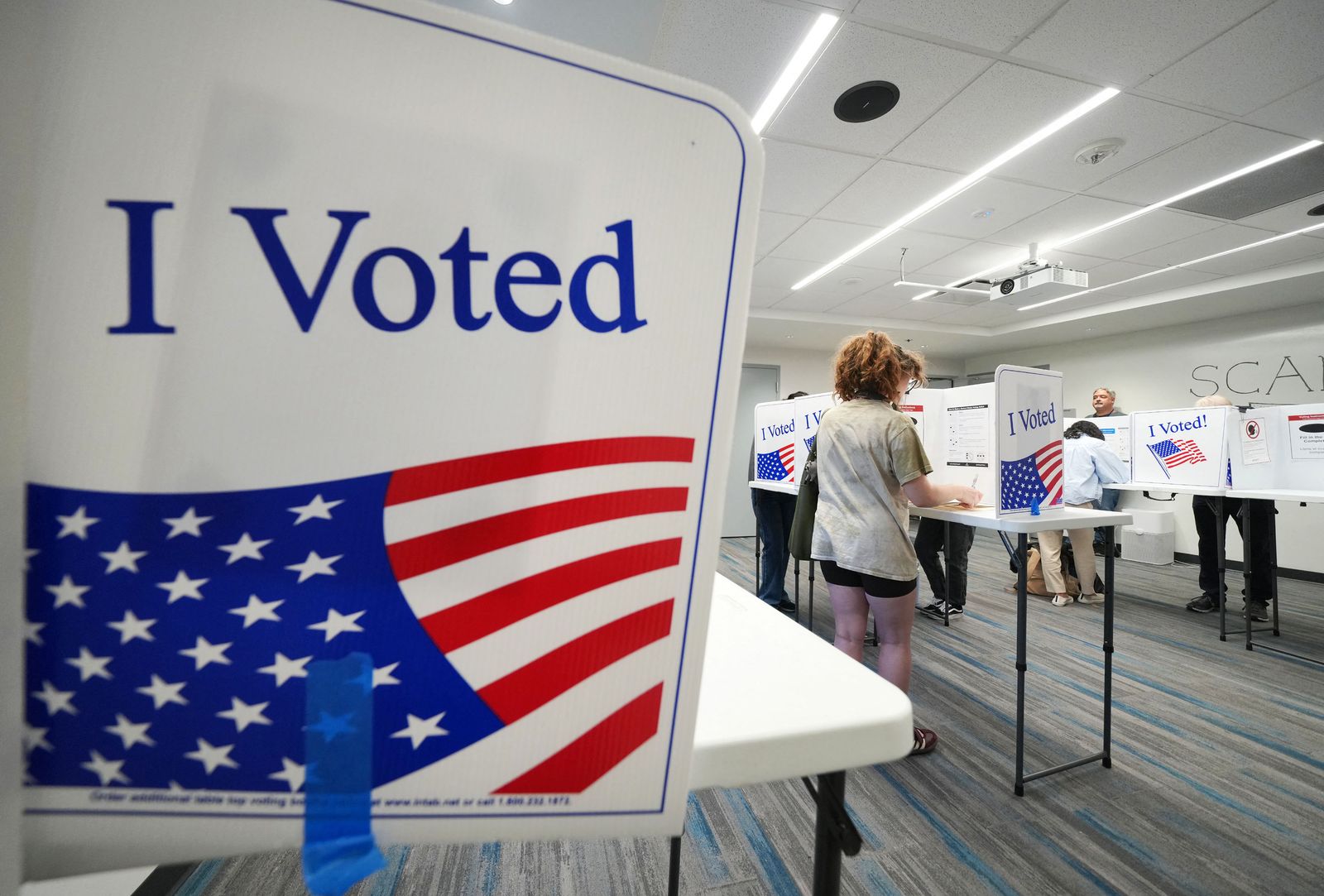
Illustrative image of the elections

The economy, healthcare and the situation in Iran are the three issues of greatest importance to American voters ahead of the November 2026 midterm elections, according to a poll published by Gallup. The study reveals that 50% of registered voters consider the economy and health care to be extremely important in deciding how they will vote, while 47% attach the same level of importance to the situation in Iran.
The poll, conducted between Oct. 1 and 19, assessed 11 issues that could influence Americans' decisions in the congressional elections. Following the top three issues are the income and wealth distribution (44%), gas prices (42%), immigration (40%) and abortion (38%).
Below these are crime and the conflict between Israelis and Palestinians, both at 35%. The construction of artificial intelligence data centers (30%) and climate change (29%) occupy the bottom spots on the list.
Gallup notes that the majority of voters consider each of the issues surveyed to be at least very important, with the exception of climate change.
The economy and inequality are gaining prominence
The 50% who consider the economy extremely important is virtually the same as the 49% recorded during the 2022 midterm elections, amid high inflation. However, it exceeds the 34% from 2018, though it remains below the peak of 63% reached in 2010, during the recovery from the Great Recession.
Other economic issues have gained prominence compared to previous midterm elections. Income and wealth distribution stands at 44%, its highest level in the three midterm elections in which Gallup has measured this indicator. The figure exceeds the 32% recorded in 2018 and the 31% recorded in 2014.
Gas prices have also risen in importance: 42% of voters consider them extremely important, compared to 32% in the previous comparable survey, conducted in 2006.
Healthcare also ranks among its highest levels on record. Fifty percent of voters consider it extremely important, matching the peak recorded in 2010 and exceeding the 40% recorded in 2018, the year of the previous survey.
As for immigration and climate change, their levels have remained relatively stable in recent years. Immigration has registered percentages close to 40% since 2018, while climate change has remained around 29%.
Abortion and crime show figures similar to those from 2022, when they stood at 42% and 40%, respectively. However, the importance of abortion is considerably higher than in 2002 (17%) and 2006 (27%).
Meanwhile, the situation in Iran and the construction of artificial intelligence data centers appear for the first time on Gallup's list of election issues.
Differences between Republicans and Democrats
The poll also reveals significant differences among voters based on their political affiliation. Democrats consider more issues to be extremely important than Republicans do, with two exceptions: immigration, which receives similar ratings from both groups, and crime, which is of greater concern to Republicans.
Among Democrats, health care tops the list of priorities at 68%, followed by the income and wealth distribution (65%), the economy (59%) and the situation in Iran (58%).
In addition, more than half consider gas prices (53%), climate change (52%) and abortion (51%). Crime ranks last among their priorities, at 32%.
Republicans, on the other hand, rank immigration (44%) and crime (43%) at the top of their list. These are followed by the economy (39%), Iran (35%), health care (34%), and abortion (32%). None of the 11 issues surveyed reaches 50% among Republican voters.
Among independents, the economy (51%), health care (48%), and the situation in Iran (46%) top the list of priorities. Income and wealth distribution and gas prices each register 41%, while immigration stands at 38%.
The greatest differences between the parties are found on climate change and the distribution of income and wealth. Democrats outpace Republicans by 47 percentage points in the importance they attach to climate change (52% versus 5%) and by 43 points on income and wealth distribution (65% versus 22%).
Healthcare also shows a significant divide: 68% of Democrats consider it extremely important, compared to 34% of Republicans.
In contrast, immigration elicits similar views: 44% of Republicans and 41% of Democrats consider it a top priority. Crime is the only issue on which Republicans significantly outnumber Democrats, at 43% versus 32%.
Dissatisfaction with the government may also influence the vote
Beyond the specific issues included in the poll, Gallup warns that dissatisfaction with the government could also influence voting decisions.
When Americans are asked what they consider to be the country's most important problem, without being given options, the government ranks first, with 26% of the responses. This concern rises to 36% among Democrats and stands at 22% among both Republicans and independents.
Among the economic issues mentioned are inflation (17%), the economy in general (15%), fuel prices (7%) and income inequality (2%).
Overall, 38% of Americans identify at least one economic issue as the country's main problem. The proportion is 39% among Democrats, another 39% among independents and 36% among Republicans.
Priorities change depending on which party is in power
Since Donald Trump's return to the White House, Republicans have shown less concern about the economy, immigration and crime than they did during the Biden administration. In contrast, Democrats now place much greater importance on the economy and immigration.
Gallup notes that the increase in Democratic concern about immigration likely reflects their strong opposition to several of the major immigration policies promoted by Trump.
When comparing the 2026 data with that from 2018, during Trump's first term, the results show that Republicans' priorities regarding the economy, immigration, healthcare and wealth distribution are similar to those of that year.
However, Democrats and independents are now much more likely to consider the economy, health care and the distribution of income and wealth to be extremely important. For these three issues, the increases are in the double digits among both groups.
With the midterm elections drawing ever closer, the economy, healthcare and the international situation are once again at the center of voters' concerns. However, differences between the parties show that Republicans and Democrats are approaching the election with different priorities.
🛠 Do you think there is an error in this article?
Recommendations





LATEST